

If you feel stuck scrolling, this guide will help you stop. Simple, realistic steps to take back your time and attention.
Learning how to stop scrolling starts with understanding why the habit feels impossible to break, and then redesigning your environment so willpower isn’t necessary. This guide offers a grounded, analog-first approach to reclaiming your attention, based on behavioral psychology and my own years-long struggle as a mother working from home. If you’ve deleted apps only to reinstall them, or set limits only to ignore them, you’re not failing, you’re fighting a system designed to win. Here’s how to change that system.
I reached that moment, the one where you realize the scroll has you, not the other way around, when my son was still a baby. Working from home, I was exhausted. Trying to hold together motherhood, a home, a career, and my own sense of self, yet Instagram and YouTube had a pull that felt stronger than my responsibilities. I deleted Instagram for weeks, only to fall into hours of YouTube. When I tried to limit YouTube, Instagram took over again. Reels and Shorts made everything worse. If you’re wondering how to stop scrolling when you already feel overstimulated or emotionally depleted, this guide is exactly the one I wish I had years ago.
Stopping the scroll isn’t about rejecting technology. It’s about reclaiming the parts of your life that scrolling quietly consumed.

1. Why Learning How to Stop Scrolling Feels Impossible
People blame themselves first. “Why do I keep doing this? Why can’t I just stop?” But the truth has almost nothing to do with you, and everything to do with how these platforms were built.
Infinite scroll works like a slot machine. Every flick offers something new: a face, a joke, an argument, a product, a quote. You never know what’s coming next, and that unpredictability is exactly what hooks you. Your brain releases dopamine not because the content matters, but because you don’t know what’s around the corner. The uncertainty itself becomes the reward, and understanding this is the first real step in how to stop scrolling in a way that actually lasts.
I remember the exact moment I realized I wasn’t choosing to scroll anymore. The gesture was choosing me. I’d pick up my phone to check the time, and three minutes later I’d be deep in Instagram without any memory of how I got there. That loss of intention, that automatic reach, is what persuasive design was built to exploit.
And because scrolling requires almost no effort, the habit forms faster than nearly any other behavior. This is why how to stop scrolling has nothing to do with willpower and everything to do with redesigning your environment.
If you want to understand the mechanics behind this, CNN published a well-reported piece on doomscrolling and persuasive algorithms that breaks down how platforms intentionally maximize engagement through unpredictable content loops. It’s a clear, evidence-based look at why stopping feels neurologically difficult.
2. What Scrolling Takes From You
The most dangerous cost isn’t the time you lose. It’s what happens to your attention in the hours that remain.
Your mind becomes trained to expect constant micro-stimulation, and anything slower starts to feel unbearable. Reading becomes harder. Being fully present with your family becomes harder. Thinking without interruption, praying, journaling, even sitting still — all of it becomes harder.
I felt this in my body before I understood it in my mind. Finishing a chapter of a book without reaching for my phone became impossible. I couldn’t cook dinner without checking something “real quick.” And I couldn’t even sit on the floor with my son without drifting into a mental fog. I thought I was just tired, but the truth was I was overstimulated to the point of numbness.
Scrolling also quietly erodes your emotional baseline. The comparisons, the manufactured envy, the constant noise — it all chips away at your sense of calm.
Scrolling doesn’t just steal hours. It steals the texture and quality of the hours you thought you still had.
3. How to Stop Scrolling: What Actually Works
The truth most people avoid: you don’t break a scrolling habit with motivation or mantras. You break it by redesigning the environment that makes the habit possible in the first place.
3.1 Give Your Phone a Physical Home
One of the most effective strategies for how to stop scrolling sounds almost too simple: your phone needs a permanent address in your house.
It shouldn’t follow you from room to room. Choose one place, a kitchen shelf, a drawer near the door, a specific corner, and let that be where it lives. Picking it up becomes a deliberate decision instead of a reflex you barely register.
When I was at my worst, I kept my phone on top of the freezer. I even wrote about it once in a newsletter I called The Freezer-Top Epiphany. That one spatial change broke half the habit overnight, because suddenly I had to walk across the kitchen, reach up, and make a choice. The friction was enough to wake me up.
Another shift that surprised me: switching to a wallet-style phone case. It closes like a small book, and that simple design change made the phone feel less like a toy and more like something I use when I leave the house, the way I use my actual wallet. It created a psychological boundary I didn’t expect: this object belongs to the outside world, not to the rhythm of my home.
3.2 Disrupt the Automatic Gesture
You don’t need to become a digital monk, but you do need friction. Intentional, well-placed friction that interrupts the seamless path from thought to phone to feed.
Strategies that create that friction:
- Remove apps from your home screen entirely
- Turn off all notifications except phone calls
- Enable grayscale mode so the screen loses its visual pull
- Log out of social apps after every use
- Delete high-pull apps during seasons when you need focus
- Use visual-disruption tools like Minimizit, which strips your screen down to a plain black-and-white list and removes all the design cues that trigger mindless opening
Tools like Minimizit work because they interrupt the sensory pull of the phone. When everything is muted, flat, and deliberately boring, your brain stops treating the device like a reward dispenser.
This isn’t punishment. It’s environmental design.

3.3 Create Technology Windows
This is one of the most powerful strategies in learning how to stop scrolling, and it’s far more effective than most people realize. If you don’t give yourself intentional time to use technology, you end up checking it constantly in scattered, anxious bursts throughout the day. You tell yourself you’re “just checking email,” but what you’re really doing is fracturing your attention into a hundred tiny interruptions.
Technology windows do the opposite. They concentrate your digital life into specific, contained pockets instead of letting it bleed quietly through every hour.
It might look like this:
- 11:00am–12:00pm → messages and email
- 3:00pm–3:30pm → social media, if you want it
- 8:00pm–8:20pm → casual browsing or catching up
Clear boundaries are infinitely easier to honor than vague intentions. And this single shift prevents the all-day drip of micro-distractions that quietly dismantle your ability to focus.
3.4 Build an Analog Life Again
This is the step most people skip, and it’s the one that solves the problem for good.
You can’t stop scrolling if your analog life feels empty. The digital world only stops feeling necessary once the physical world becomes rich enough to hold your attention again.
If you’re not sure where to start, think about activities that bring back texture, movement, rhythm, and presence:
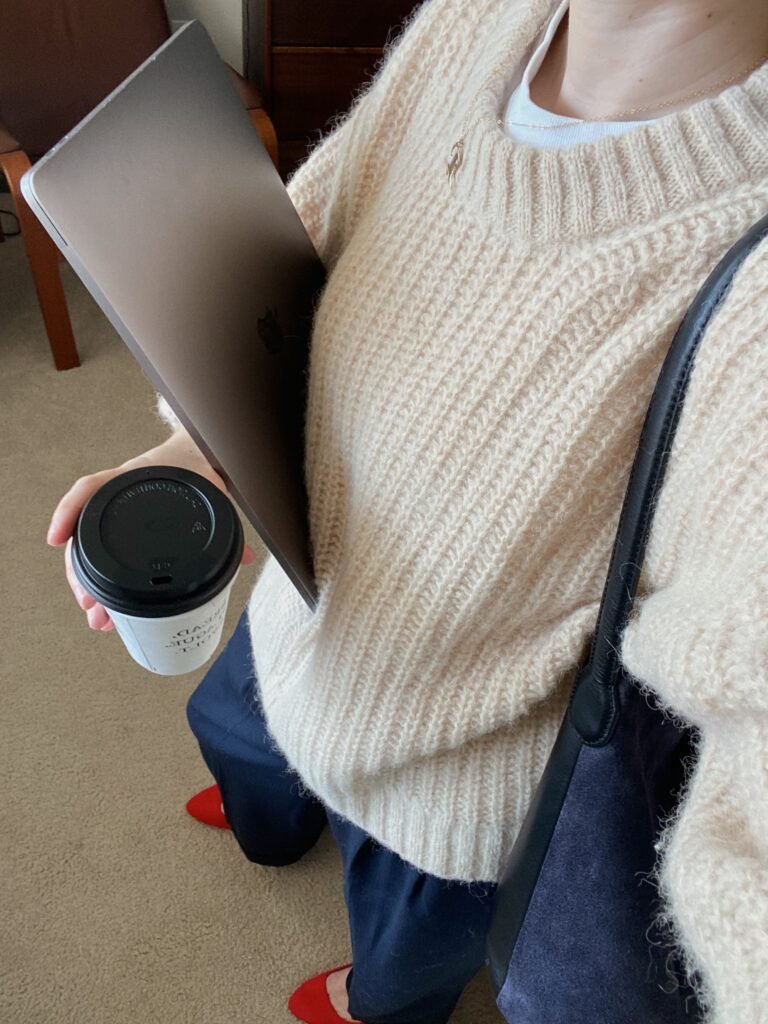
- Meet a friend for coffee and spend an hour watching the street through the window
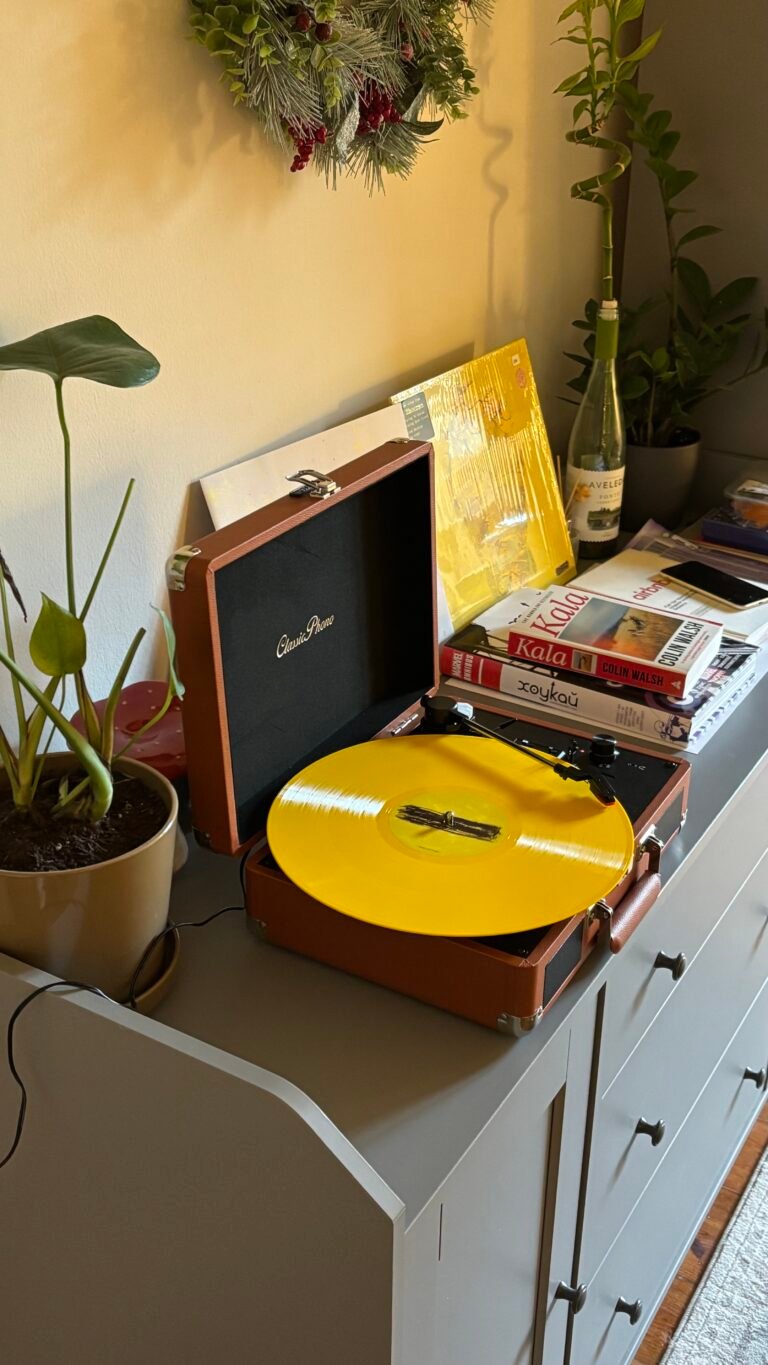
- Walk through your neighborhood without headphones, just listening
- Try a sport or movement practice purely for the pleasure of it
- Browse a bookstore with no agenda and pick one book to read that week
- Cook something slow and savor the process more than the outcome
- Tend to your home with quieter, more deliberate routines
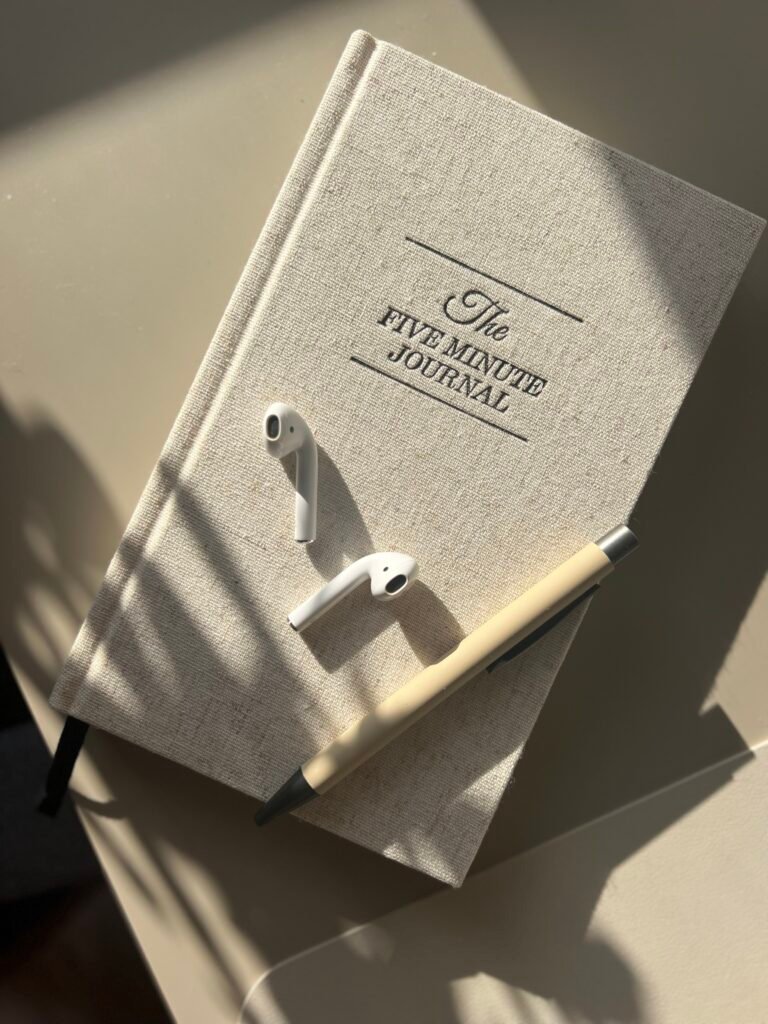
- Journal by hand, even if it’s messy
- Pick up hobbies that involve your hands — knitting, sketching, gardening, puzzles, scrapbooking
These aren’t distractions or fillers. They’re anchors. They rebuild the analog scaffolding your nervous system actually needs, so scrolling stops being your brain’s default response to stillness.
3.5 Understand Your Emotional Triggers
Scrolling is almost never about boredom or entertainment. It’s about escape. And if you want to learn how to stop scrolling in a way that lasts, you need to understand what you’re escaping from.
Most of us don’t reach for the phone because we have nothing to do. We reach for it because something inside us feels uncomfortable, unfinished, or too heavy to sit with. The phone becomes the fastest way to dull that edge.
One simple journaling question helps bring this pattern into focus: “What was I trying not to feel when I reached for my phone?”. Once you can name the emotional cue, the entire habit loop becomes visible — and suddenly, interruptible.
For many women, the triggers fall into a few recurring categories:
- Overwhelm — the phone becomes a tiny escape hatch from impossible responsibilities
- Loneliness — scrolling mimics connection without requiring the vulnerability of real presence
- Fatigue — it’s easier to collapse into a feed than to rest in a way that actually restores you
- Avoidance — especially of decisions, unfinished work, or emotions you’re not ready to face
- Overstimulation — which, paradoxically, makes you crave even more stimulation instead of quiet
When you can witness your triggers without shame, you start to understand why willpower alone never worked. You weren’t fighting a bad habit. You were soothing a feeling.
This awareness doesn’t magically fix the behavior overnight, but it gives you something invaluable: agency. And in the process of learning how to stop scrolling, emotional clarity becomes one of the most powerful tools you can build.

4. The Science Behind How to Stop Scrolling
Research across attention studies, neurobiology, and behavioral psychology confirms what many of us already feel:
- Infinite scroll increases usage regardless of what you consciously intend
- Unpredictable rewards are far more addictive than predictable ones
- Micro-interruptions reduce cognitive performance by up to 40%
- Low-effort habits form the fastest and stick the longest
Harvard published a helpful overview of the neuroscience of attention and smartphone use that explains how the brain’s reward pathways get shaped and overstimulated by constant digital input. It’s accessible, well-researched, and clarifies why this feels so difficult.
You are not weak. You’re not broken. You’re responding exactly the way a human nervous system responds to a system built to capture and hold attention.
When you change the system, the behavior changes.
5. Rebuilding Your Attention After You Stop Scrolling
These practices don’t just help you scroll less. They strengthen your ability to be present in real life and rebuild the mental texture that scrolling quietly erodes. They seem small on the surface, but their cumulative effect is profound.
Morning rituals without screens — Your nervous system needs silence and slowness before it can settle into focus. Opening a screen first thing pulls you immediately into the mental rhythm of the internet, and the rest of your day never quite recovers.
Evening wind-down without scrolling — Late-night feeds disrupt your sleep cycles and heighten baseline anxiety. Replacing the scroll with a book, soft lighting, or quiet routines helps your body remember how to rest.
Tolerate boredom again — Boredom isn’t a failure or a problem to solve. It’s where your brain recalibrates. Allowing yourself a few minutes of nothing — no input, no stimulation — strengthens the exact neural circuits that scrolling weakens.
Protect your attention like a finite resource — Because it is. Treating attention as something you steward rather than something you spend reflexively changes the way you move through your entire day.
The more you practice these, the easier it becomes to experience daily life without needing constant stimulation. They’re the bridge between quitting the scroll and actually recovering your capacity to be present.
6. How to Stop Scrolling: Simple Daily Rules
By now, you understand the why and the how. These rules aren’t new concepts, they’re the distilled version of everything you’ve already learned, kept here as a quick reference when life gets loud.
- Phone sleeps outside the bedroom — Protects your sleep and the quiet start to your morning
- No phones at the table — Rebuilds presence during meals with yourself or your family
- No social media before 10:00 AM — Gives your mind breathing room before external input floods in
- Phone stays in one designated place — Creates conscious retrieval instead of reflexive reaching
- One analog activity daily — Anchors you back into the physical world
- Technology only during assigned windows — Prevents the scattered, all-day checking that fractures focus
Think of this as a pocket anchor rather than a rigid system, something you return to when your days start feeling fragmented.
These rules build stability.
7. How to Maintain the Change Long-Term
This isn’t a one-week cleanse. It’s a rhythm you learn, lose, and return to over time. Even after you understand how to stop scrolling, life will pull you back toward old patterns. Stress rises, routines collapse, schedules shift, and suddenly the scroll feels familiar again.
I’ve done multiple detoxes over the years. Just a few deliberate days without social media, without YouTube, without the constant drip of input. Every time I felt myself slipping, losing focus, losing patience, losing the ability to sit quietly with my own thoughts, a short reset brought me back to center.
What makes the change sustainable isn’t rigidity. It’s awareness:
- Reevaluating which apps actually earn a place in your daily life
- Protecting pockets of quiet so your mind has room to breathe
- Keeping your analog routines alive, even when they feel inconvenient
- Restarting without guilt or shame when you slip back into the habit
- Remembering that your attention reveals your true values far more honestly than your stated intentions ever will
Maintenance isn’t failure. It’s part of the rhythm — the natural cadence of living with technology while still choosing a life that feels real.

Learning How to Stop Scrolling Is Really Learning How to Live Again
Learning how to stop scrolling isn’t just about reducing screen time or reclaiming a few hours. It’s about rebuilding the capacity to be present. It’s the ability to feel your own life again instead of watching it dissolve into fragments.
When you start peeling back the habit, what returns isn’t just time. It’s depth. It’s the ability to think in full paragraphs instead of scattered headlines. To sit in your home without the constant itch to check something. To be with your child or your spouse without half your attention drifting into an invisible feed you can’t even see.
Every detox I’ve done has reminded me of this. The first day always feels awkward, almost uncomfortable, like I’ve misplaced something important. But by the second or third day, my mind starts to expand again. I start hearing my own thoughts more clearly. I notice the quiet in my house instead of trying to fill it. And I remember the pleasure of reading without rushing, cooking without background noise, walking without needing distraction. The analog world comes back into color, and with it, a version of myself I don’t want to lose.
This is why stopping scrolling feels like returning to life itself. Once you taste that clarity again, you understand what the scroll was taking from you all along. And guarding your attention stops feeling like restriction. It starts feeling like stewardship.
The After Scroll exists to help women return to a life that feels embodied, intentional, and rooted in the real world. This guide is the beginning. The next steps are yours.
Ready to Take the Next Step?
If this guide resonated with you, you’re not alone. Thousands of women are reclaiming their attention and rebuilding their analog lives — and you can join them.
Subscribe to The After Scroll newsletter for weekly insights, practical strategies, and honest reflections on living intentionally in a distracted world.


2 Comments