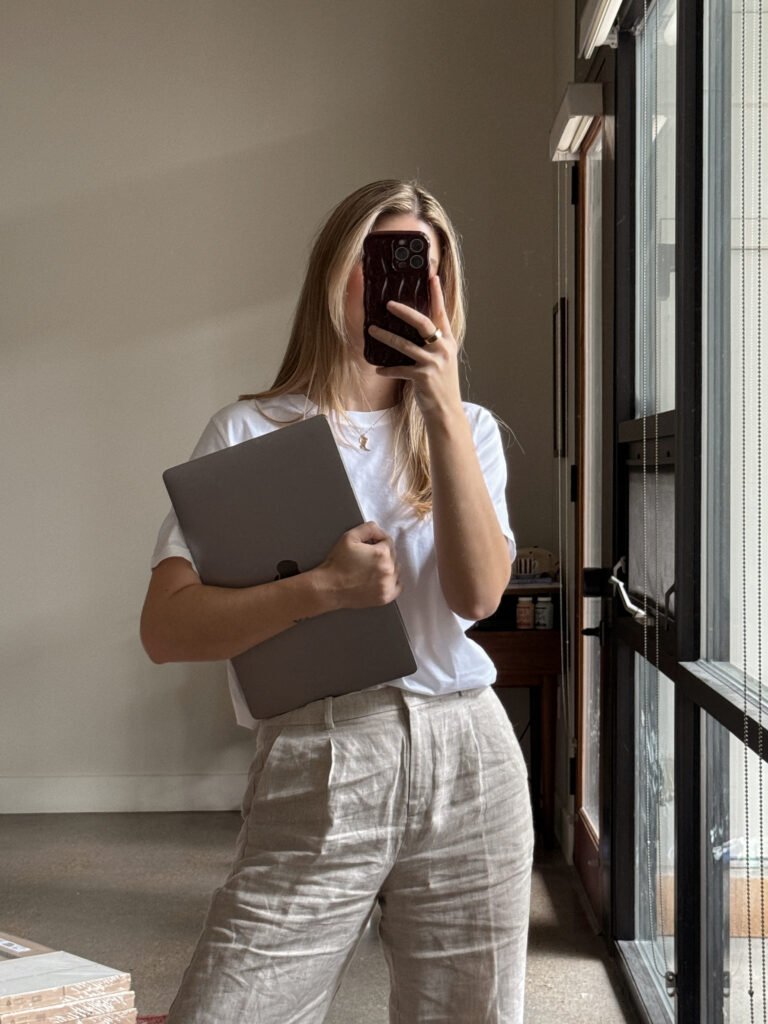
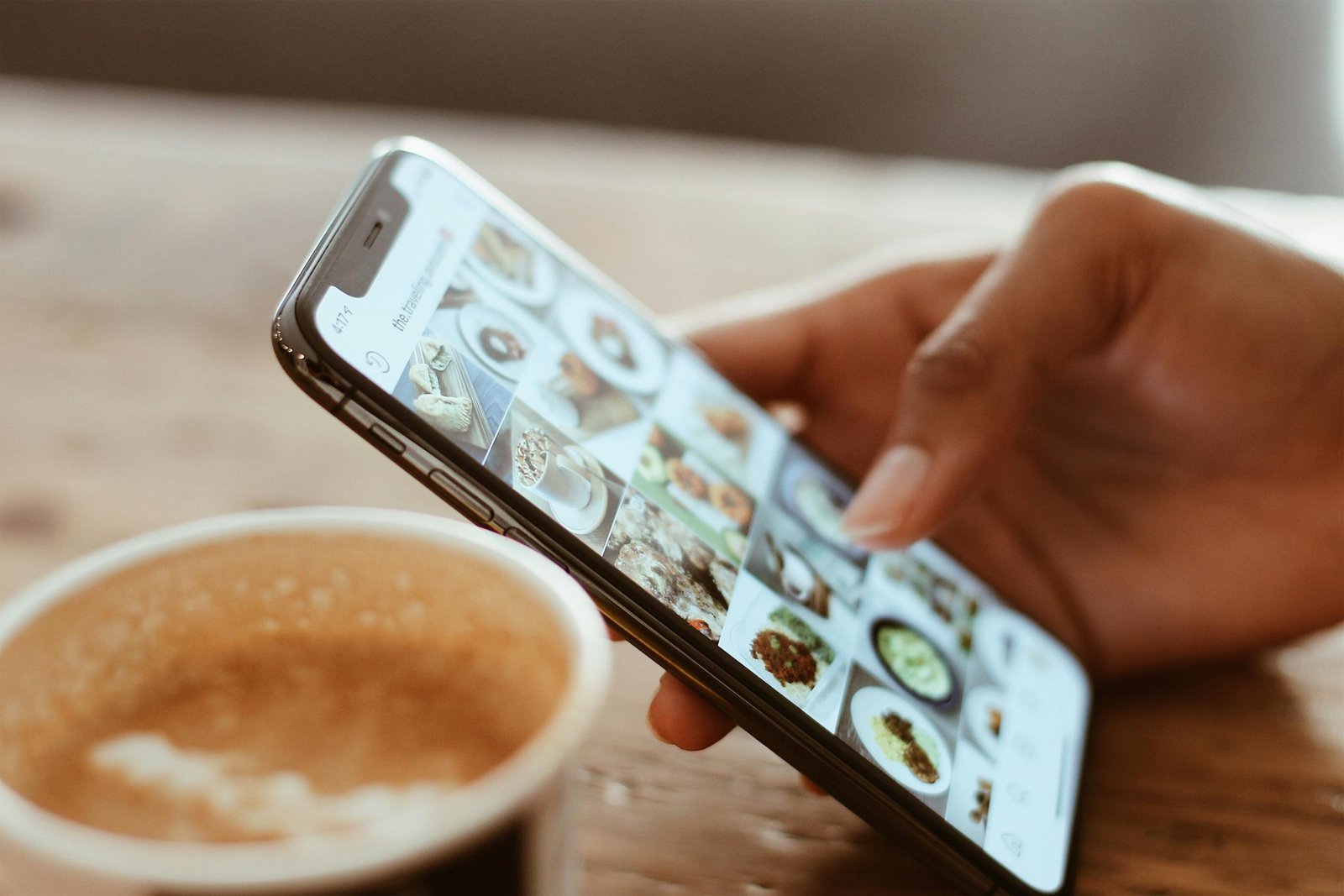
I’ve been where you might be right now: looking to learn how to stop scrolling addiction. I had been aware that something was off, but I wasn’t quite ready to call it addiction. Back then, I told myself I was just tired, overwhelmed, busy with a toddler and work and everything else. Every night I’d go to bed with these big plans for the next morning. They always felt so doable in the quiet of the evening, when the house was still and my mind was full of hope. And then morning came, and nothing happened.
I blamed life, exhaustion and my never-ending to-do list. But the truth was sitting right there in my screen time report: four or five hours a day, lost to scrolling. A “quick break” on the couch turned into an hour without me noticing. I’d sit down to play with my son, hear a notification, pick up my phone “just for a second” — and suddenly I wasn’t on the floor with him anymore. I was deep inside an algorithm, watching someone else’s life. Evenings were the same. My husband would cook dinner, and instead of being present, I’d find myself on YouTube or Instagram, drifting from video to video, completely unaware of the time slipping away.
What I didn’t realize
The worst part? I actually believed I was doing something useful. I followed all these mentors, experts, creators, people who seemed to have life completely figured out. Consuming their content gave me this weird feeling of motion, like I was somehow improving just by watching. But I wasn’t. I was just collecting information I never used, accumulating mental clutter that felt heavy, constant, and numbing.
I didn’t realize how much the scrolling was reshaping everything. My marriage started to feel shallow. My motherhood felt distracted. And the dreams I had for myself kept getting further and further away. Because here’s what scrolling does: it doesn’t just waste time, it steals the part of you that acts, tries, builds, takes risks. You end up watching your own life like it belongs to someone else.

The Turning Point: Deciding to Stop Scrolling Addiction
I tried all the usual tricks — app limits, timers, notifications off. Nothing changed. Every time that little Screen Time alert popped up, I’d hit “ignore for today” without even thinking. Not because I lacked discipline, but because the phone was always right there, offering the quickest escape from whatever uncomfortable feeling I didn’t want to deal with.
The turning point came when I finally saw the truth without any filters: If I didn’t change my relationship with my phone, I would never build anything meaningful. Not as a wife, not as a mother, not as a woman with dreams that require discipline, courage, and actual focus. I had to stop being a spectator.
And that’s where this guide begins. Not with shame, not with judgment, and definitely not with some unrealistic digital detox fantasy. Just a grounded, compassionate, deeply realistic approach to breaking your scrolling habit. We’ll talk about why phone addiction happens (with research, not wishful thinking), what absolutely doesn’t work, and how to stop scrolling addiction and rebuild your attention without throwing your smartphone in the ocean. Because you don’t need a new app. You don’t need to quit technology. You just need to learn how to reclaim your mind.
Why Scrolling Addiction Happens (and Why It Feels Impossible to Break)
Understanding how to stop scrolling addiction starts with understanding why it happens in the first place. Scrolling addiction isn’t a character flaw. It’s not a moral failure or a sign that you’re weak. It’s the completely predictable outcome of using tools that were engineered, with billions of dollars of research behind them, to hijack your attention and keep you hooked for as long as possible. What you’re fighting isn’t “bad habits.” It’s a behavioral system built to win.
Social platforms use something neuroscientists call intermittent variable rewards (the same psychological pattern that powers slot machines). Every swipe offers the possibility of something interesting, comforting, inspiring, entertaining. That tiny “maybe” is potent enough to keep your thumb moving almost on autopilot. Each swipe gives you a small hit of dopamine. Not enough to satisfy you, just enough to keep you wanting more. Over time, this rewires your brain to crave stimulation, novelty, and the emotional escape that scrolling provides.
But dopamine is only part of the story. There are deeper forces at play that explain why stopping feels so hard.

Scrolling soothes discomfort instantly
Whenever you feel anxious, bored, lonely, overwhelmed, insecure, spiritually dry, the phone offers a quick escape. You stop feeling for a moment. You get relief. And that relief is what reinforces the whole habit loop. This is a key reason why breaking phone addiction feels so difficult.
It replaces real effort with the illusion of progress
Scrolling gives you the emotion of growth without requiring the discipline, courage, or actual action that real growth demands. For instance, watching productive people feels productive. Consuming spiritual content feels devout. Listening to self-help feels like self-improvement. However, none of it changes your life.
It fractures your attention so deeply that real life starts to feel harder
Research from APA shows that constant task-switching — especially between emotionally charged content — reduces your ability to focus deeply. As a result, real tasks start to feel overwhelming. Digital tasks feel easy. Your brain naturally chooses the path of least resistance. This is why you can scroll for hours but struggle to clean the kitchen, write a paragraph, pray, plan your week, or sit on the floor fully present with your child. In fact, your mind has been conditioned to expect stimulation, speed, and novelty.
Scrolling addiction isn’t about character. It’s about a rewired nervous system. And before we talk about what actually works, we need to be honest about what doesn’t — the common strategies that fail every single time.
What Doesn’t Work (And Why Most Advice Fails to Stop Scrolling Addiction)
Most people try to fix their scrolling problem with the same predictable strategies: app limits, Screen Time warnings, deleting Instagram for a weekend, turning off notifications, or promising themselves they’ll “just be more disciplined.” These approaches don’t work. Not because you’re weak, but because they don’t address the actual mechanics of social media addiction or the psychological role the phone is playing in your life.
App limits and Screen Time warnings
Your phone is designed to let you override every single limit with one tap. When you’re tired, stressed, bored, or overstimulated, you will always tap “ignore limit for today.” Not because you fail, but because the system is engineered to make the override completely frictionless. A true interruption needs to come from your environment, not from inside the device itself.
Relying on willpower to stop scrolling addiction
Willpower is a terrible strategy for anything involving dopamine. By the time you’re tempted, you’ve already lost. Scrolling is automatic, emotional, fast. Willpower is slow, rational, finite. You cannot out-will the design of an algorithm.
Deleting apps temporarily
Most people redownload everything within days. Why? Because the root issue is still there: the need for escape, stimulation, numbing, fantasy, comparison. Removing the app doesn’t remove the impulse.
Trying to “use the phone mindfully” without changing anything else
Mindfulness only works when the environment around you supports it. If your phone is always in your pocket, always buzzing, always within reach, you can’t expect yourself to rise above instinct every single time.
Blaming yourself instead of the system
Shame keeps you stuck. When you believe you’re the problem, you don’t investigate the real mechanics behind your behavior. And without understanding the mechanics, you can’t break the pattern.
The truth is simple: You cannot solve an attention problem inside the same environment that is actively stealing your attention. Which brings us to the part most people skip — but the part that actually works
How to Stop Scrolling Addiction: A Realistic Approach That Works
Learning how to stop scrolling addiction doesn’t start with rules, apps, or restrictions. It starts with interrupting the automatic patterns that pull you into the phone before you even realize what you’re doing. The goal isn’t to eliminate your smartphone. It’s to rebuild the relationship so you’re the one directing the interaction, not the other way around.

Start with a short, intentional detox
A temporary digital detox is the quickest way to reset your nervous system and regain enough clarity to understand what’s really happening. It doesn’t have to be dramatic or perfect. A weekend is powerful. Two weeks is transformative. A month can be life-changing. The point isn’t to “prove something” or punish yourself. The point is to remove the constant stimulation long enough to notice your impulses, feel the discomfort you’ve been numbing, and understand how often you reach for the phone without thinking. Without this pause, you’re fighting blind.
Interrupt the automatic reach
Scrolling begins before the screen even lights up — it begins with the reach. If your phone is always within arm’s length, the habit wins by default. Changing the location of your phone changes the cue that starts the whole cycle. Leaving it in one designated spot — your kitchen counter, a hallway table, the top of the freezer — breaks the reflex. You introduce friction. You force a moment of awareness before action. That moment is where the habit begins to die.
Change the environment, not just the intention
If your phone looks inviting, it will pull you in. Case closed. This is why grayscale mode, minimalist home screens, and simple cases that close like a book can be surprisingly effective. They remove the visual appeal that triggers the compulsive urge. A phone that looks boring is a phone that stops calling your name.
Reduce dopamine spikes without removing comfort
You don’t need to eliminate rest. You need to eliminate cheap stimulation masquerading as rest. When you stop giving your brain constant spikes of novelty, your baseline resets. Real rest starts to feel restful again. You begin craving quiet, books, journaling, puzzles, conversation, prayer — the things that actually refill you instead of draining you. This is where the real healing happens.
Rebuild analog habits that give your mind a place to land
If scrolling is your only break, you will always go back to it. The antidote isn’t restriction, it’s replacement. When you fill your life with analog rhythms, the phone loses its power. A notebook for your thoughts. A physical planner for your week. A puzzle book for the evenings. A real book on your nightstand. These small anchors help retrain your attention and remind your mind how to rest without a screen.
Accept that real life moves slower — and that’s the point
Scrolling addiction conditions you to expect immediate stimulation, immediate answers, immediate relief. Real life doesn’t offer that, and at first, it feels uncomfortable. But that slower pace is where your actual life exists: your relationships, your work, your faith, your home, your sense of purpose. The discomfort isn’t a sign you’re failing. It’s a sign you’re returning to a human rhythm.
This approach isn’t glamorous. It’s not a hack. It’s a rebuilding. And it works because it honors how the brain actually functions, not how we wish it would.
Stop Scrolling Addiction: Replacing Passive Watching with Active Living
Scrolling addiction convinces you that watching life is enough, that observing other people’s routines, successes, homes, habits, and spiritual practices is almost the same as building your own. But learning how to stop scrolling addiction requires a complete reversal of posture. You stop standing on the sidelines. You step back into your real life with both feet. Scrolling is passive. Living is active. The more you choose action, the weaker the pull becomes.

Reclaim your time by grounding your day in analog structure
It’s nearly impossible to break a scrolling habit if your day has no physical anchors. A phone fills every empty pocket of time by default. A paper planner disrupts that pattern by giving your mind a visual roadmap. With your weekly to-do list in front of you, on paper, beside your laptop, you remember what actually matters. You see what deserves your attention. You stop telling yourself you “don’t have time,” because you watch the truth unfold: five minutes here, ten minutes there, small windows that easily disappear into the void of your apps suddenly become enough to accomplish real, tangible things. Analog structure brings your agency back.
Protect your evenings from blue light and digital overstimulation
Most people don’t realize that scrolling doesn’t just steal time, it destroys rest. Blue light disrupts melatonin production, but the bigger issue is cognitive overstimulation. Your brain never powers down. Even when you’re lying on the couch, your nervous system is still firing. When you put the phone away at night, you make room for something better: conversation, slow dinners, shared activities, quiet rituals that strengthen your home. Some of the most healing moments of my own journey happened on evenings without screens — crossword puzzles with my husband, simple meals, laughter, the kind of peace you don’t notice you’re missing until it returns. Protect your nights, and your days begin to heal.
Track your real usage (it’s more motivating than you expect)
There’s something incredibly grounding about watching your screen time drop from hours to minutes. Not because of shame, but because of clarity. You begin to see what your life feels like without the constant pull; you notice the weight lifting from your mind; you notice your attention returning. And the truth is refreshing: the less you scroll, the more you actually live. This isn’t about perfection. It’s about ownership.
Restoring Your Life: Why the Analog World Matters More Than Ever
You can’t break phone addiction by fighting your phone forever. At some point, you have to build a life compelling enough that the digital world stops feeling like the only place worth being. Real connection takes time. Real friendships take intention. And real creativity takes boredom, silence, and mental space. A real spiritual life takes presence. None of those things can survive when your attention is constantly being siphoned away.
We’ve normalized a pace of living that no human mind was built for. When you step back into the analog world — its slower rhythms, its deeper bonds, its physicality — you begin to feel human again. Rebuilding analog life doesn’t mean rejecting technology. It means refusing to let technology flatten your existence. It means choosing depth over speed, presence over performance, reality over simulation.

Your Mind Can Be Yours Again: Final Steps to Stop Scrolling Addiction
Breaking your scrolling habit isn’t about deprivation. It’s about restoration. It’s about reclaiming the part of you that modern life has stretched thin and scattered across a thousand apps and feeds. And the good news, the hope I want you to hold onto, is that you don’t need a perfect plan or superhuman discipline to stop scrolling addiction. You need willingness, structure, and a few practical, human-centered steps.
Your attention is one of the most precious things you have. Guard it. Direct it. Honor it. Because a woman who owns her attention owns her life. And let me be clear about something: you don’t need to throw your smartphone away to live a bold, present, meaningful life. You need to learn to treat it as a tool, not a master.
When you do, the world opens back up. Ideas return. Purpose sharpens. Your relationships deepen. Home feels warmer. Your days feel longer. You stop watching life. And you start living it. You stop scrolling. You come back to yourself again.
For a deeper understanding of why scrolling feels impossible to break and the complete system to reclaim your attention, read: How to Stop Scrolling (Complete Guide)
Ready to Take the Next Step to Stop Scrolling Addiction?
If this guide resonated with you, you’re not alone. Thousands of women are reclaiming their attention and rebuilding their analog lives — and you can join them.
Subscribe to The After Scroll newsletter for weekly insights, practical strategies, and honest reflections on living intentionally in a distracted world.