Organize your closet for a new season with a calm, step-by-step reset—edit, store, and style your wardrobe so getting dressed feels light and intentional again.
The first truly new-season morning always feels a little electric.
You open your window, the light looks different, and suddenly the chunky knits and heavy coats that felt perfect a few weeks ago don’t match the day in front of you. You’re ready for lighter fabrics, easier outfits, and a closet that actually reflects the season you’re in now.
This isn’t about starting over or building a capsule from scratch. It’s about giving your closet a calm, intentional reset so getting dressed feels inviting instead of chaotic—without turning your bedroom into a tornado of clothes.
Think of this as a seasonal edit you can return to again and again: gentle, repeatable, and aligned with the kind of home you’re already creating in pieces like How Your Home Is Training You to Scroll and How to Refresh Your Space for Spring: Easy Decor Swaps.
Start With the Season You’re Dressing For
Before you touch a single hanger, get clear on the upcoming season and life you’re dressing for, not just the clothes you already own.
Ask yourself:
- What does a normal week look like in this season—work, weekends, evenings?
- Which fabrics, colors, and silhouettes I own do I actually reach for then?
- How do I want my closet to feel when I open it—airier, softer, more edited, more playful?
You’re not trying to build a fantasy wardrobe. You’re matching your closet to the season you’re actually living.
A few tiny guardrails help:
- Choose a loose color story for this season (for example: navy, white, camel, soft green).
- Decide on 2–3 go-to “uniforms” (e.g., jeans + tee + blazer; midi dress + cardigan; trousers + knit).
Everything else you do in this reset should support those choices.

Step 1: Give Yourself a Clear Container
Closet projects get overwhelming when they feel endless. Instead of “organize my closet,” give yourself a clear container:
- One closet (not every wardrobe in the house)
- One afternoon or evening
- One simple goal: “When I open the door, I can see what I wear this season at a glance.”
Before you start, borrow an idea from your broader home environment work in How Your Home Is Training You to Scroll: change the cues.
- Put your phone in another room or in its “home” for the next hour.
- Turn on a playlist, podcast, or quiet background audio.
- Fill a water bottle, light a candle if that’s your thing, open a window if you can.
You’re telling your brain: this is not a rushed declutter; this is a small, seasonal ritual.
Step 2: Edit in Gentle Layers (Not in One Giant Pile)
The dramatic “dump your entire closet on the bed” method looks satisfying on TikTok but can feel intense in real life. Instead, work in layers so your room stays functional.
- Start with the obvious off-season pieces.
- Heavy coats and puffers
- Thick turtlenecks and wool dresses
- Boots you won’t touch until next season
- As you pull, make three simple piles or bins:
- Store for later – you love it, but it’s wrong for this season.
- Pass on – it doesn’t fit, feel good, or match your current life.
- Question mark – you’re unsure; you’ll try it on in Step 3.
- Leave everything you actually wear in this in-between season on the rail for now.
You’re not judging every item at once. You’re gently skimming off what clearly doesn’t belong right now.
Step 3: Try-On Session With Your Real Life in Mind
Next, move to the question mark pile and any borderline pieces still in the closet.
Try things on with your actual calendar in mind:
- Do you have places to wear this in the next 2–3 months?
- Does it work with at least two other items you’re keeping?
- Do you feel like yourself in it—or like a past version you’re ready to retire?
If something is almost right but needs a tweak (shorter hem, waist taken in, new buttons), start a small “tailor” pile instead of letting it haunt your rail.
Remember: your goal is not a perfect, minimalist wardrobe. It’s a closet that quietly supports the life you’re already living and the small rebrands you’re working on elsewhere in your home and routines.
Step 4: Create Zones That Make Getting Dressed Feel Easy
Once you’ve edited, it’s time to rebuild the closet layout so your everyday outfits are impossibly easy to reach.
Think in zones instead of a single packed rail:
- Front-Row Daily Wear
- Hang your most-worn tops, pants, and dresses for this season at eye level.
- Group by category first (all shirts together, then pants, then dresses), then by color if that feels good.
- Make sure your 2–3 “uniforms” live here front and center.
- Seasonal Extras
- Occasion pieces, special fabrics, and less-used silhouettes can live toward one side of the rail.
- You still see them, but they’re not competing with your Tuesday-morning outfit.
- Off-Season & Backstock
- Use higher shelves, under-bed bins, or a secondary rail for heavy winter pieces and truly off-season items.
- Label containers simply (“Winter knits”, “Holiday dresses”) so they’re easy to grab when the weather flips again.
If you’ve enjoyed creating targeted spaces like a reading nook you’ll choose over scrolling or a phone-free living room you’ll love, think of your closet the same way: a tiny room with a clear job.
Step 5: Style Your Closet Like a Tiny Room
A seasonal closet reset isn’t only about function; it’s also about making this small space visually pleasant enough that you actually want to open it.
You don’t need a custom system to do this. A few small upgrades go a long way:
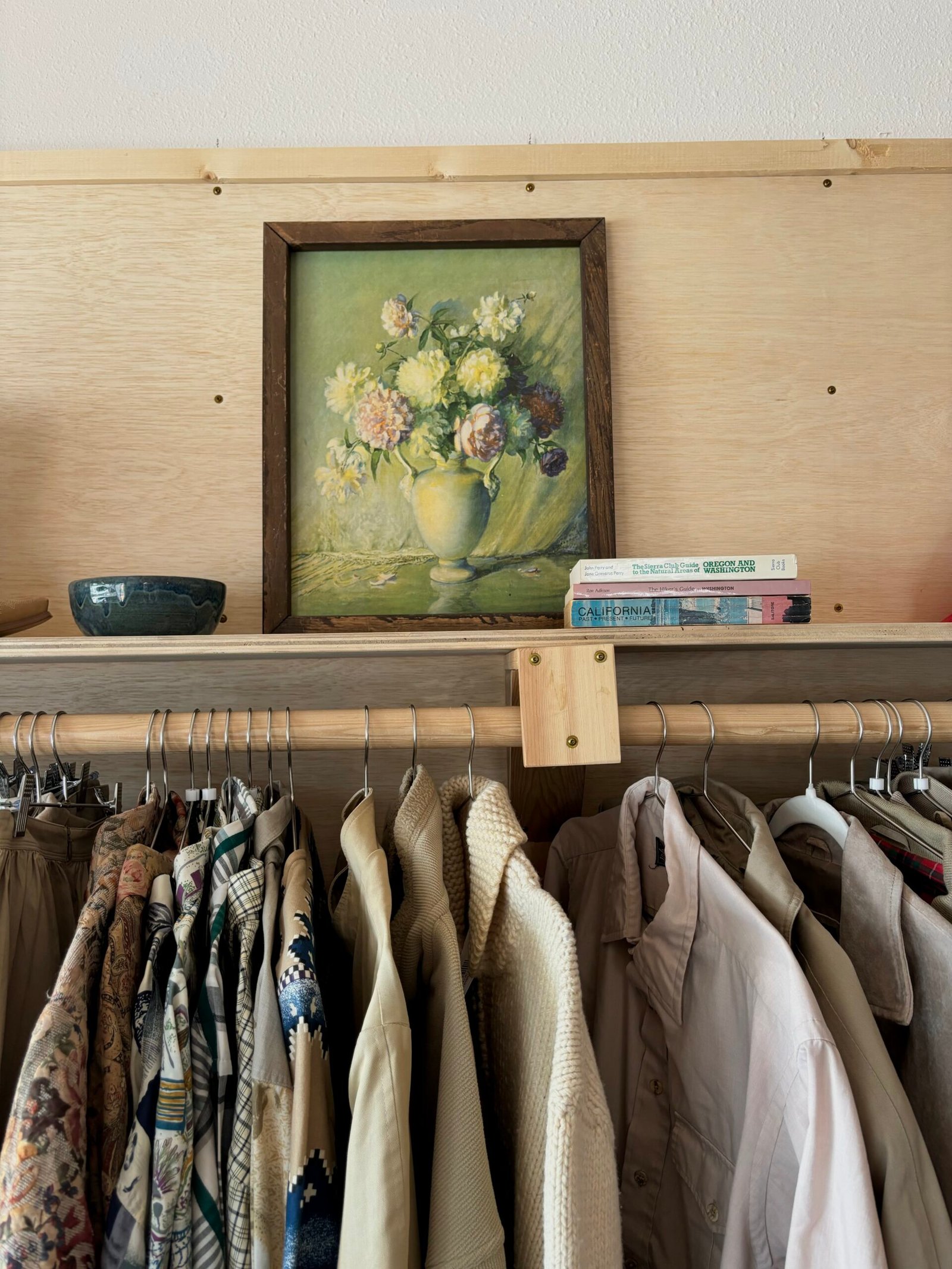
- Unify your hangers. Even swapping to one or two consistent styles (wood or slim velvet) instantly calms the rail.
- Use simple dividers. Shelf dividers or small open bins for sweaters, bags, and denim keep stacks from collapsing.
- Add one tactile element. A woven basket for scarves, a small ceramic tray for jewelry, or a linen box for belts.
- Invite a hint of the season in. A lavender sachet, a small framed photo, or a swatch of your seasonal color palette.
Research highlighted in pieces like How to Refresh Your Space for Spring: Easy Decor Swaps pulls from work such as the University of Minnesota’s overview on how nature impacts our wellbeing and the American Psychological Association’s article on feeling nurtured by nature. You don’t have to turn your closet into a greenhouse—but a single natural touch (wood, woven fiber, a small plant nearby) can make the whole space feel more alive.
Step 6: Let Your Closet Support Your Screen-Light Habits
A seasonal closet reset is also a chance to quietly retrain your evenings and mornings.
A few small experiments:
- Phone-free outfit planning. Decide tomorrow’s outfit while your phone charges in another room, the same way you might when you’re protecting a screen-light bedroom from How to Turn Your Bedroom Into a Screen-Free Sleep Sanctuary.
- Create a tiny “getting dressed” ritual. Soft music, a candle on a nearby dresser, two minutes to choose jewelry or a scarf.
- Pair your reset with one analog habit. After you hang up tomorrow’s outfit, read a few pages in your current book or jot down tomorrow’s plan.
You’re stacking habits: a closet that’s easier to use, and a rhythm that makes your phone slightly less central to how you begin and end the day.
Step 7: Build a Simple Seasonal Maintenance Loop
Once you’ve done one full reset, you don’t need to repeat it every weekend. Instead, add a few light-touch habits that keep the closet feeling seasonal:
- Once a week, do a 5–10 minute tidy: re-fold sweaters, rehang anything that slipped off hangers, move any obvious off-season pieces up and out of the way.
- Once a month, choose 3–5 items to reevaluate—especially anything you keep skipping.
- At the end of the season, repeat the gentle layering process: skim off what clearly won’t be needed and store it, then make space for what’s coming.
If you’re doing a broader seasonal reset with your home or habits, you can pair this with the digital side using Spring Cleaning Your Digital Life: Inbox, Photos & Files so your closet, screens, and spaces all feel a little lighter at once.
Your goal isn’t a museum-precise wardrobe. It’s a closet that feels like a quiet “yes” to the season you’re in.