Disclosure: This post may contain affiliate links. If you click and make a purchase, we may receive a small commission at no extra cost to you. We only recommend products we genuinely use, love, or believe align with the After Scroll philosophy.Creating a morning routine for kids without screens felt impossible—until I saw how much screens were quietly ruining our days. This is what happened when I removed them, and what we do instead.
I never intended to become the kind of parent whose toddler couldn’t function without a screen.
When I first introduced screen time, it was for a specific, well-intentioned reason. We live in a bilingual household—my native language is Portuguese, but my husband speaks English. I worried that our son, who was almost two, wasn’t getting enough exposure to English in his daily life. I could see it bothered my husband a little, noticing which words our son understood and which ones he didn’t. So I thought: maybe a show could help. Something educational. Something harmless.
I tested a few options. Most of them, honestly, I didn’t like. I’m not a fan of shows that try to teach kids emotional lessons through cartoon characters—not because the lessons are bad, but because I’d have to watch and analyze every episode to make sure I agreed with what was being taught. That felt exhausting. So when I found Mickey Mouse Clubhouse, it seemed perfect. It was genuinely educational in the most straightforward way: colors, numbers, shapes, songs, rhymes. Innocent. Safe. The kind of show I felt good about letting my son watch.
At first, it was just one episode. That’s it. One episode a day, and we were done.
But then, slowly, without me fully noticing, it started growing. He was a little fussy one morning? Put on a show to calm him down. I needed to distract him for a few minutes? Put on a show. Any excuse started to justify turning on the screen. And before I knew it, the TV was on constantly—sometimes just playing in the background like a soundtrack, even when he wasn’t actively watching.
Months passed. And suddenly, the screen was nonstop.
When I Realized We Had a Problem
My husband started noticing it too, especially when our son began refusing to eat unless a show was playing. Mealtimes, which used to be calm and focused, turned into negotiations. He’d get upset—genuinely upset—if the TV wasn’t on. And that bothered both of us, but we didn’t connect it to anything bigger yet.
The moment I realized how bad things had gotten was when my son started having serious trouble sleeping.
He’s almost two now (one year and ten months, to be exact), and he’d always been a good sleeper. But suddenly, he’d lie in his crib for one to two hours—awake, crying, unable to settle. This wasn’t normal for him. He’d never been the kind of kid who fought sleep or needed hours to wind down. Something was wrong, but I didn’t know what.
At first, I thought it might be his routine. Maybe his nap schedule was off or dinner was too late. Maybe he needed more physical activity during the day. I ran through every possible explanation, adjusting things here and there, but nothing seemed to help.
And then I had this instinct—this gut feeling I couldn’t ignore: I need to test removing the screens.
The First Day Without Screens
On the first day, I let him watch one episode in the morning. That was it. No more screens for the rest of the day.
That night, when we put him in his crib, he didn’t cry. He still took about an hour to fall asleep—longer than I would have liked—but he didn’t cry. And for us, that was huge. The crying had been the worst part. Hearing him upset, not knowing why, feeling helpless. Just the absence of that was a massive relief.
I didn’t say anything to my husband yet. I wanted to see if it was a coincidence or if the pattern would hold.
The second day, I told my husband what I was testing. I explained that I thought the screens might be affecting our son’s ability to sleep, and I wanted to see what happened if we kept them off. That night, my husband put our son to bed. And this time, not only did he not cry—he asked to go to bed. He literally threw himself into the crib, ready to sleep.
When my husband came back downstairs, he looked at me and said, “The test is confirmed. There’s no doubt.”
It was the screens. The whole time, it had been the screens.
How Screens Became a Snowball
Looking back, I can see exactly how it happened. And the scariest part is how invisible the process was.
Screens didn’t ruin our son’s mood or sleep patterns overnight. It was gradual. Slow. A little more screen time here, a little more there. And because he seemed calmer while watching—because putting on a show was an easy way to settle him down in the moment—I kept using it as a solution.
But I was solving the wrong problem. The screens weren’t calming him. They were overstimulating him, making him more irritable, harder to settle, and more dependent on that stimulation to feel okay. And the more irritable he got, the more I reached for screens to calm him down, which made everything worse. It was a cycle. A snowball.
By the time he was struggling to sleep, his nervous system was so overstimulated that lying still in a quiet, dark room felt impossible. And the crying? That was his body trying to regulate itself after hours of sensory overload.
Once we removed the screens, everything started shifting. He slept better and woke up less irritable. He didn’t need constant distraction to feel okay. The difference was undeniable.
What Our Morning Routine Looks Like Now (Without Screens)
I’m not going to pretend we’re a completely screen-free household. We’re not. My son still uses FaceTime to talk to his maternal family in Brazil—his grandparents, his uncle, other relatives. That’s important, and I’m not cutting that off.
And I’ll be honest: I still use screens occasionally when I need to. We live in a small apartment with limited space, and my husband has a lot of hunting and fishing equipment that we can’t fully childproof. The safety gate between the living room and kitchen only works under pressure—our landlord won’t let us drill into the walls—so my son has figured out how to get past it. When I take a shower in the morning after exercising, I need him to be safely occupied. There have been moments where I’ve gotten out of the shower to find him in places he shouldn’t be, and it scared me. So yes, sometimes I put on a show so I can shower without worrying about his safety.
But here’s the difference: we use screens intentionally now. Not as background noise. Not as a default solution. And never as a chain of episodes that goes on indefinitely.
When screens are off—which is most of the time—our mornings look like this:
1. Physical activity comes first.
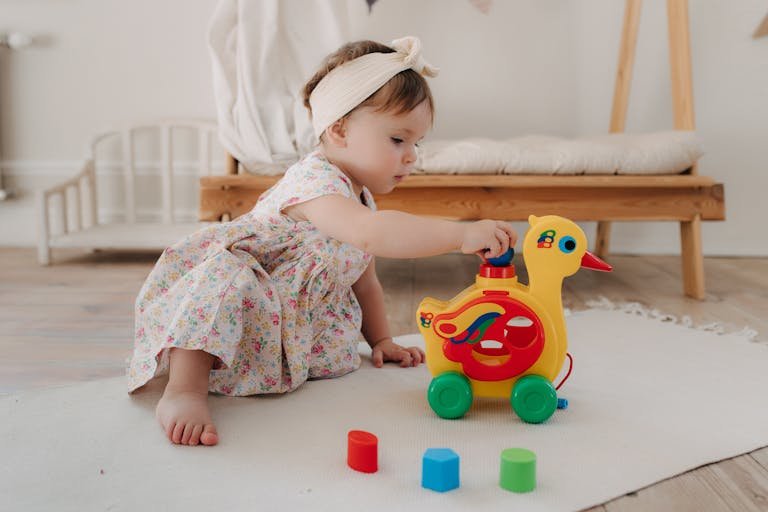
My son needs to move. Kids need to move. I take him to a playspace near us a few times a week—it’s $50 a month, and it has climbing structures, toys, other kids to play with. It’s worth every penny. On days we don’t go there, we go outside. We walk and explore. We let him bun energy in a way that screens never could.
2. We don’t turn on the TV just because mornings feel hard.
Mornings with a toddler are hard. But turning on a screen to avoid the difficulty doesn’t actually make it easier. It just delays the difficulty and makes the rest of the day worse.
3. We keep mealtimes screen-free.
Always. No exceptions. Eating is for eating. If he doesn’t want to eat, that’s fine. But we’re not using screens to force compliance.
4. We notice the difference when we slip.
There are weekends when we get lazy. When we want to stay in bed a little longer, so we turn on the TV. And every single time, we see the difference in our son the next day. He’s more irritable. He asks for screens. He cries more easily. Even one morning of extra screen time has a visible impact. That’s how sensitive kids’ nervous systems are to this stuff.
How to Remove Screens If They’ve Already Become a Problem
If you’re reading this and realizing that screens have taken over your child’s mornings—or their entire day—I get it. And I’m not here to judge you. This stuff is hard. Parenting is hard. And screens are designed to be compelling. They’re not easy to resist, for kids or adults.
But if you want to change the pattern, here’s what I’d suggest based on what worked for us:
Start with a test.
You don’t have to commit to anything long-term yet. Just try one day—or even one morning—without screens. See what happens. Notice how your child sleeps that night. Notice their mood the next day. You might be surprised.
If your child is old enough, have a conversation.
If your kid is three, four, five years old—old enough to understand—talk to them. Explain that screens don’t make them feel good, that you made a mistake letting them watch so much, and that you’re going to help them feel better by watching less. Don’t make it punitive. Make it collaborative.
Replace screens with something, not nothing.
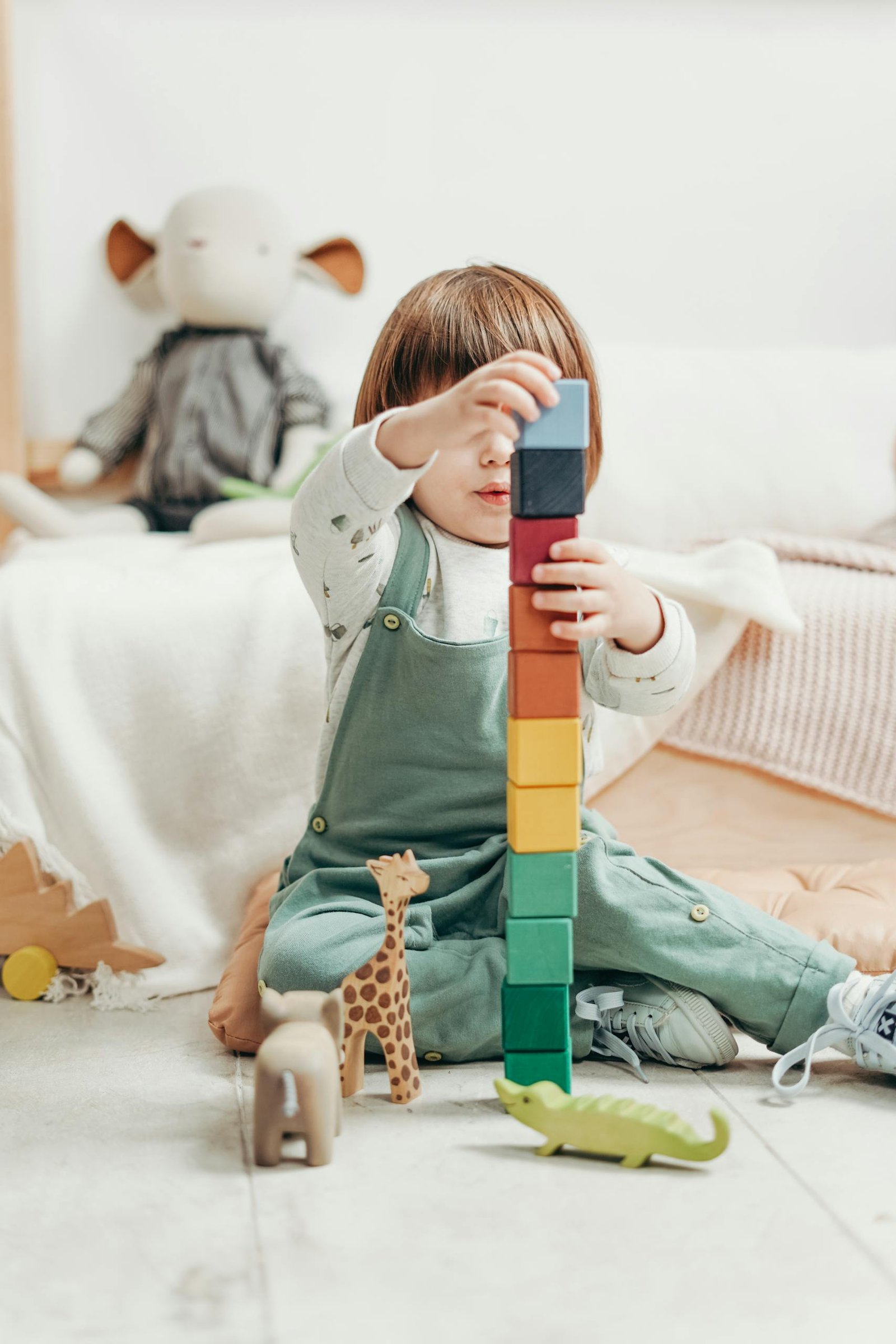
You can’t just take away the thing that’s been occupying their time and attention without offering an alternative. Physical activity is the best replacement. Parks, playgrounds, playdates, anything that gets them moving. If you don’t have access to outdoor spaces, even just playing with blocks, building forts, dancing to music—anything that engages their body and imagination.
In our case, simple building toys made a huge difference. Magnetic tiles, like this one, became one of the easiest screen replacements—open-ended, physical, and engaging without overstimulation.
You have to model it.
This is non-negotiable. If you’re on your phone all morning, scrolling TikTok or Instagram while telling your kid they can’t watch TV, it won’t work. Your TikTok videos are their cartoons. Your phone addiction is their screen addiction. If you’re struggling with your own screen use, After Scroll has a lot of posts that can help (I’ll link some at the end). But you can’t ask your child to do something you’re not willing to do yourself.
Expect resistance. It’s temporary.
The first few days will be hard. Your kid will ask for screens. They’ll be frustrated. They might cry. But that’s withdrawal, not evidence that you’re doing something wrong. Stick with it. The irritability fades. The sleep improves. The calm returns. It just takes a few days.
What I Wish I’d Known From the Beginning
If I could go back and talk to myself before I introduced screens, here’s what I’d say:
Screens aren’t neutral. They’re not just a tool. They’re not “educational” in the way we want to believe. Even the most innocent, well-designed kids’ shows are engineered to capture and hold attention in ways that affect the developing brain. And once that pattern is established, it’s hard to undo.
The snowball starts small. You won’t notice it at first. One episode becomes two. Morning screen time becomes all-day screen time. The irritability creeps in so gradually that you don’t connect it to the screens. By the time you realize what’s happening, the dependency is already there.
You don’t owe screens to your child. I felt guilty saying no to screens, like I was depriving my son of something other kids had. But screens aren’t a right. They’re not something kids need. And the guilt I felt for limiting them was nothing compared to the guilt I felt once I realized how much harm they’d been doing.
Physical activity is non-negotiable. Kids need to move. Their bodies are designed to run, jump, climb, explore. When we keep them inside, strapped into seats, staring at screens, we’re working against their biology. And then we wonder why they’re so restless and hard to manage.
Mornings set the tone for the entire day. If the morning starts with screens, the rest of the day will be shaped by that. The overstimulation, the irritability, the difficulty transitioning—it all compounds. But if the morning starts calm, active, and screen-free, everything flows better.
Why a Morning Routine for Kids Without Screens Actually Matters
This isn’t about being a perfect parent or adhering to some idealized version of childhood. It’s about noticing what’s actually working and what’s quietly making life harder.
For us, removing screens from our morning routine didn’t just improve our son’s sleep. It improved his mood. His ability to play independently and his patience. His willingness to engage with the world instead of waiting for the next episode to start.
And it improved our mornings too. We’re not negotiating and we’re not managing meltdowns caused by turning off the TV. We’re not watching our son zone out in front of a screen, wondering if this is really what we want for him.
Mornings are still hard sometimes. Toddlers are hard. But they’re hard in a way that feels manageable now. Not hard in the way that makes you feel like you’re constantly losing a battle you didn’t choose to fight.
If you’re struggling with this—if screens have taken over your mornings and you’re not sure how to take them back—I promise it’s possible. It’s not easy. But it’s possible. And the difference, once you see it, is impossible to ignore.
If this resonated, you’ll probably feel at home in our Digital Wellness essays. Most of the work here is about noticing what quietly makes life harder—and learning how to step back before it becomes normal.
→ Explore the Digital Wellness archive
→ Subscribe to the After Scroll Substack