

Disclosure: This post may contain affiliate links. If you click and make a purchase, we may receive a small commission at no extra cost to you. We only recommend products we genuinely use, love, or believe align with the After Scroll philosophy.Finding screen-free activities for kids shouldn’t feel like an uphill battle. This list offers practical, tested ideas that work for different ages, energy levels, and situations—no screens required.
If you’ve ever tried to pry a tablet out of your child’s hands, you know how hard it is to compete with screens. The colors, the sounds, the instant gratification—screens are designed to be compelling. And most screen-free activities feel… boring by comparison.
But here’s what I’ve learned: kids don’t actually prefer screens. They prefer stimulation, autonomy, and novelty. Screens just happen to deliver those things with zero effort.
The real challenge isn’t finding screen-free activities for kids. It’s creating an environment where those activities feel more appealing than reaching for a device.
This isn’t a guilt trip. It’s a practical resource. Whether you’re trying to reduce screen time gradually or looking for alternatives during specific times of day, these ideas come from a careful curation of real-life experiences, research, and patterns observed across families navigating the same challenge.
Why Screen-Free Activities Matter (Beyond the Obvious)
Most conversations about kids and screens focus on what screens are doing to children: reduced attention spans, sleep disruption, behavioral issues, less physical activity.
All of that is true. But focusing only on the negatives misses something important: what kids lose when screens fill their time.
They lose:
- The ability to tolerate boredom without immediate stimulation
- Practice solving problems independently
- Time to develop hobbies that require sustained focus
- Opportunities to use their imagination without external direction
- The experience of creating instead of just consuming
Screen-free activities aren’t just “better for kids.” They’re essential for building skills that screens can’t teach: patience, creativity, resourcefulness, and the confidence that comes from making something with your own hands.
Screen-Free Activities for Kids (Ages 4-12)
Creative & Building Activities
1. Build with anything.
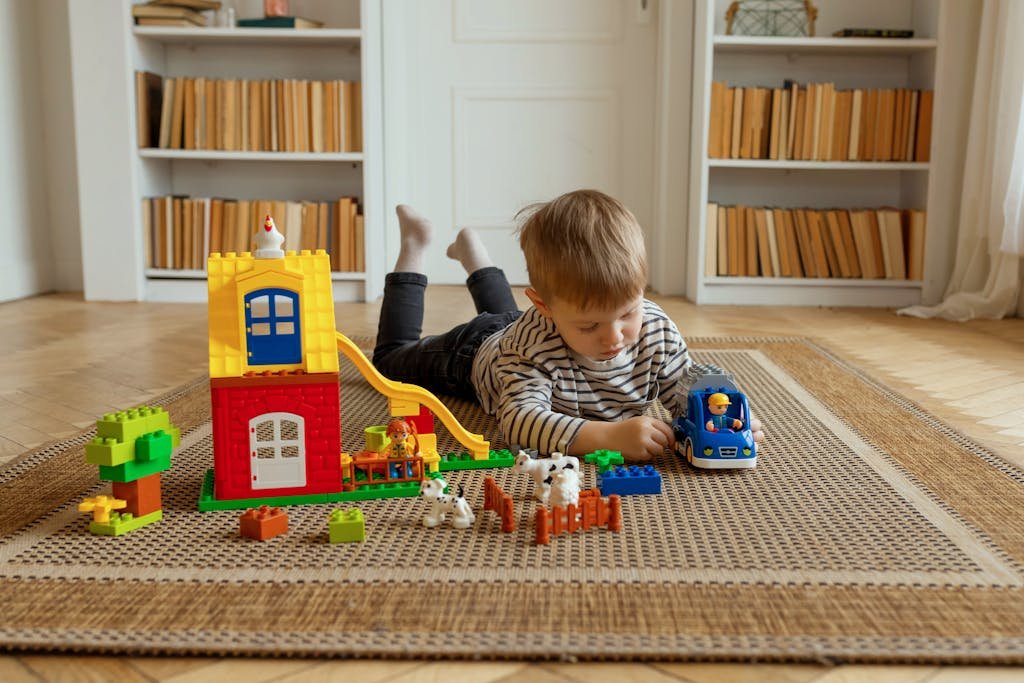
Blocks, LEGOs, cardboard boxes, pillows, blankets. Building engages spatial reasoning, problem-solving, and patience. Let them build without instructions. The messier, the better.
2. Art with real materials.
Not coloring apps. Actual paper, markers, paint, scissors, glue. Set up a dedicated art space where mess is allowed. When my son got old enough to hold crayons, I stopped worrying about the table getting marked up. Art supplies that live in sight get used more than supplies hidden in closets.
3. Craft kits (but not the overly structured ones).
Look for kits that require actual decision-making: jewelry making, model building, sewing projects. Avoid kits where every piece is pre-determined and the child is just following instructions. The goal is creation, not compliance.
4. Playdough, clay, or kinetic sand.
Tactile activities calm kids down while keeping their hands busy. Add tools—rolling pins, cookie cutters, plastic knives—and let them experiment.
Physical & Outdoor Activities
5. Playground time.
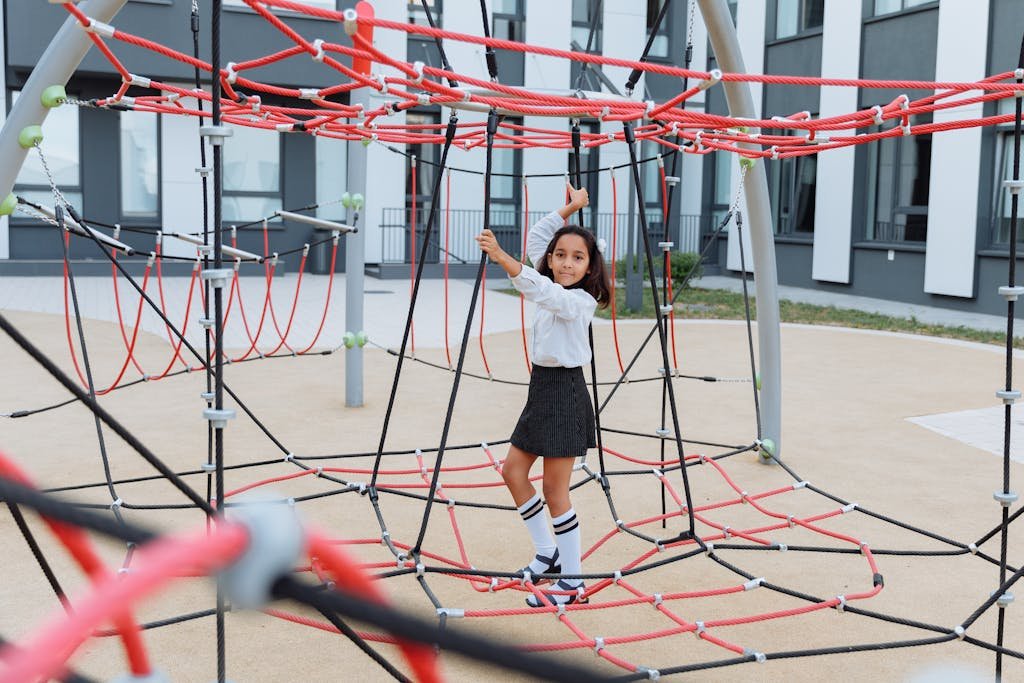
Obvious, but underutilized. Playgrounds offer physical challenge, social interaction, and sensory variety. Go even when it’s cold. Dress them warm and let them move.
6. Scavenger hunts.
Create a list of things to find: a smooth rock, something red, a feather, three different leaves. Works indoors or outdoors. Kids love the challenge of locating specific items.
7. Obstacle courses.
Use furniture, pillows, tape on the floor. Time them. Let them design their own. Physical activity that feels like play, not exercise.
8. Bike riding, scootering, skating.
Any activity that involves speed and movement. Kids need to go fast sometimes. Screens don’t provide that.
9. Nature walks (with a purpose).
Don’t just walk. Collect things. Identify birds. Look for animal tracks. Count how many different types of trees you see. Purpose transforms a boring walk into an adventure.

Imaginative Play
10. Pretend play with real-life tools.
Kids are obsessed with doing what adults do. Give them a toy kitchen, play tools, a toy vacuum, a pretend cash register. My son is two, and he’s far more interested in a toy screwdriver than any flashy electronic toy. Kids want to feel capable and grown-up.
11. Dolls, action figures, stuffed animals.
Let them create worlds. Narratives. Conflicts. Resolutions. This is where storytelling skills develop. Don’t interrupt. Don’t correct. Just let them play.
12. Dress-up clothes and costumes.
Capes, hats, old clothes, accessories. Let them become someone else. Imagination needs props.
13. Build a fort.
Blankets, chairs, couch cushions. Forts are magic. They create a space that feels separate and special. Kids will play in a fort for hours.

Games & Puzzles
14. Board games.
Age-appropriate games teach turn-taking, strategy, and losing gracefully. Start simple: Candy Land, Chutes and Ladders, Connect Four. Graduate to more complex games as they grow.
15. Card games.
Go Fish, Uno, War. Easy to learn, endlessly replayable, portable.
16. Puzzles.
Jigsaw puzzles build patience and spatial reasoning. Start with age-appropriate piece counts and increase difficulty over time. Puzzle night with pizza became a weekend tradition in our house—it’s quiet, focused, and screen-free.
17. Word games and brain teasers.
Crosswords (age-appropriate versions), word searches, riddles, “I Spy.” My husband and I do simple crosswords together with our son nearby. He can’t read yet, but he’s learning that problem-solving can be collaborative and fun.
Social & Group Activities
18. Playdates.
Invite other kids over. Free play without adult direction. Kids entertain each other, and you get a break.
19. Team sports or classes.
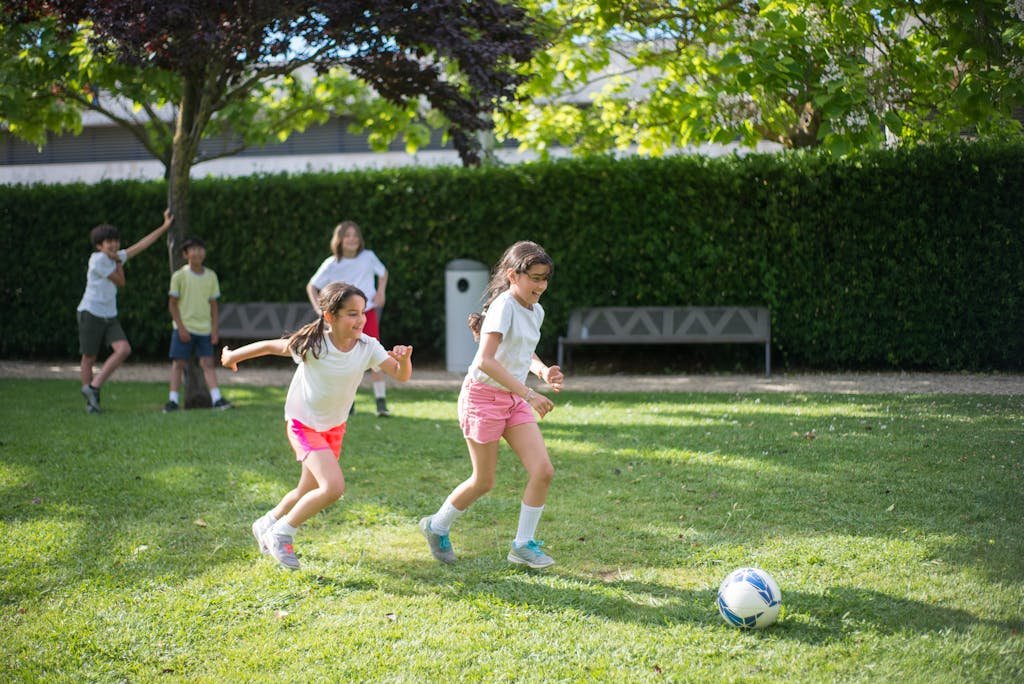
Soccer, swimming, gymnastics, dance, martial arts. Structured physical activity with social interaction built in.
20. Visits to play spaces or play cafés.
If you have access to indoor play spaces (especially helpful in winter or rainy weather), use them. These spaces are designed for active play and social interaction. We go to a local play space a few times a week—$50/month for unlimited visits. Climbing structures, toys, other kids. My son burns energy, I get to sit with coffee, everyone wins.

Independent & Quiet Activities
21. Books.
Read to them when they’re young. Let them read independently as they grow. Audiobooks count. The goal is story absorption, not just physical reading.
22. Listening to music or audiobooks.
This counts as screen-free even though it’s digital. Music and stories don’t demand visual attention. Kids can listen while drawing, playing, or just lying down.
23. Building models or kits.
Age-appropriate models (cars, planes, etc.) that require following instructions and careful assembly. This teaches focus and delayed gratification.
24. Journaling or drawing.
For older kids, a blank notebook and some pens can become a daily habit. Let them draw, write, doodle—whatever helps them process their day.
25. Hobby development.
Help them find something they genuinely enjoy. Collecting rocks. Learning about dinosaurs. Drawing animals. Building with a specific LEGO theme. Hobbies give kids a sense of identity beyond what they consume.
What Works Better Than Forcing It
The mistake most parents make (myself included) is treating screen-free time as punishment. “No iPad until you do X.” “You’ve been on screens too long—go outside.”
That framing makes screens the reward and everything else the obligation.
What works better:
- Make screen-free activities the default. Screens aren’t the baseline. They’re the exception.
- Remove friction. Art supplies visible and accessible. Outdoor toys easy to grab. Books within reach.
- Participate sometimes. You don’t need to entertain them constantly, but playing together occasionally makes activities feel valuable.
- Let them be bored. Boredom is not an emergency. It’s the space where creativity begins.
When Screens Make Sense
I’m not anti-screen. Screens have a place. But that place is narrow and specific:
- Long car rides
- When you need to cook dinner and your toddler is melting down
- Educational content that genuinely teaches something (not everything labeled “educational” actually is)
- Designated family movie nights
The key is intention. Screens as a tool, not a default. Screens when needed, not whenever it’s easier.
Final Thoughts on Screen-Free Activities for Kids
Kids don’t need to be entertained every second. They need space, materials, and time. Most screen-free activities don’t require money or elaborate planning. They require presence and patience.
The goal isn’t perfection. It’s creating an environment where reaching for a screen isn’t the first, easiest option.
Start small. Pick three activities from this list. Make them accessible. See what happens.