
Disclosure: This post may contain affiliate links. If you click and make a purchase, we may receive a small commission at no extra cost to you. We only recommend products we genuinely use, love, or believe align with the After Scroll philosophy.Slow productivity is often framed as a softer alternative for people who are “burnt out” or disillusioned with hustle culture. That framing misses the point entirely. Slow productivity is not a trend. It is not a luxury. It is not something you try when you’re tired of working hard.
For women—especially women who want both meaningful work and a family—slow productivity is the only model that aligns with biological reality, long-term mental health, and the desire to build a career that bends instead of breaks under pressure.
When Biology Meets Corporate Reality
The modern productivity model was not designed with women in mind. It was built around linear output, constant availability, and sustained intensity—assumptions that map neatly onto a male hormonal cycle but clash violently with the cyclical nature of the female body. Women do not operate at the same energetic, emotional, or cognitive baseline every single day of the month. Pretending otherwise comes at a cost: chronic stress, anxiety, hormonal imbalance, burnout, and a deep, pervasive sense of personal failure for not being able to “keep up” with a system that was never neutral to begin with.
This becomes even more stark when motherhood enters the picture. Pregnancy, postpartum, and early motherhood are fundamentally incompatible with environments driven by rigid deadlines, performance metrics, and constant pressure to prove value. The stress of corporate productivity is qualitatively different from the stress of caring for a home or a child. One fragments attention, pits identity against biology, and externalizes worth into KPIs and meetings. The other, while demanding, is rooted in presence, continuity, and embodied responsibility.
Conflating the two—or pretending they carry the same psychological load—is intellectually dishonest. And yet, most women don’t realize this until they’re pregnant or holding a newborn. By then, the margin for maneuver has disappeared. Careers that took a decade to build cannot simply be paused without consequences. Families increasingly cannot survive on a single income. The result is not empowerment. It’s exhaustion and grief disguised as resilience.
I know this because I lived it. Twice.

My Story: Why I Wish I’d Started Sooner
The first time I had to walk away from my career, I was in my twenties. I moved to the United States to study, and suddenly there was this massive gap in my professional life. Years of building credibility, relationships, and momentum—paused. When I finally switched from a student visa to a journalist visa and was ready to step back into my career, I got pregnant. One month later.
I’ve always known that family was a dream for me. I wasn’t willing to miss the early years of my child’s life. I knew how important that time was. But I also knew that walking away from my career again—this time for motherhood—meant starting over. Again.
The pregnancy itself was uncertain. I was pregnant in a relatively new relationship. (Thank God everything worked out—we’re married now, my son is almost two, and we’re very happy.) But at the time, everything felt so fragile. I had ideas. I had things I wanted to build. But I didn’t have the courage to move forward with any of them. So I just… waited. And prayed that everything would turn out okay.
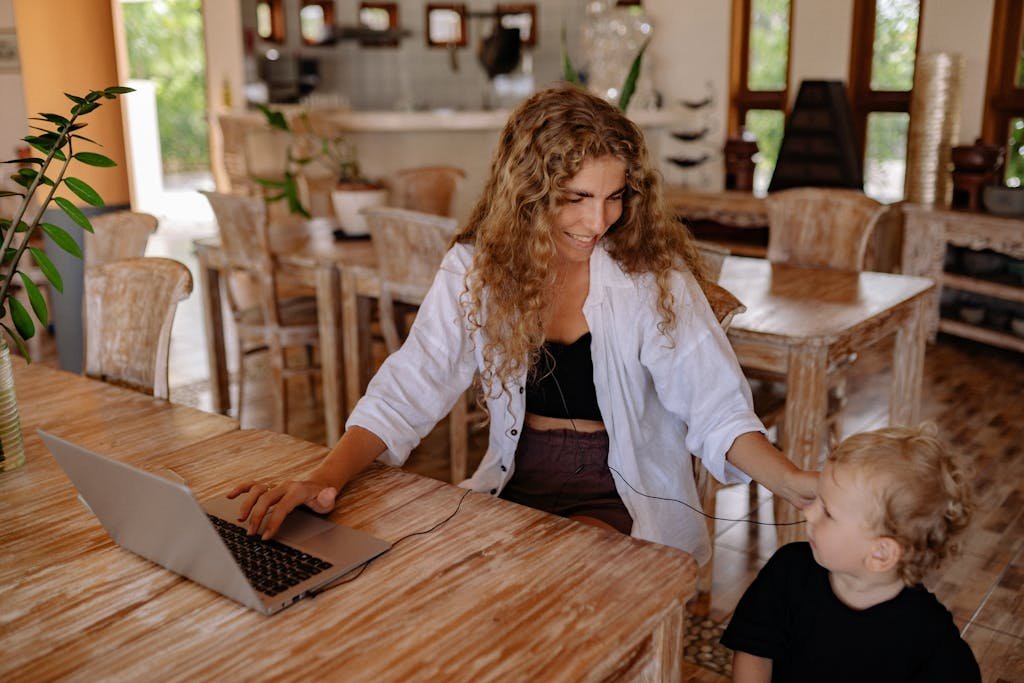
When my son was about six months old, I started working remotely, part-time, fifteen hours a week. It’s a huge privilege—the work is flexible, I can do it on my own schedule. But even that brought a level of stress that felt incompatible with having a small baby. It’s a digital marketing job, very performance-driven. There are meetings. There are results to hit. There’s pressure.
The Part-Time Trap
I wanted to work. My family needed me to contribute financially. But I also wanted something of my own. Something I controlled. Something that didn’t demand I perform at someone else’s pace while my body and my life were asking me to slow down.
I tried starting a blog, but I didn’t really know what I was doing. I tried e-commerce. I tried web design. Nothing felt right. It wasn’t until a few months ago that I realized what I actually wanted: to return to my roots in journalism. To have my own publication. To write about something I knew was important because I had lived it—digital wellness.
I’m a millennial. The digital world exploded during my adolescence. I don’t know what it’s like to be an adult without it. During the pandemic, social media consumed me in ways that were deeply harmful. Now I have a son, and I want to raise him differently. I want to be intentional about our relationship with technology. And I realized: this matters. Society needs this conversation. And almost no one is having it in the way I wanted to see it discussed.
So I built After Scroll. But I actually I wish I had started ten years ago.
If I had built a personal platform in my early twenties—even just publishing once a month about journalism, media literacy, or the things I was learning—I would have had something to fall back on when life got complicated. I would have had continuity. I would have had a body of work that could evolve with me instead of being erased every time my circumstances changed.
This is why slow productivity matters so much to me. And why I’m writing this for you.
What Slow Productivity Actually Means
Before we go further, let’s be clear about what slow productivity is—and what it isn’t.
The term comes from Cal Newport, who argues in his book Slow Productivity that the modern obsession with “pseudo-productivity” (doing more, faster, constantly) is both unsustainable and ineffective. Pseudo-productivity measures busyness, not results. It rewards visible effort over deep work. It confuses motion with progress.
Slow productivity, by contrast, is built on three principles:
1. Do fewer things
Not zero things. Not lazy things. Fewer things. Focus on what actually matters and let go of what doesn’t. This is not about doing less work—it’s about doing less shallow work so you have energy for deep work.
2. Work at a natural pace
Respect seasons. Respect energy cycles. Respect the fact that not every day, week, or month will look the same. Intensity is not sustainable. Consistency over time is.
3. Obsess over quality
When you do fewer things at a natural pace, you have the space to make them excellent. Excellence compounds. Mediocrity doesn’t.
For women, this model isn’t just philosophically appealing. It’s biologically necessary.
Our hormonal cycles affect energy, focus, mood, and cognitive function. Pregnancy and postpartum don’t just pause careers—they fundamentally shift priorities, capacities, and what “productivity” even means. Trying to operate as if biology were optional leads to burnout, resentment, and the haunting feeling that you’re failing at everything because you can’t do it all, all the time, at the same intensity.
Slow productivity gives you permission to stop pretending.
Why Slow Productivity Requires Deep Focus (And Why That Matters)
Here’s where slow productivity becomes not just sustainable, but strategically superior. When you commit to doing fewer things at a natural pace, the things you do work on get your full attention. And attention—deep, sustained, undivided attention—is what creates work that lasts.
This is the part most people miss. Slow productivity is not about doing less forever. It’s about building leverage slowly so that your work compounds over time instead of evaporating the moment you stop producing. A blog post published once a month for five years becomes sixty posts. That’s a body of work. That’s searchable, shareable, referenceable content. That’s authority.
The Compound Advantage
A woman who starts writing about her field—whatever it is—in her twenties doesn’t need to write every day. She doesn’t need to go viral. She just needs to keep showing up, slowly and consistently, while the rest of her life unfolds. By the time she’s thirty-five, she has a decade of work behind her. That work is leverage. It opens doors. It creates opportunities. It gives her options when life demands flexibility—and life always demands flexibility.
Compare that to the alternative: spending a decade climbing a corporate ladder, building someone else’s platform, tying your identity and income entirely to a structure you don’t control. When motherhood arrives, or illness, or relocation, or simply changing priorities, that structure doesn’t bend. It breaks. And you have to start over.
I’ve watched this happen to so many women. Smart, capable, ambitious women who spent their twenties and early thirties building impressive careers in institutions that did not care about their biology, their values, or their long-term wellbeing. When they finally wanted to step back—just a little, just enough to breathe—they realized they had nothing of their own to step back into. No platform. No body of work. No continuity.
They had to choose: stay and burn out, or leave and disappear. Slow productivity offers a third option. But only if you start early.
Why You Need to Start Your Platform Now (Not Later)
This is the part I need you to hear.
Most women treat personal platforms—websites, blogs, newsletters, whatever form it takes—as something to build “later.” After the career is established. After things settle down. After they have more time. That logic is backwards.
The personal platform is what allows the career to bend instead of break. It creates continuity through life transitions—maternity, relocation, illness, changing priorities—without erasing professional identity.
But platforms take time to build. Not because the work is hard, but because trust compounds slowly. A website with five years of consistent, thoughtful writing carries weight that a brand-new site never will. Google rewards age and consistency. Readers reward familiarity and reliability. Authority is not granted—it’s accumulated. If you wait until you “need” your platform, you’ve already waited too long.
Time You Cannot Buy Back
I started After Scroll when my son was a year old. I wish I had started it when I was twenty-three. Not because I would have known more then (I didn’t), but because I would have had ten more years of compounding work by now. Ten more years of search traffic building. Ten more years of relationships forming. Ten more years of authority accumulating.
You cannot buy time. You can only use it or waste it. Starting now doesn’t mean quitting your job. It doesn’t mean publishing every day. It doesn’t mean having it all figured out.
It means choosing one thing you care about—one topic, one question, one area of life you’re actively learning about—and starting to document it. Publicly. Consistently. Slowly. Once a month is enough. Once every two weeks is great. The frequency matters less than the consistency and the duration.
What you’re building is not a side hustle. You’re building insurance. You’re building leverage. You’re building the thing that will give you options when life inevitably asks you to choose between biology and career, between presence and performance, between what you want and what the system demands.
The Digital Age Made This Possible (But Most Women Still Don’t See It)
Here’s the opportunity that previous generations didn’t have: you don’t need permission anymore.
You don’t need a publisher to approve your ideas. You don’t need a university to validate your expertise. You don’t need a corporation to give you a platform. You need a website, a willingness to write, and patience.
The digital age has lowered the barrier to entry so dramatically that the only thing standing between you and professional autonomy is your own hesitation. But most women still wait. They wait for credentials. They wait for confidence. They wait until they feel “ready.” And while they wait, they’re building someone else’s empire.
I’m not saying traditional employment is bad. I’m saying dependency on it is risky. Especially for women whose lives will inevitably require flexibility that most institutions are not designed to accommodate. Slow productivity is not about rejecting ambition. It’s about reframing it. It prioritizes durability over speed, ownership over titles, alignment over applause.
For women who want children, stability, and meaningful work that evolves rather than collapses under pressure, it’s not an ideological stance. It’s a practical one.
What This Looks Like in Practice
So what does this actually mean for you, today?
It means asking yourself: If I kept my current job but started publishing once a month about [topic I care about], what would I have in five years? The answer is probably: a significant body of work, a small but engaged audience, and options you don’t currently have.
It means recognizing that you don’t need to choose between slow productivity and ambition. You need to build slowly so that your ambition can survive the seasons of your life.
It means understanding that the work you do in your twenties—even if it feels small, even if no one is paying attention yet—is not wasted. It’s compounding. And compound growth is invisible until it isn’t.
It means starting now. Not perfectly. Not with a five-year plan. Just starting.
Because here’s the truth I wish someone had told me when I was younger:
The women who thrive long-term are not the ones who worked the hardest in their twenties. They’re the ones who built something of their own, slowly and consistently, while everyone else was busy performing productivity for someone else’s metrics.

Why Slow Productivity Is Not a Retreat
In a world that still expects women to perform as if biology were optional, slow productivity is not a retreat. It’s a strategy.
It’s saying: I will not pretend that my body operates on the same cycle as a man’s. I will not sacrifice my health, my family, or my sanity to meet standards designed without me in mind. I will not wait until I’m burnt out to admit that this system was never built to support me.
Instead, I will build something that bends with my life instead of breaking under it. I will do fewer things, but I will do them deeply and well. I will work at a pace that respects my seasons, not someone else’s quarters. I will obsess over quality, not quantity, because quality is what lasts. And I will start now—not because I have it all figured out, but because time is the one resource I cannot get back.
Slow productivity is not about doing less forever. It’s about building in a way that protects your future self. For women who refuse to choose between professional identity and biological reality, it’s not just sustainable. It’s the only path that actually works.
Start Here
If you’re reading this and thinking, I wish I had started sooner—start now.
Pick one thing you care about. Create a simple website. Write once a month. Don’t worry about virality or monetization or having a massive audience. Worry about showing up consistently, building slowly, and giving your future self options.
Because ten years from now, you’ll either have a decade of work behind you, or you’ll still be wishing you had started. The choice is yours.
Continue this conversation on Substack
If this piece resonated with you, I explore these ideas more personally and more freely on Substack.
You might enjoy starting here:
- The Woman Who Forgot Herself at Work
A reflection on how modern work quietly erodes women’s inner lives — and why so many don’t notice until it’s too late. - Home Over Hustle: A Quiet Rebellion
On choosing presence over productivity theater, and why slowing down is not a failure — it’s a form of resistance.
I publish essays like these regularly on Substack.
If you want to keep reading — and thinking — you can subscribe below.