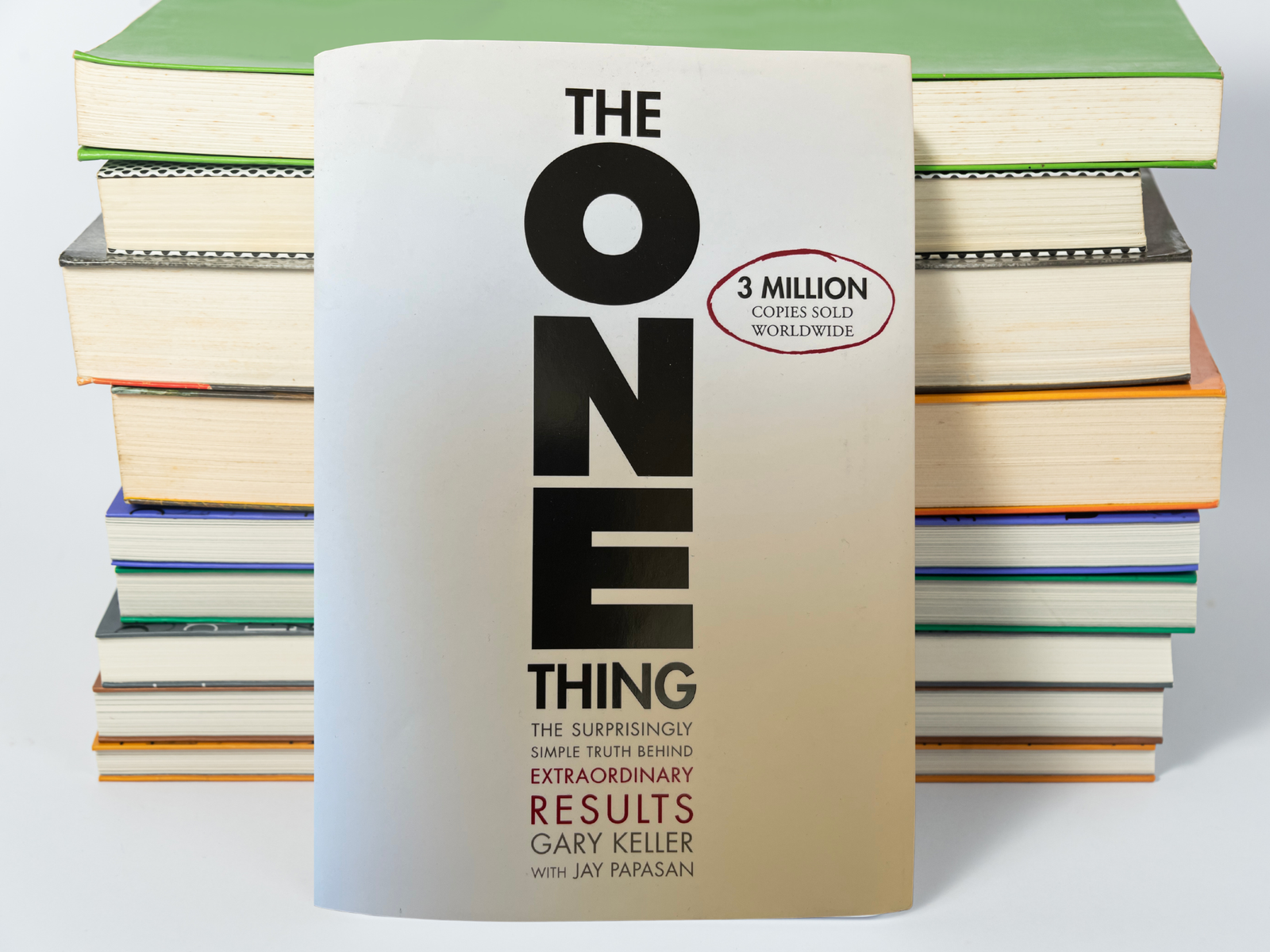
Disclosure: This post may contain affiliate links. If you click and make a purchase, we may receive a small commission at no extra cost to you. We only recommend products we genuinely use, love, or believe align with the After Scroll philosophy.Reading The One Thing book by Gary Keller changed how I think about productivity entirely. For years, I believed productivity meant effort—full days, full lists, constant movement, and the quiet assumption that progress required staying busy.
I thought being productive meant doing more. Juggling more projects. Saying yes to more opportunities. Keeping all the plates spinning at once. And when things didn’t move forward as fast as I hoped, I assumed I just needed to work harder, be more disciplined, add more hours.
But reading The One Thing book disrupted that logic in a way that felt calm but irreversible. It didn’t push me to do more. It taught me to stop doing what didn’t matter.
This book entered my life at a moment when I was trying to figure out what to build next. I was working part-time in marketing, parenting a toddler, and exploring the idea of offering web design services online. I thought web design made sense—I had some skills, there was demand, and it felt like a logical way to create income with flexibility.
But something about that path felt forced. Like I was choosing it because it seemed practical, not because it aligned with what I actually wanted to create long-term. That’s when I read The One Thing. And one question from the book completely reordered my thinking.
The Question That Changed Everything
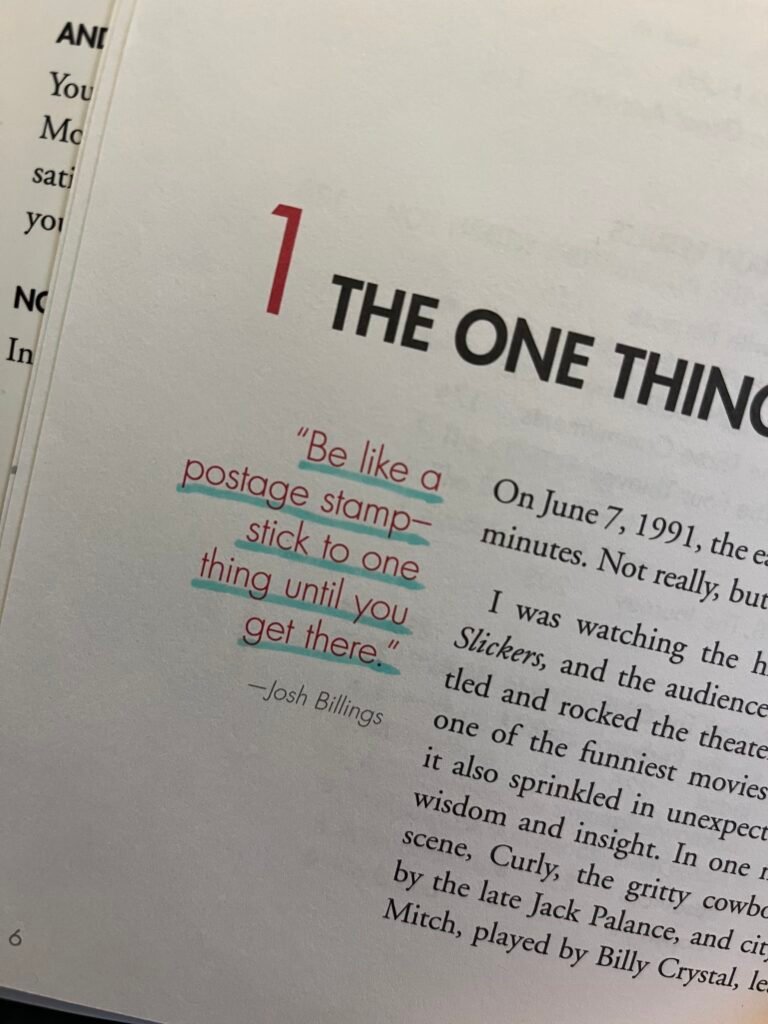
At the center of The One Thing is one deceptively simple question: “What’s the ONE thing I can do such that by doing it everything else will be easier or unnecessary?”
When I first encountered this question, I thought I understood it. But actually sitting down and answering it honestly was uncomfortable, because it forced me to admit that most of what I was doing, or planning to do, was secondary.
I was about to launch web design services. But when I asked myself the focusing question, the answer wasn’t “build websites for clients.” The answer was something deeper: create an audience.
If I built an audience—a group of people who trusted my perspective, who found value in what I shared, who came back consistently—everything else would become easier. I could offer services later if I wanted. I could create products, and I could write, and I could consult. But without an audience, I’d be starting from zero every single time.
Web design, I realized, would keep me busy. But it wouldn’t build the foundation I actually needed. It would become unnecessary the moment I focused on the one thing that mattered. That realization led directly to After Scroll.
Instead of offering services, I started writing. I built a website. I began publishing consistently about digital wellness, intentional living, and the topics I genuinely cared about. Not because it would generate income immediately, but because it was the one thing that would make everything else easier down the line.
The One Thing didn’t just help me choose a project. It helped me stop choosing the wrong ones.
Who Gary Keller Is—and Why His Perspective Matters
Gary Keller is a businessman who scaled Keller Williams into one of the largest real estate companies in the world. That context matters because The One Thing is not a book written from abstraction or theory. It comes from someone who had to decide, repeatedly, where focus actually produces results when resources are limited and stakes are real.
The book reflects that experience. It isn’t interested in productivity aesthetics, complex systems, or motivational noise. It’s interested in leverage. In understanding which actions truly move the needle—and having the discipline to protect them.
Keller and his co-author Jay Papasan don’t sugarcoat the difficulty of this. Focus requires saying no. It requires disappointing people. It requires tolerating the discomfort of leaving things undone. But it also produces results that scattered effort never will.
This isn’t a feel-good book. It’s a demanding one. And that’s exactly why it works.
What The One Thing Actually Teaches
The premise of the book is simple, but its implications are profound: Success is built sequentially, not simultaneously.
Most of us treat our goals, projects, and responsibilities as if they all deserve equal attention at the same time. We try to improve our health, advance our career, build a side project, maintain relationships, stay organized, and pursue creative work—all at once, all with equal urgency.
The book argues this approach is not only exhausting, it’s ineffective. Real progress happens when you identify the one thing that, if accomplished, makes everything else easier or unnecessary—and then you protect that priority above all else.
The Focusing Question
The core tool of the book is the focusing question: “What’s the ONE thing I can do such that by doing it everything else will be easier or unnecessary?”
This question can be applied to different timeframes:
- Right now
- Today
- This week
- This month
- This year
- In my career
- In my life
What makes this question powerful is that it forces specificity. You can’t answer it with vague goals or multiple priorities. You have to choose. And that choice reveals what you actually believe matters most.
The Domino Effect
Keller uses the metaphor of dominoes throughout the book. When you line up dominoes correctly and knock down the first one, it triggers a chain reaction. But the key is identifying which domino to knock down first.
In work and life, not all tasks are equal. Some tasks are leverage points—they create momentum that carries forward. Others are just activity. They keep you busy but don’t compound.
The book teaches you to distinguish between the two.
The Lies That Keep Us Scattered
One of the most valuable sections of the book dismantles common productivity myths:
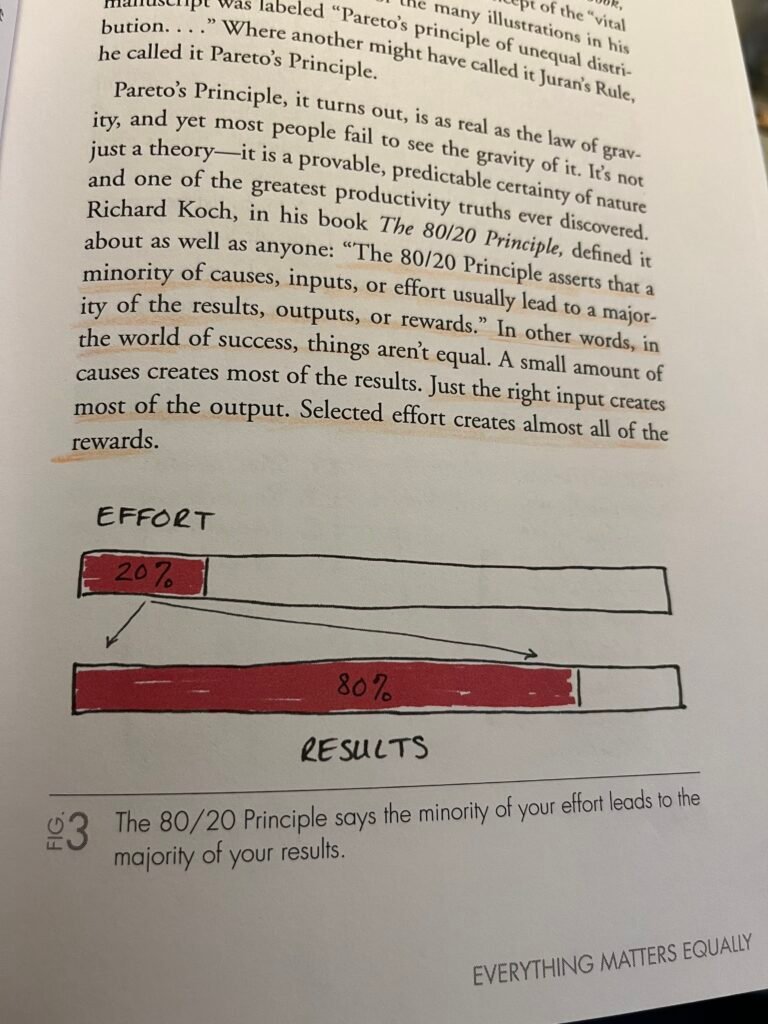
“Everything matters equally“ — It doesn’t. The 80/20 principle applies to almost everything. A small number of actions produce most results.
“Multitasking works” — It doesn’t. Task-switching destroys focus and quality.
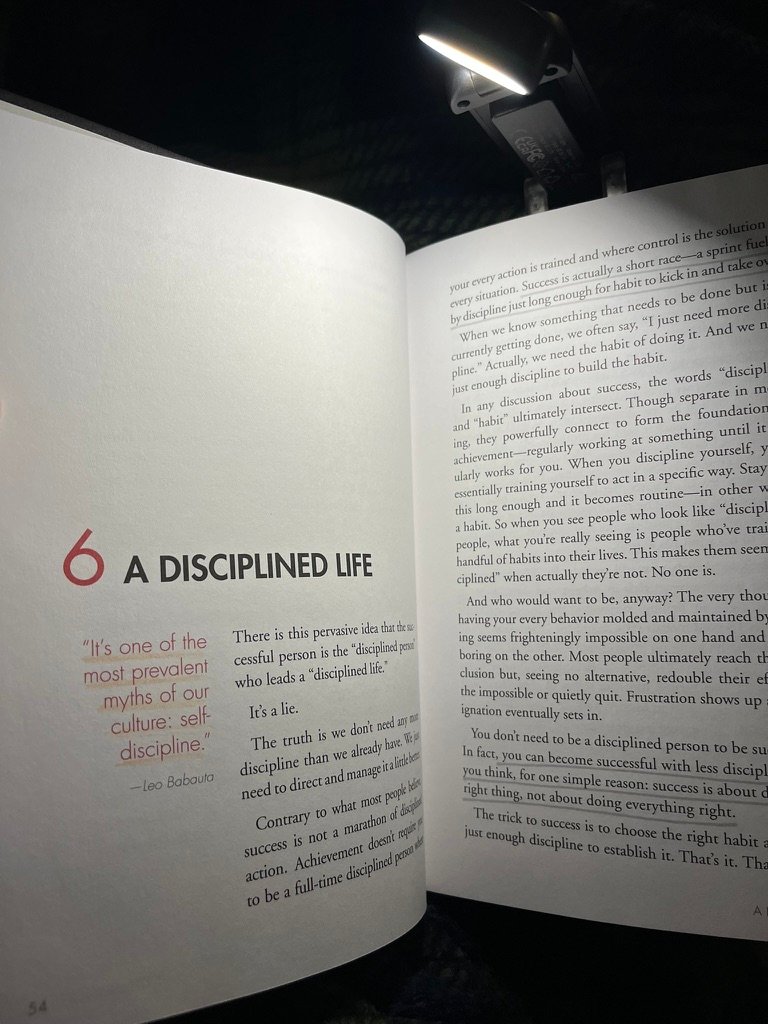
“Willpower is always available” — It isn’t. Willpower is finite. That’s why you need to do your most important work when your energy is highest, not whenever you get around to it.
“You can achieve work-life balance” — Not in the traditional sense. Balance implies everything gets equal time. What you actually need is counterbalance—giving focused time to what matters most in each area, not trying to do everything at once.
These “lies,” as Keller calls them, are what keep people stuck in cycles of busyness without progress. Recognizing them is half the battle.
Applying The One Thing at Work—and Seeing Real Results
The first place I applied this framework was in my part-time marketing role.
Before reading the book, I was doing everything. And I mean everything. Social media posts, email newsletters, designing uniforms, creating flyers, getting quotes from vendors, updating the website, managing ads, writing blog content, coordinating with sales. My days were full. I felt productive. But when I looked at actual results—leads, conversions, clients—the needle wasn’t moving much.
Then one day, my manager forwarded me an email from an SEO agency asking if we should hire them to help bring in more clients through the website. That’s when I realized: if bringing clients through the website is the goal, then that should be my one thing. Not flyers, not uniforms. Not miscellaneous internal requests. Those things might be helpful, but they weren’t leverage points.
I sat down with my manager and asked a direct question: What is the most important result you want from my work? She answered clearly: more leads. More clients coming through our online presence.
So I explained my plan. To deliver that result, I needed to focus on two things: writing high-quality articles for the website (for organic search traffic) and managing paid ads on Google and Meta. Everything else—while useful—needed to become secondary, not equal. This wasn’t about refusing work. It was about alignment. And my manager understood. She supported the shift.
The results followed quickly. Within a few months, our lead volume more than tripled. Not because I worked harder, but because I stopped diluting my effort. I focused on the one thing that actually brought clients in, and everything else either became easier or revealed itself as unnecessary.
That experience alone justified the book for me.
How The One Thing Shapes How I Build After Scroll
The same principle now guides how I build After Scroll. There are countless things I could be doing: launching on multiple social platforms, experimenting with video content, creating digital products, pursuing brand partnerships, building an email funnel, optimizing every tiny detail.
The temptation to expand is constant. Especially when you see other creators doing all of those things and seemingly succeeding. But instead of trying to do everything, I return to the same question: What is the one thing that makes everything else easier?
For After Scroll, the answer is clear: writing consistently and building a body of work that compounds over time. Everything else—social media, monetization strategies, partnerships—becomes supportive, not central. Those things might come later. But they’re only valuable if I’ve already built the foundation: a publication with authority, depth, and a body of work that people return to.
This mindset keeps After Scroll grounded. It protects depth. It allows the project to grow without becoming scattered, reactive, or dependent on trends I don’t actually care about. When I feel the pull to add more, do more, be more visible, I ask: Does this make my one thing easier, or does it distract from it? Most of the time, the answer is distraction. And that clarity makes it easier to say no.
How the 80/20 Principle Changed Everything Else
The One Thing aligns naturally with the 80/20 principle: roughly 80% of your results come from 20% of your actions. I’d heard of this principle before. But I didn’t truly understand it until this book. And once I did, I started seeing it everywhere—and applying it to areas of life I never expected.
Health: Finding the 20% That Actually Works
I’m currently above my ideal weight. For years, I approached this the way most people do: overwhelming myself with a hundred small changes. Count calories. Go to the gym every day. Track macros. Meal prep. Cut out all treats. Do cardio. Lift weights. Drink more water. Sleep better. Manage stress. All of those things are helpful. But trying to do all of them at once is exhausting. And when you’re exhausted, you quit.
After reading The One Thing, I asked myself: What’s the 20% of effort that will give me 80% of the results? For me, the answer was clear: cut sugar and simple carbs.
Not forever. Not perfectly. But consistently. Because when I analyzed my eating habits honestly, that was the lever. That’s where most of my excess calories were coming from. That’s what caused energy crashes, cravings, and the cycle of eating more to feel better.
Everything else—exercise, hydration, sleep—matters. But sugar and simple carbs are my 20%.
The 15-Minute Morning Practice
I also started doing 15 minutes of exercise every morning. Just 15 minutes.
This isn’t my “one thing” for health. Cutting sugar is. But this small practice supports everything else in ways I didn’t expect.
When I move my body first thing in the morning, several things happen:
- I feel my body. I’m very mental, very in my head. Movement grounds me.
- I work muscles that need attention without the commitment of a full workout.
- It relieves anxiety and pulls me out of the mental loop of everything I need to do today.
- It makes me thirsty. And I’m terrible at drinking water. I drink coffee and zero-calorie soda. But after exercising, I want water. So I drink it.
This 15-minute practice isn’t about getting fit. It’s about starting the day present in my body instead of already spinning in my mind. It’s a form of grounding. And it naturally leads to better choices—water, delayed caffeine, a calmer start.
I only have my coffee after this. That simple delay makes a difference.
These are recent changes. I read The One Thing just a few months ago, and I’m still applying what I learned. But I’m already seeing the difference.
After Scroll: Letting Go of Perfection
The 80/20 principle also transformed how I approach After Scroll.
For a long time, perfectionism paralyzed me. I wanted every post to be exceptional. Every sentence polished. Every idea fully developed. I was terrified of publishing something that wasn’t good enough, that people would judge, that would fail.
So I took forever to finish anything. I calculated every detail. I overthought every choice. And I published almost nothing. Then I realized something uncomfortable but true: 20% of my posts will bring 80% of my readers.
That’s just how it works. Not every post will perform equally. Some will resonate. Some won’t. And I can’t predict which ones will take off until they’re out in the world. This understanding freed me. It gave me permission to stop treating every post like it had to be perfect.
The book also talks about the 10,000-hour rule—the idea that you need roughly 10,000 hours of practice to master something. That means quantity matters. The more I write, the better I’ll get. The more I publish, the more I’ll understand what resonates, what doesn’t, what my voice actually sounds like, and what topics matter to my audience.
So I changed my approach. Now, I aim to publish posts when they’re good—not perfect. I focus on clarity, usefulness, and honesty. And then I let them go.
A month or two later, I analyze which posts are gaining traction. Which ones are getting search traffic, saves, shares. Those are my 20%. Those are the posts I return to. I expand them and add more examples. Then, I optimize them further. I make them even better.
But I don’t waste energy trying to make every single post Pulitzer-worthy from the start. That approach would take years to get anywhere. Instead, I focus on consistency and volume, then double down on what works.
This shift didn’t just make After Scroll more sustainable. It made it better. Because I’m learning faster, publishing more, and actually seeing what resonates instead of endlessly refining in isolation.
Applying 80/20 to Everything
Once I understood this principle, I started asking the question everywhere:
- In my marriage: What’s the 20% of effort that creates 80% of connection?
- In my home: What’s the 20% of cleaning/organizing that creates 80% of the calm?
- With my son: What’s the 20% of time and attention that builds 80% of the security and joy he needs?
These questions simplify everything. They remove the guilt of not doing it all. They help me focus on what actually matters instead of what feels like it should matter.
And over time, I’ve realized something the book emphasizes: most of success is about systems, not willpower. Willpower is finite. It runs out. But systems—small, repeatable structures that remove friction—compound quietly over time.
Cutting sugar works better when I don’t keep it in the house. Writing consistently works better when I protect the same time every morning. Drinking water works better when I exercise first and create thirst.
These aren’t willpower victories. They’re system designs. And The One Thing taught me to think that way.
Letting Go of False Importance
The hardest part of applying the 80/20 principle is accepting that some tasks will remain undone. Some ideas will wait. Some opportunities will pass. Not because you failed, but because you chose.
This is uncomfortable. We’re conditioned to believe that leaving things undone is irresponsible. That saying no means missing out. That if we just worked a little harder, we could do it all.
But trying to do it all is what guarantees mediocrity. It guarantees you’ll be busy, exhausted, and frustrated that nothing significant is actually changing.
The One Thing gives you permission to let go. To stop pretending everything is equally important. To protect your leverage points and release everything else—without guilt.
This shift doesn’t just reduce stress. It creates momentum. Because when you stop scattering your energy across dozens of secondary tasks, you finally have enough focus to make real progress on the one thing that matters.
When The One Thing Doesn’t Apply (Important Nuance)
This book is powerful, but it’s not universally applicable in every moment.
There are seasons of life when “the one thing” is survival. When you’re postpartum, caring for a sick family member, or navigating a crisis, the focusing question might not be about career leverage. It might be: What’s the one thing I need to protect today so I don’t fall apart?
There are also maintenance tasks that matter even though they’re not leverage points. Paying bills. Grocery shopping. Basic self-care. These things won’t “make everything else easier,” but they’re necessary.
The book is most useful when you have some degree of choice and capacity. When you’re capable of doing many things but need clarity on which things deserve your focus.
If you’re in pure survival mode, this book might frustrate you. If you’re in a season where you have energy and ambition but feel scattered, it will clarify everything.
Who This Book Is For
The One Thing is for people who are capable, thoughtful, and committed—yet feel spread thin.
It’s for those who plan well but sense that effort isn’t translating into proportionate results. It’s for builders, writers, professionals, and parents who need productivity to serve life, not consume it. Actually, it’s for anyone tired of being busy without being effective.
It isn’t for readers looking for hacks, shortcuts, or novelty. Its value comes from repetition, application, and restraint. You’ll need to come back to the focusing question again and again. The concept is simple. Living it is not.
Final Thoughts on The One Thing
The One Thing is easy to read and demanding to apply. Its impact doesn’t come from excitement or inspiration—it comes from consistency and discipline.
For me, this book clarified what deserved my time and what didn’t. Reading it helped me stop pursuing web design services that would have kept me busy but unfocused. It helped me start After Scroll with a clear foundation. It helped me triple my marketing results at work by finally focusing on what actually mattered. That kind of change doesn’t fade. It compounds.
If you’re tired of feeling busy without feeling effective, if you’re juggling too much and getting mediocre results in all areas, if you know you’re capable of more but can’t figure out where to direct your energy—this book will help.
It won’t tell you what your one thing is. But it will teach you how to find it. And once you do, everything else starts to make sense.
If this way of thinking resonates with you, After Scroll is where I explore how to build a quieter, more intentional life in a noisy digital world — one focused choice at a time. You can subscribe to the newsletter to read what I’m building, in real time.