Disclosure: This post may contain affiliate links. If you click and make a purchase, we may receive a small commission at no extra cost to you. We only recommend products we genuinely use, love, or believe align with the After Scroll philosophy.Your home became beige because your digital life was overwhelming. But now that void drives you back to screens. Here’s how to bring life back—without chaos.
Look around your home right now. What do you see?
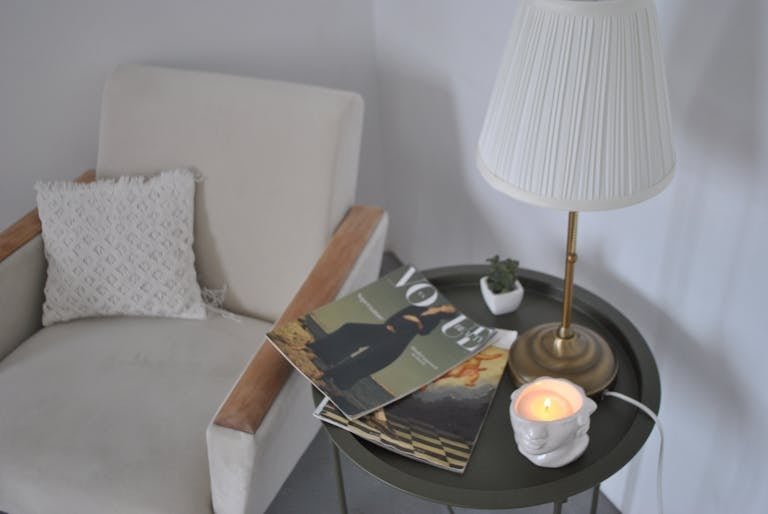
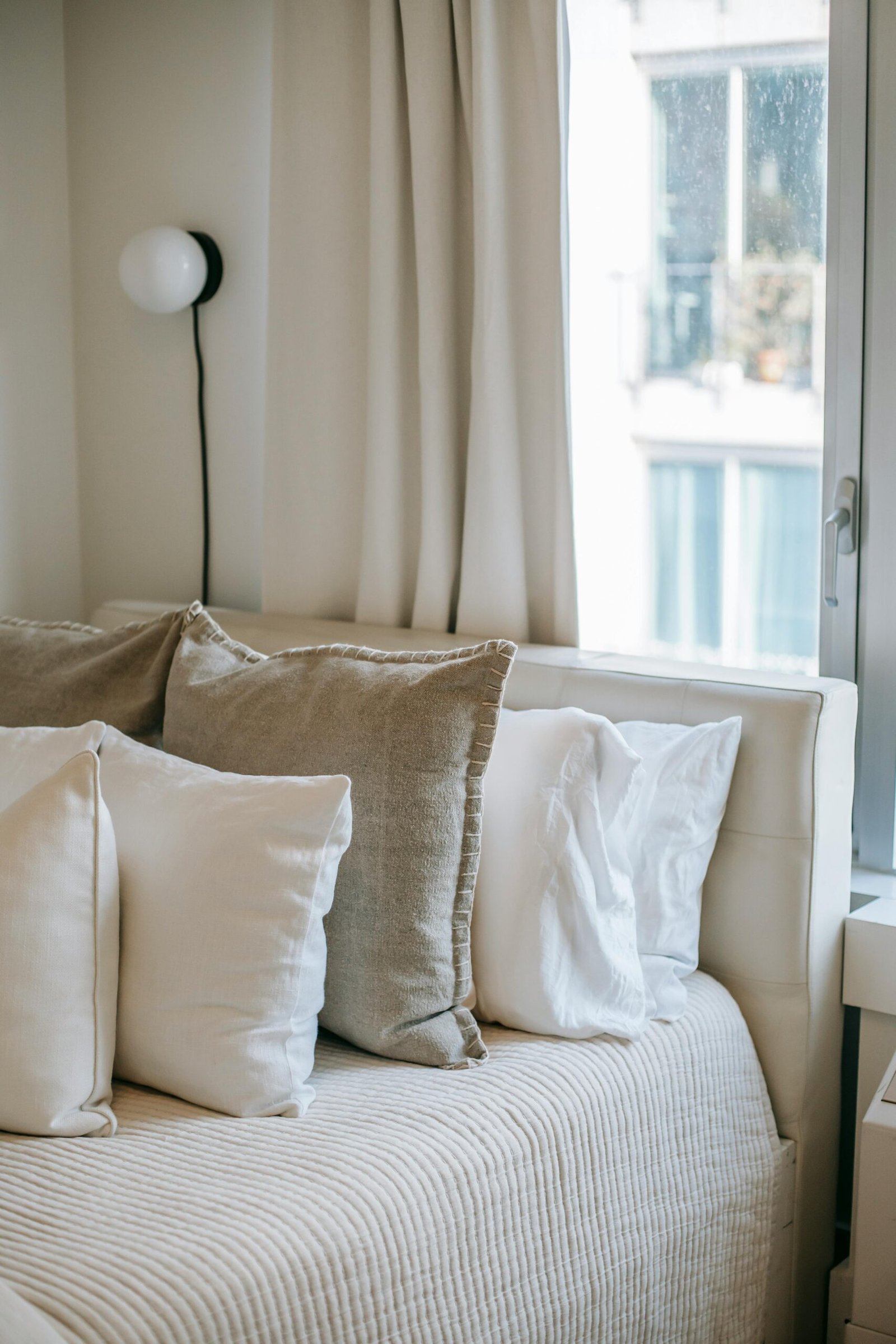
If you’re like most of us, you see: white walls. Gray couch. Beige everything. Maybe some greenery in a neutral pot. Clean lines. Empty surfaces. Nothing that demands attention. Nothing that sparks joy anymore—because at some point, everything stopped sparking joy, so you got rid of it all.
Welcome to the era of ‘sad beige.’
Scroll through Instagram and every home looks the same. Minimalist. Monochrome. Sterile. We told ourselves it was ‘calming,’ that we were creating ‘peace,’ that less is more. We bought into the idea that a house full of nothing would finally quiet our overstimulated minds.
But here’s what nobody told us: It didn’t work.
I have a theory about why your home became beige. And if I’m right, it explains why you’re reading this on your phone right now instead of looking up at the room you’re sitting in.
Here it is: Your home became beige because your life became digital. You stripped your physical space bare because your mental space was overflowing. And now that your home is lifeless, you seek life in the only place left: your screens.
In this post, I’m going to walk you through how we got here, why the 2026 home decor trends are actually a philosophical correction (not just a trend), and how to bring richness back to your space without tipping into cluttered chaos.
Because here’s the thing: digital minimalism alone doesn’t work if your real life is beige. You need something worth paying attention to.
The Digital Overload Hypothesis: How We Got Here
Let’s rewind to 2010.
The iPhone 4 came out. Instagram launched. Suddenly, everyone had a supercomputer in their pocket and infinite content at their fingertips. By 2012, smartphones weren’t just tools—they were extensions of our bodies. We went from checking email once a day to checking everything constantly.
2013-2015: Instagram exploded. FOMO became a documented phenomenon. Netflix introduced binge-watching. We stopped watching TV shows weekly; we consumed entire seasons in a weekend.
2016-2018: Notifications became relentless. Slack. Email. Text. Instagram. Twitter. Every app fighting for your attention, all the time. The average person was getting 80+ notifications per day. Your phone buzzed. You looked. Your phone buzzed. You looked. Your phone buzzed.
2019-2020: Peak digital. We were consuming content every waking moment. Scrolling while eating, walking, and before we even got out of bed. Our brains were overstimulated, overloaded, exhausted.
And then we looked around at our physical spaces.
Our homes felt like too much. Too much stuff. Too much color. And too much visual noise. We were already drowning in stimulation—we couldn’t handle one more thing demanding our attention.
So we did what felt natural: we stripped everything away.
We KonMari’d our closets. We asked if things sparked joy, and when nothing did anymore (because we were burned out), we threw it all away. Then we painted over colorful walls with Swiss Coffee and Agreeable Gray. And we bought beige couches, white dishes, and minimalist art that said nothing.
It seemed like wisdom. ‘Less is more.’ ‘Simplify.’ ‘Calm, neutral spaces.’
Entire aesthetics were built around this: Scandinavian minimalism. Millennial gray. The clean girl aesthetic. Sad beige moms. Everything monochrome, everything muted, everything quiet.
We thought we were creating peace. But here’s what we were actually creating: a void.
The Unintended Consequence: Your Home Became So Lifeless, You Had to Escape It
Here’s the irony that nobody talks about: You removed all the color, texture, and life from your home because your digital life was overwhelming. But now that your home is so unstimulating, you spend even more time seeking stimulation in the one place that still offers it: your screens.
Your beige living room is so boring that scrolling Instagram feels more interesting than being in it.
Let me explain why this happens.
Humans need sensory input. Our brains are wired to seek novelty, color, texture, beauty. It’s not superficial—it’s neurological. When we experience something beautiful or rich in texture, our brains release dopamine. It’s a natural, healthy reward.
But when your physical environment offers no sensory reward—when everything is beige and white and flat—your brain still craves that dopamine. So where does it go?
Your phone. Instagram’s colorful grid. TikTok’s endless novelty. Pinterest’s infinite inspiration boards. These platforms are designed to be hyper-stimulating, to give you the sensory reward your beige home can’t.
I discovered this paradox accidentally.
Three years ago, I decided to try digital minimalism. I reduced my screen time, deleted social media apps, committed to being more present. And you know what happened?
I got bored.
Not in a good, ‘finally slowing down’ way. In a restless, ‘what am I supposed to do with my hands’ way. I’d put my phone down and look around my apartment and think: Now what?
That’s when I realized: my space was boring. It was perfectly fine. Clean. Organized. But there was nothing in it that invited me to stay. Nothing that caught my eye. Nothing that made me want to sit down and just… be.
So I did something that felt counterintuitive at the time: I added more.
I bought a Persian-style rug in deep blue with intricate details—the complete opposite of minimalism. Then I added pops of color around the apartment. And I brought in textures, patterns, things that were interesting to look at.
And suddenly, being home felt different. I wanted to sit on the floor with a book, and have friends over for dinner. I actually wanted to be there.
That’s when I understood: when you use your phone less, you need your home to be more. Not more stuff—more alive. More rich. More interesting.
Digital minimalism doesn’t work if your real life is beige. You can delete Instagram, but if your home offers nothing worth paying attention to, you’ll just find something else to escape into.
You need something worth being present for.
The 2026 Reversal: Why This Is Perfect Timing
Here’s the good news: the cultural tide is turning.
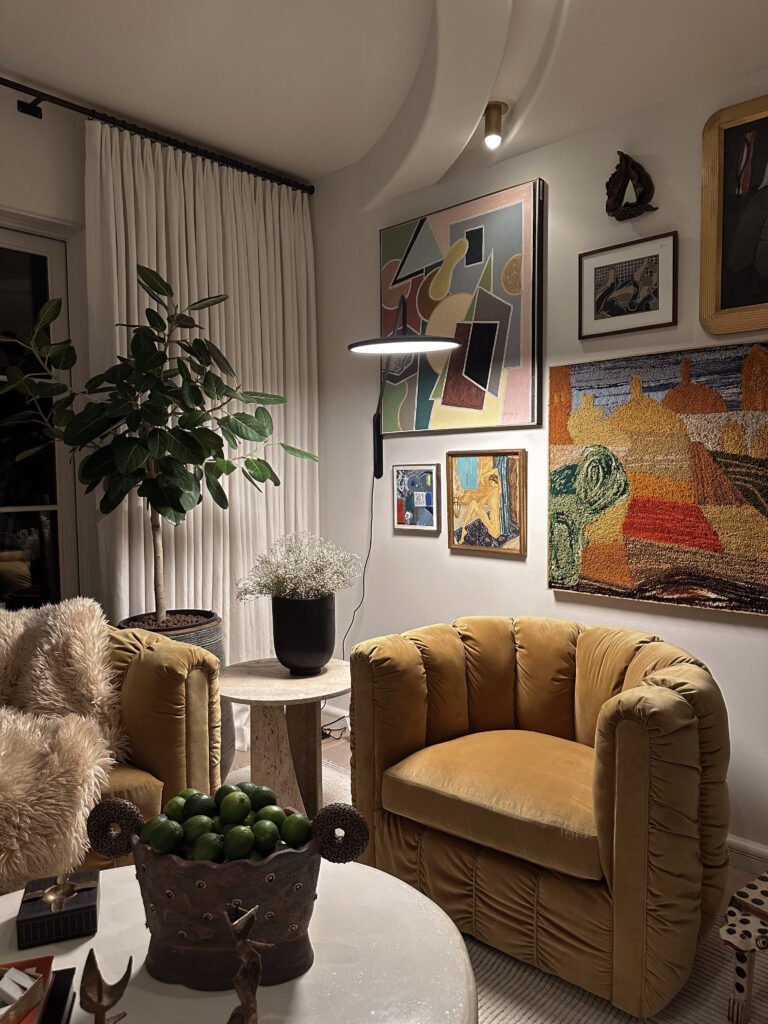
If you’ve been paying attention to home decor trends for 2026, you’ve probably noticed something: color is back. Warmth is back. Texture is back.
According to design forecasters, 2026 is all about moving away from ‘sad beige’ and embracing rich, soulful spaces. Here’s what’s trending:
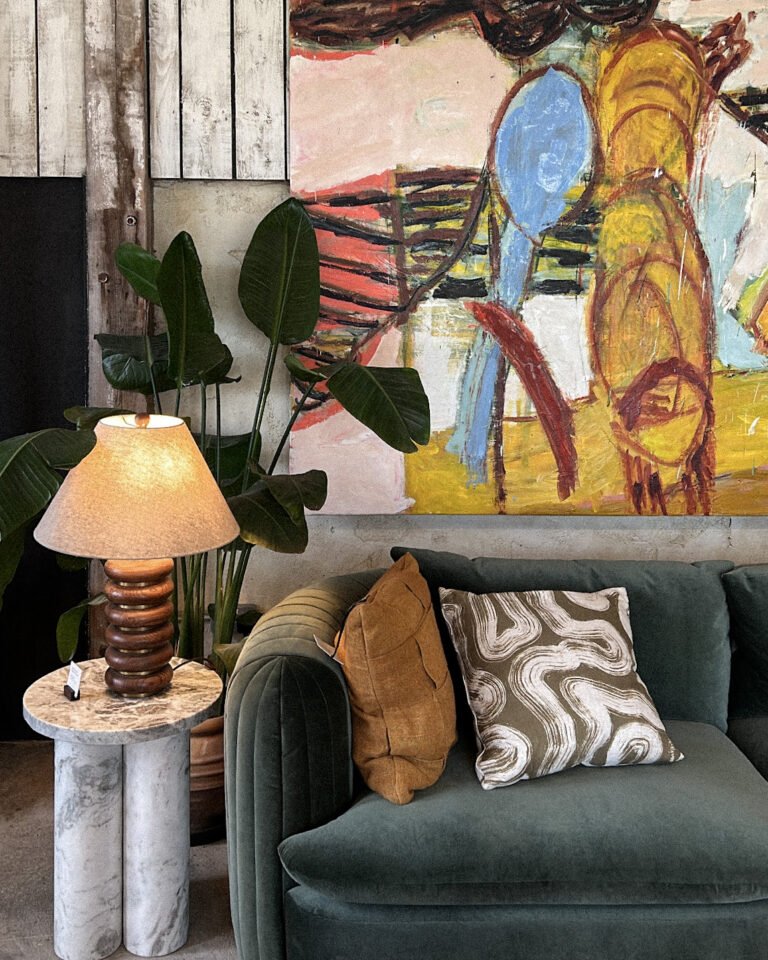
- Rich, warm colors: plum, forest green, ochre, terracotta, Prussian blue
- Natural materials: walnut, oak, linen, raw silk, clay, stone
- Tactile textures: wainscoting, curved furniture, artisanal imperfections
- Nostalgia and comfort: vintage pieces, family heirlooms, things with history
- Sustainability over trends: investing in quality, buying less but better
Notice what all of these have in common? They’re sensory. They’re rich. They invite you to touch, to notice, to be present.
This isn’t just another design trend. It’s a cultural correction.
After a decade of digital overstimulation followed by beige minimalism, people are collectively exhausted. We’re burned out from hustle culture, Zoom fatigue, and doomscrolling. Gen Z is rejecting millennial minimalism. Post-pandemic, we’ve realized that our homes need to be more than aesthetic—they need to be havens.
There’s a growing backlash against Instagram-perfect spaces. People want homes that feel lived-in, not styled for content. They want to feel things again—the weight of a ceramic mug, the softness of linen, the warmth of wood under their hands.
And here’s why this aligns perfectly with the After Scroll philosophy:
When you reduce your digital consumption, you create space to appreciate richness in the physical world. When your home is full of sensory rewards—color, texture, beauty—you’re less likely to seek artificial rewards on your phone.
It’s the inverse of what we’ve been doing:
2010-2023 approach:
Digital life: Chaotic, overstimulating → Physical space: Void, beige, minimal
Result: Still seeking stimulation, still scrolling
After Scroll approach:
Digital life: Minimal, intentional → Physical space: Rich, warm, sensory
Result: Home becomes more interesting than screens
This isn’t just a trend. It’s a correction. A return to sensorial living.
How to Bring Life Back (Without Overwhelm)
Okay, so how do you actually do this without turning your home into cluttered chaos?
The key is intentional richness. This isn’t about buying more stuff. It’s about choosing things that offer sensory satisfaction, that invite presence, that make you want to look up from your phone.
Here are six practical ways to start:
1. Start With Color (In Small Doses)
You don’t have to repaint your entire house plum (though you could). Start small:
- Swap your white throw pillows for jewel tones—emerald, sapphire, rust
- Add one accent wall in a warm, earthy color
- Replace white dishes with colored ceramics (terracotta bowls, navy mugs)
- Bring in art with actual color
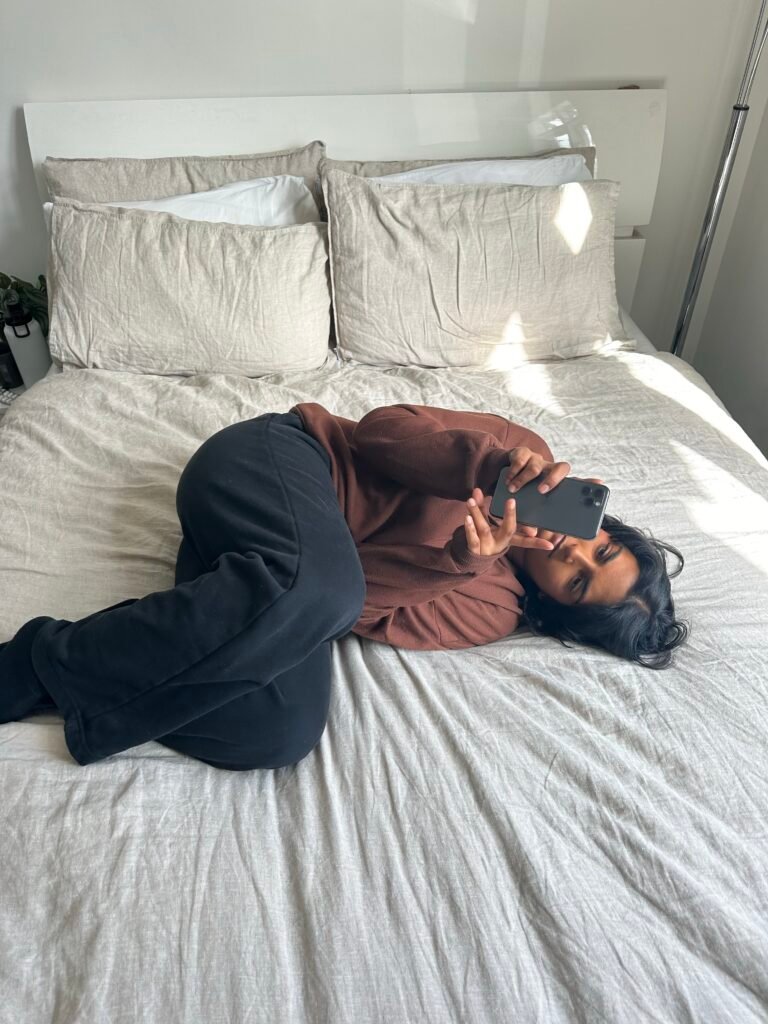
- Use richly colored linens on your bed
The goal: when you walk into the room, there’s something that catches your eye in a good way. Not chaos, just… interest.
2. Add Natural Materials
Trade plastic for wood. Polyester for linen. Laminate for stone.
Natural materials have texture. They invite touch. They age beautifully instead of looking cheap. And they ground a space.
Examples:
- Display a wooden cutting board instead of hiding it
- Use linen napkins instead of paper
- Add a jute rug or wool throw
- Choose brass hardware over chrome
- Keep a clay pot of fresh herbs on the counter
These materials connect you to the physical world. You can feel the grain of the wood, the weight of the brass, the coolness of the stone.
3. Embrace Imperfection (Wabi-Sabi Philosophy)
Here’s your permission: your home doesn’t have to look like Instagram.
In fact, it shouldn’t.
Wabi-sabi is the Japanese philosophy of finding beauty in imperfection, impermanence, and incompleteness. It’s about celebrating things that are handmade, aged, lived-in.
What this looks like in practice:
- Keep the vintage chair with the worn fabric
- Display the handmade ceramic mug with the wonky handle
- Frame the painting your friend made, even if it’s not ‘perfect’
- Let your books stack on the coffee table
- Allow evidence of life: a blanket draped over the couch, a half-read book, a mug of tea
A home that looks lived-in is a home worth living in.
4. Create Micro-Environments That Compete With Screens
This is key: build little pockets in your home that are more appealing than scrolling.
Examples:
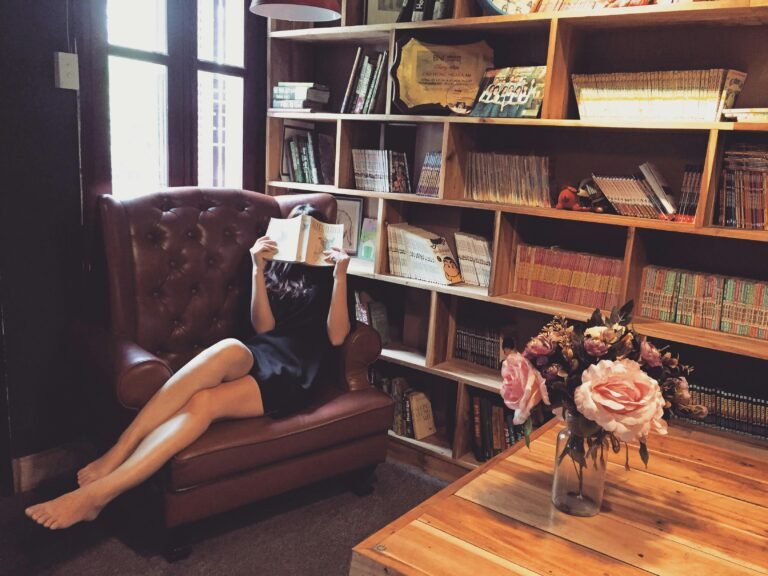
- A reading nook with a good lamp, soft blanket, and stack of books you actually want to read
- A coffee corner with your favorite mugs displayed, a French press, and good beans
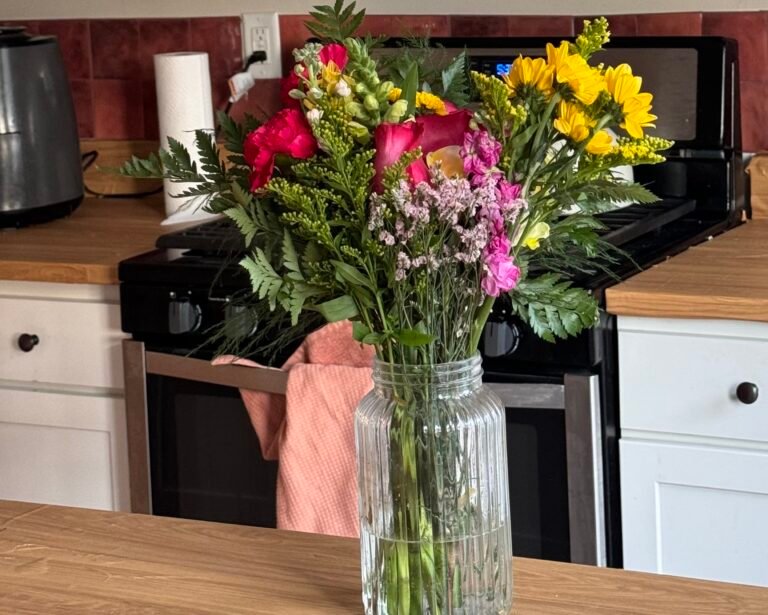
- A dining table that’s always set (even casually) with nice napkins and a vase of fresh branches
- A window seat with cushions and a view
The test: Would you rather sit in this spot or scroll on your phone?
If the phone wins, the space needs more warmth, more interest, more invitation.
5. Mark Time Through Seasonal Touches
One of the problems with digital life is that it’s timeless. Instagram looks the same in January as it does in July. There’s no rhythm, no seasons, no sense of the year turning.
Your home can bring that back.
This isn’t about elaborate holiday decor (unless you want that). It’s about small, seasonal touches that connect you to the natural world:
- Bare branches in winter
- Fresh tulips in spring
- Farmers market peaches in summer
- Dried eucalyptus in fall
Swap your throw pillows with the seasons. Change your bedding. Light candles that smell like the time of year.
These small rituals anchor you in real time, not screen time.
6. Ask the Question: ‘Would I Rather Be Here or On My Phone?’
This is your litmus test for every room.
Sit in your living room and ask: Would I rather be here or scrolling?
If the answer is scrolling, your space needs more life. Not more stuff—more life.
- More warmth (a soft throw, better lighting, a candle).
- More interest (art you actually love, books displayed, something beautiful to look at).
- More comfort (a chair you want to sink into, not just look at).
- More invitation (a space that says ‘sit here, stay a while’).
Your goal isn’t Pinterest-perfect. It’s presence-perfect.
What This Really Means: Beyond Decor
Let’s zoom out for a second.
This isn’t really about paint colors or throw pillows. It’s about something bigger: where you direct your attention.
For the past decade, we’ve been living in two worlds: the digital world (overstimulating, infinite, addictive) and the physical world (which we made beige and boring in self-defense).
But the digital world won by default. Of course you chose scrolling over sitting in your beige living room. Who wouldn’t?
The shift I’m proposing is this: What if you made your physical world rich enough, warm enough, interesting enough that it could actually compete?
What if your living room was more visually interesting than your Instagram feed?
What if your kitchen was so lovely that you actually wanted to cook instead of ordering in and scrolling?
And what if your bedroom was so restful that reading a book by lamplight felt better than watching Netflix?
This is what I mean by intentional richness. Your home should:
- Be interesting enough to make you look up from your phone
- Be beautiful enough to make you want to be in it
- Be comfortable enough to actually live in (not just photograph)
- Be rich enough in texture, color, and sensory details to satisfy your need for stimulation
And here’s what it shouldn’t be:
- Instagram-perfect
- Styled for content
- Impressive to guests but uncomfortable for you
- Untouchable, unusable, unlived-in
The goal is a home that feels good to be in. Not one that looks good in photos.
Conclusion: Time to Bring Life Back
So here’s where we’ve landed:
Your home became beige because your digital life was chaotic, and stripping everything away felt like the only defense. But in removing all the stimulation, you created a void—a space so lifeless that it drove you back to your screens for any sense of color, interest, or beauty.
The 2026 design trends toward warmth, color, and texture aren’t just aesthetic shifts. They’re a cultural correction. After years of overstimulation followed by overcorrection, we’re finally finding a middle path: minimal in the digital world, rich in the physical one.
This is the After Scroll approach. Reduce what’s artificial. Enrich what’s real.
So here’s my challenge to you:
Look around your space right now. Is it a place you want to be? Or a place you tolerate while scrolling?
If it’s the latter, start small. Pick one room. One corner. One wall.
Add color and texture. Add something warm. Something that makes you want to put your phone down and just… be there.
Make it rich and warm. Make it worth looking up for.
Because your home should be interesting enough that scrolling feels boring by comparison.
What’s the first thing you’ll change in your space? Let me know in the comments—I’d love to hear what resonates.