
Your home environment quietly shapes your scrolling habits. Learn how light, layout, and tiny design tweaks can cut your scrolling without relying on willpower.
I used to think my scrolling problem was a willpower problem.
If I could just be more disciplined, I told myself, I’d stop picking up my phone every time I walked through the living room. I’d stop sitting on the couch “for five minutes” and waking up from a 45–minute scroll coma. I’d stop reaching for Instagram whenever the house felt quiet or my brain felt tired.
But the more I paid attention, the more I realized something uncomfortable:
My home was training me to scroll.
Every surface had a charger. My phone lived on the coffee table. The couch was positioned perfectly in front of the TV. The bed was the most comfortable place in the house—and also where my phone slept.
I kept blaming my self-control, but my environment was doing exactly what it was designed to do: make screens the easiest, most obvious source of stimulation in the room.
If you’ve been trying to spend less time on your phone and feel like you’re constantly failing, it might not be that you’re weak. It might be that your home is quietly working against you.
In this post, I want to show you how your home environment shapes your scrolling habits—without you realizing it—and how to redesign your space so it finally helps you log off instead of pulling you back in.
It’s Not Just Willpower: Your Home Is a Feedback Loop
We like to think we act from pure choice.
But most of our behavior is a reaction to cues.
Psychologists call this a cue–craving–response–reward loop:
- You see or feel a cue (boredom on the couch, your phone on the table, the ping of a notification).
- Your brain anticipates a reward (dopamine from something new, interesting, or comforting).
- You respond (pick up the phone, unlock it, open your favorite app).
- You get the reward (a hit of novelty, a tiny sense of connection, a distraction from what you don’t want to feel).
Do this enough times and the loop runs on autopilot.
What we often miss is that our home is full of built-in cues:
- The spot on the sofa where you always scroll before bed.
- The corner of the table where your phone charges.
- The empty minutes between loading the dishwasher and starting the next task.
- The silence of a bare, under-stimulating room.
If your environment is set up so that the easiest, most obvious thing to do in those moments is grab your phone, of course that’s what you’ll keep doing.
It’s not that you “love” scrolling that much. It’s that your home has become a giant, invisible interface that points you toward your screen all day long.
The Science of Understimulation (and Why Bare Rooms Make You Scroll More)
When we talk about phone addiction, we usually talk about overstimulation—constant notifications, bright colors, endless content.
But there’s another piece of the puzzle: understimulation.
Your brain doesn’t like being under-stimulated for long. When there’s nothing interesting happening, it will go looking for something. In a world where your phone is always within arm’s reach, that “something” is almost always a screen.
Think about what happens in a room that’s technically “minimalist” but emotionally empty:
- The walls are bare.
- There are no books within reach.
- No half-finished puzzle on the table.
- No cozy chair that invites you to sit and read.
- No materials for hobbies visible anywhere.
It might look beautiful in photos. But for your nervous system, it’s a stimulus desert.
In that kind of environment, your phone becomes the easiest way to give your brain sensory input—color, sound, novelty, connection. So even if you’re trying to scroll less, your environment is quietly pushing you toward the one object in the room that can flood you with stimulation in seconds.
This is the paradox: extreme minimalism can actually increase your screen time.
When your home is so stripped down that there’s nothing else to do, your phone stops being a bad habit and starts being the only habit.
Your goal isn’t to fill your home with clutter. It’s to create enough meaningful stimulus in your physical environment that your brain has somewhere else to go besides a screen.
When Your Home Trains You to Reach for Your Phone
Before we talk about changing anything, it helps to see how your current environment is already shaping your behavior.
Walk through a normal day at home and notice the small moments where your hand goes to your phone almost automatically. You might recognize some of these:
The couch scroll
You sit down “for a few minutes” after cleaning the kitchen.
The remote is on the table. Your phone is right next to it. There’s nothing else within reach—no book, no notebook, nothing that asks a little more from your brain.
Your body associates that spot on the couch with collapse + scrolling. Even if you tell yourself you’re just resting for a minute, your fingers already know the choreography: grab phone → unlock → open favorite app.
The bed scroll
Your phone charges on your nightstand or under your pillow.
You tell yourself you’re just going to “check something” before sleeping. Twenty, thirty, forty minutes disappear.
In this case, your environment is literally glued to your habit: phone + pillow + darkness = automatic scroll tunnel.
The kitchen scroll
You’re waiting for water to boil or food to finish in the oven.
Instead of letting your brain rest or looking out the window, your hand reaches for the device on the counter.
Why? Because nothing else in that space is inviting you into a different kind of activity.
The transition scroll
You walk from one room to another and your phone is sitting on the hallway table.
You tap it “just to see” if anything happened in the last five minutes. Of course something did. Your brain gets a tiny hit of dopamine. You’ve just strengthened the habit of checking during transitions.
None of this is about moral failure. It’s about training.
Your home is teaching your brain: in this spot, with this object, at this time of day, we scroll.
To change the habit, you don’t just need more discipline. You need to retrain the space.
Create Spaces That Compete With Your Screen
You can’t fight the entire internet with pure willpower.
But you also don’t have to. You just have to make at least one other option in the room more appealing—or at least easier—than picking up your phone.
That starts with tiny, physical changes.
1. Make offline options ridiculously obvious
If the only interesting thing in your living room is a TV and a phone charger, of course you’ll default to screens.
Start by asking: What do I want to be doing more of at home instead of scrolling?
Reading? Drawing? Stretching? Talking to your partner? Playing with your kids? Resting without input?
Then make those options feel as obvious as your phone:
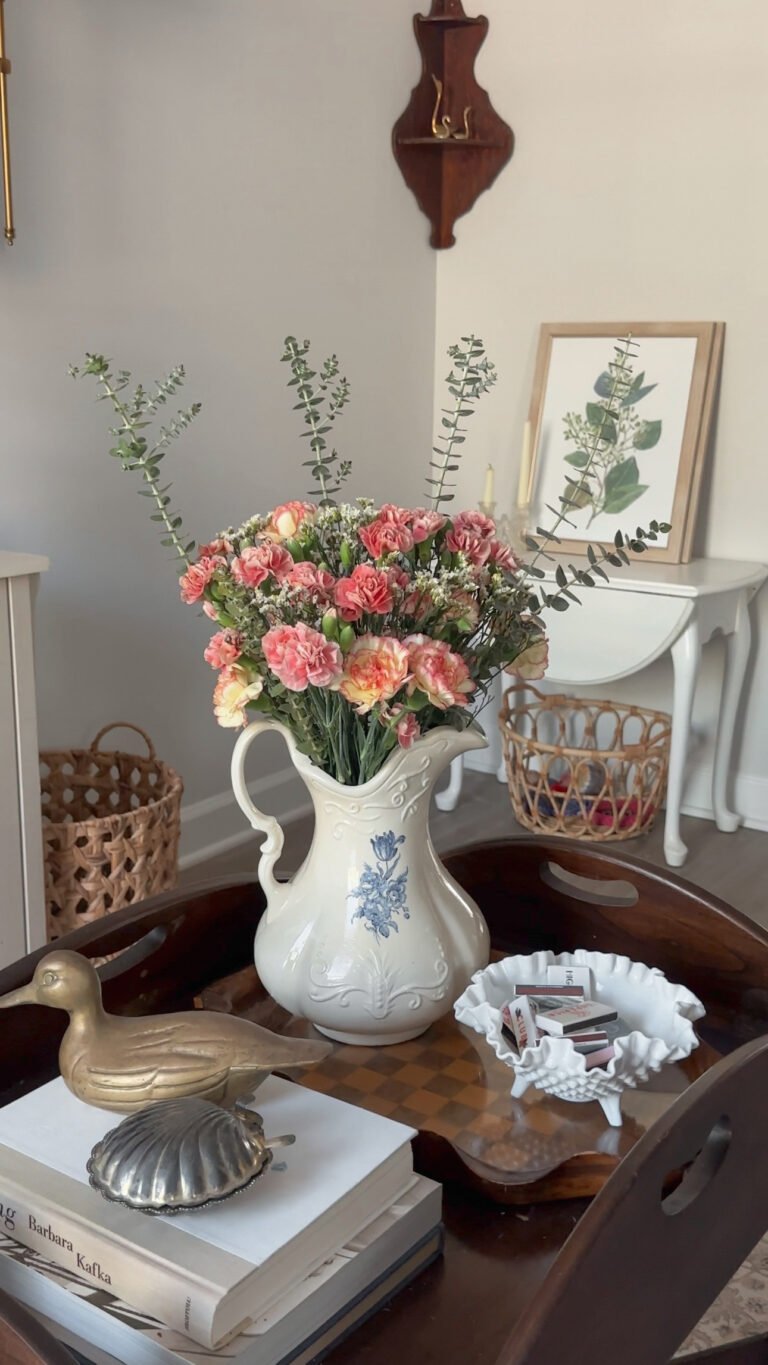
- Keep one book you actually want to read on the coffee table, not hidden on a shelf.
- Leave a puzzle, deck of cards, or crossword book out where you tend to collapse after work.
- Put a yoga mat rolled up in a basket next to the couch so stretching is a two–second decision.
- If you have kids, keep a basket of simple toys or art supplies within reach of where you usually sit together.
Need ideas? Here are some screen-free activities that actually feel good to get you started.
You’re not trying to create a Pinterest-perfect setup. You’re creating visual competition for your phone.
2. Design tiny zones with clear jobs
You don’t need a separate room for every activity. But your brain loves when spaces have a “job.”
Even in a small apartment, you can define micro–zones:
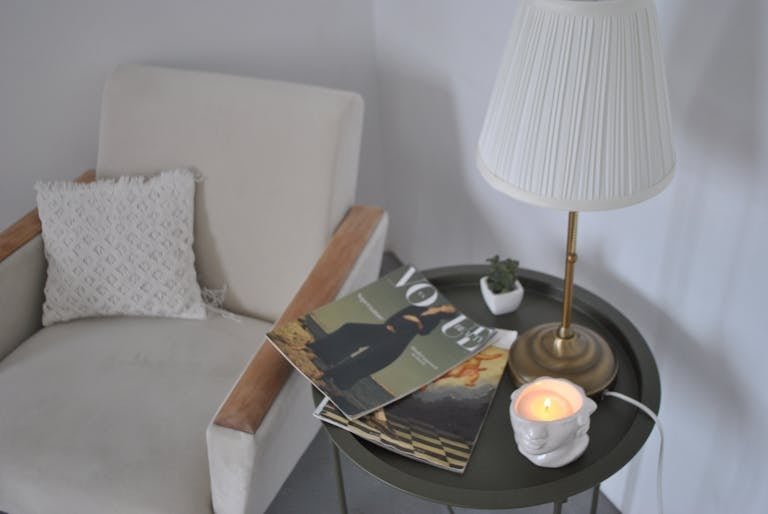
- A reading corner: a chair, a blanket, a lamp, and a small table with a book and a pen.
- A craft basket: a box or basket that lives in one spot, filled with knitting, embroidery, or simple art supplies.
- A thinking table: the end of your kitchen table with a notebook and pen where you sit with coffee and plan your day.
- A movement spot: a mat and resistance band behind the couch where you do ten minutes of stretching.
When you walk into a room and see a clearly defined zone, your brain gets a cue: this is where we do that thing. Over time, those cues begin to compete directly with the “this is where we scroll” spots.
3. Reduce friction for the habits you want
Scrolling is so powerful because it’s frictionless.
You don’t have to decide anything. You don’t have to gather materials. You don’t have to tolerate the awkward beginning of something new.
To build habits that can compete with that, you have to make them almost as easy to start:
- If you want to read more, stop hiding books on a high shelf. Lay one open to your current page.
- If you want to journal, keep your journal and pen out, not zipped in a drawer.
- If you want more conversation with your partner, move the phones away from the sofa and put a small stack of question cards or conversation prompts on the table instead.
- If you want to cook more, keep one cookbook open on a stand or save a printed recipe on the fridge.
Ask yourself: What is the first 30 seconds of this habit? Then design your space so those 30 seconds are as low–friction as possible.
4. Add friction to the habits you don’t want
I’m not anti–phone. I’m anti–”phone as default.”
You don’t have to banish screens from your house. But you can make mindless scrolling slightly more annoying:
- Charge your phone in the kitchen instead of by the bed.
- Use a non-glass, wallet-style case that closes, so you have to physically open it before you see the screen.
- Keep a charging station outside the living room, so grabbing your phone means actually getting up.
- Turn off non-essential notifications so your phone doesn’t constantly call your attention.
You’re not relying on heroic self-control. You’re using the same principle screens use on you—tiny bits of friction and ease—to nudge yourself in a different direction.
The Paradox of Extreme Minimalism
Minimalism is supposed to help you live more intentionally.
But there’s a version of minimalism that looks clean and calm on the outside while secretly making your scrolling worse.
If you’ve decluttered your home so aggressively that:
- There are no visible books, hobbies, or materials.
- Surfaces are always empty.
- The only objects left out are your phone, your laptop, and your TV remote.
…then your home might feel peaceful, but your inner life is being outsourced to your devices.
You didn’t get rid of distraction—you just funneled all your attention into a single source.
Instead of aiming for “nothing out,” aim for intentional visibility:
- A few books you genuinely want to read.
- One or two hobbies that live in beautiful baskets or boxes.
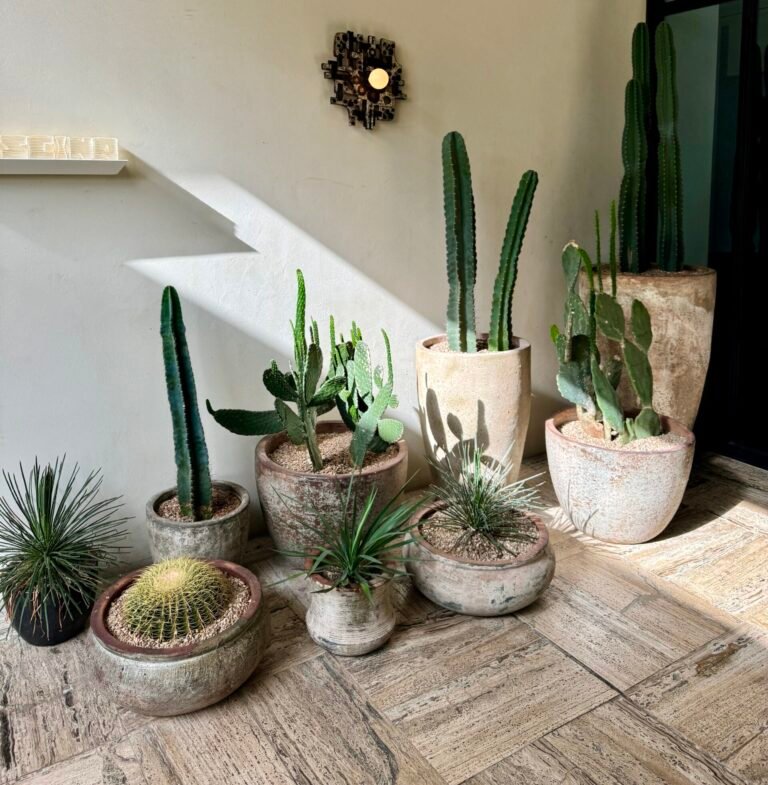
- A plant or candle in the corner where you like to sit.
- A blanket that invites you to lie down and rest without a screen.
Your space doesn’t have to be maximalist. It just has to offer real alternatives to scrolling.
That’s part of building an aesthetic routine that actually matches your new identity, not the algorithm’s idea of a perfect room.
Your home should be a place where your offline life has a chance to show up on the furniture.
Small Home, Big Impact (When You Don’t Have a Spare Room)
It’s easy to think all of this only works if you have a huge house, a home office, or a separate reading room.
Most of us don’t.
If you live in a small apartment or share space with family, you can still redesign your environment—you just have to think in layers instead of rooms.
Here are a few ways to do that:
Use containers instead of rooms
You might not have a craft room, but you can have a craft box.
You might not have a dedicated gym, but you can have a movement basket with a mat and resistance bands.
You might not have a library, but you can have a single shelf or tray with the next 2–3 books you’re actually going to read.
Containers are powerful because they create a sense of “this lives here” even inside a small, multipurpose room.
Create time–based zones
If you can’t physically separate spaces, separate moments.
- Mornings at the kitchen table = planner + pen + coffee, no phone.
- Evenings on the couch = one show you chose intentionally, then devices off.
- First 15 minutes after you put the kids to bed = book or stretch, not scroll.
When you repeat these patterns, time itself becomes a cue. Your brain learns: it’s 8pm, this is when we read on the couch, not this is when we fall into a reel hole.
If you’re in a season of changing who you’re becoming, you can build morning routines that support your rebrand instead of starting with a scroll so the first thing you touch isn’t your phone.
Make “phone homes” outside your hotspots
Pick specific places where your phone “lives” when you’re home—a shelf near the door, a charging station in the hallway, a drawer in the kitchen.
The rule is simple: when you’re on the couch, in bed, or at the table, your phone is in its home, not in your hand.
That single boundary can change your relationship with your space more than any decor change ever will.
Building a Home That Helps You Log Off
Changing your environment won’t magically delete your desire to scroll.
You will still have days when you’re tired and want to disappear into your phone. You’ll still have moments where you pick it up without thinking.
But when your home starts to offer you something back—a book within reach, a puzzle half-finished, a comfy chair by the window, a mat ready for stretching—it becomes much easier to choose something else.
Instead of being a backdrop for your scrolling, your home becomes a quiet collaborator in your digital detox.
You don’t have to fix everything at once. Start small:
- Move your charger out of the bedroom.
- Put one book or notebook where your phone used to live.
- Create one tiny zone—a chair, a lamp, a blanket—that invites you to sit without a screen.
Then notice what happens over the next week.
You might still scroll. But you’ll also catch yourself reaching for the book instead. Sitting in the chair instead. Stretching on the mat instead.
It’s one small, tangible piece of what rebranding yourself actually means when your life finally matches who you’re becoming.
And little by little, dot by dot, your home will stop being the place where you lose hours to your phone—and start being the place where you finally get your time, your attention, and your life back.