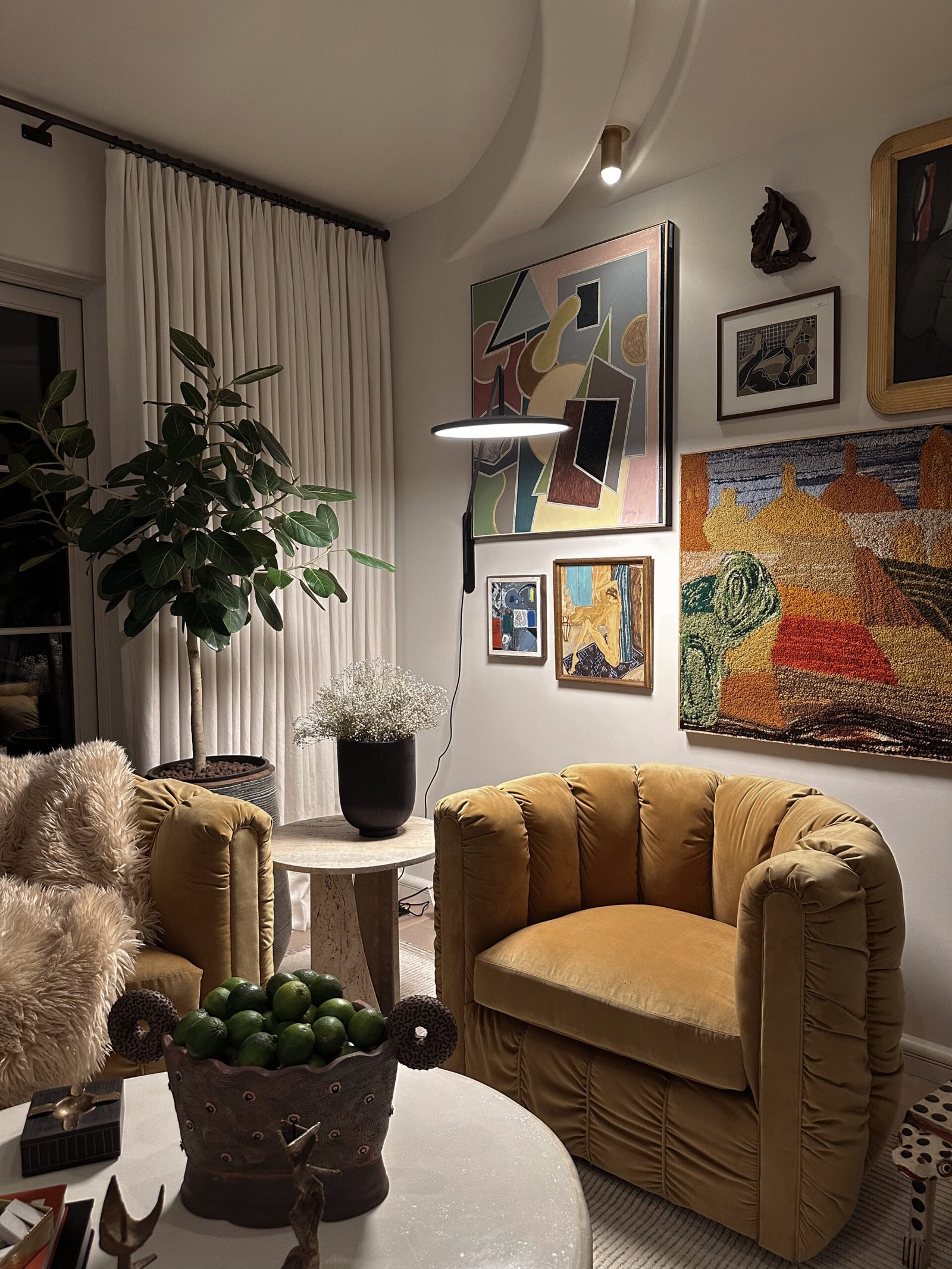
Turn your living room into a phone-free space you actually want to be in, with cozy design tweaks, clear tech boundaries, and rituals that make offline time feel natural.
If you walked into your living room as a stranger, what story would it tell about how you spend your time?
For a lot of us, the story looks something like this:
- Couch pointed at a TV.
- Coffee table covered in remotes and chargers.
- Phone always within arm’s reach—on the armrest, the table, or in your hand.
We promise ourselves we’ll “be more intentional” with screens… but the room is quietly designed for the opposite. It’s not just that you like your phone. It’s that your living room is set up to make scrolling the easiest, most obvious thing to do.
In How Your Home Environment Affects How Much You Scroll, you zoomed out and looked at how the whole house trains your attention. This piece zooms into the center of it all: the living room—the place where you collapse after work, host friends, and spend the biggest chunk of your waking hours at home.
The goal isn’t to turn your living room into a tech-free monastery.
The goal is to create a phone-free living room you actually want to be in—a space where:
- Conversation, books, and small rituals feel easier than “just one more scroll.”
- Your body can rest without automatically reaching for a screen.
- The room still looks like your life, not a staged waiting room.
Let’s rebuild this space so it finally competes with your phone instead of losing to it.
It’s Not Just Willpower: Your Living Room Is Training You
We’re taught to treat scrolling as a self-control problem.
If we were just more disciplined, the story goes, we’d stop falling into the couch–phone–TV loop every night.
But most of our behavior at home is a response to cues.
In the living room, those cues are everywhere:
- The couch where you always sit in the exact same corner.
- The coffee table where your phone and laptop live.
- The way the TV is the visual center of the room.
- The silence or emptiness of the space when nothing is on.
Over time, you’ve rehearsed a very specific loop:
Walk into living room → see couch + phone → feel tired → sit → unlock phone → disappear.
You didn’t consciously choose this ritual. The room and your nervous system built it together.
So when you try to “fix” the habit by shaming yourself or deleting an app, you’re fighting a battle on the wrong layer. Your environment is still wired for the old loop.
A phone-free living room doesn’t ask you to become a new person overnight. It asks you to quietly change what the room is for and what it makes easiest.
What a Phone-Free Living Room Actually Is (and Isn’t)
Let’s clear something up: a phone-free living room is not a joyless room where nothing modern is allowed.
It’s not:
- A space where you’re “not allowed” to relax with a show you genuinely love.
- A room stripped of color and personality in the name of discipline.
- A place where guests feel policed for taking out their phones.
Instead, a genuinely phone-free living room is:
- Oriented around people, not screens. The seating, lighting, and surfaces invite connection, rest, and analog hobbies first.
- Designed to make offline options obvious. Books, games, crafts, and cozy spots are easier to reach than chargers.
- Supported by boundaries you actually believe in, not rules you resent.
If you’ve been doing the work of reclaiming your home from “sad beige” and digital numbness, this is the next chapter after posts like Creating a Reading Nook You’ll Choose Over Scrolling and How to Turn Your Bedroom Into a Screen-Free Sleep Sanctuary. Those zoomed into specific corners. This one is about the shared stage where your everyday life plays out.
Step 1: Decide What This Room Is For
Before we move a single chair, decide what you want this room to do for you.
Right now, your living room might quietly be doing all of this:
- Background office
- Snack station
- Second bedroom
- Storage area
- Newsroom
- Endless scroll portal
No wonder it feels chaotic.
Choose a simpler job description instead:
This is the room where we land, connect, and do things that feel good offline.
Maybe that looks like:
- Talking with your partner or roommates.
- Playing with your kids on the floor.
- Reading or doing a hobby after dinner.
- Watching something on purpose instead of by default.
Write that job description down somewhere if you need to. The rest of your decisions—where the furniture goes, where the phone lives, what stays out on surfaces—should line up with this.
Step 2: Redesign the Path to Your Phone
Right now, your phone probably has the easiest job in the room.
It’s always:
- Visible
- Within arm’s reach
- Fully charged
If you want a phone-free living room, you don’t have to banish technology completely. You do have to make mindless phone use less convenient.
Give your phone a home that isn’t the couch
Pick a specific place where your phone “lives” when you’re in the living room:
- A small tray on a shelf by the door
- A basket on a console table in the hallway
- A drawer in the sideboard
The rule is simple: if you’re on the sofa, your phone is in its home.
You can still go get it when you need it. But that tiny moment of getting up is enough friction to interrupt the autopilot reach.
Move chargers out of the relaxation zone
If there’s a charger snaking out from under the couch or coffee table, your room is literally wired for scrolling.
- Relocate chargers to the kitchen, entryway, or a small “charging station” away from soft seating.
- If someone complains, that’s data: the phone has been doing a lot of emotional heavy lifting in this room.
Decide what is allowed in the room
You might keep:
- A TV for intentional movie nights
- A tablet for the occasional recipe or yoga class
The question isn’t “Is this device bad?” It’s: Does this support what the room is for? If it helps you connect or genuinely rest, it can probably stay. If it drags you back into infinite feeds, it needs a different home.
Step 3: Create Zones That Compete With Your Screen
Once your phone has a new home, you can start giving the living room something else to offer.
You don’t need a huge space. You just need a few tiny zones with clear jobs.
A conversation zone
- Pull chairs a little closer together.
- Move the coffee table so legs and feet aren’t trapped behind it.
- Add a small tray with coasters, a candle, or a deck of card prompts to spark real conversation.
A reading / thinking corner
If you loved the idea of a dedicated reading nook but don’t have a spare corner, carve one out of what you already have:
- Angle one chair slightly toward a window.
- Add a floor lamp behind it.
- Keep a single book you actually want to read on a side table, open to your current page.
If you’ve already built a nook somewhere else in your home, this can be a smaller “satellite” version—just enough to make reading feel like an obvious choice when you sit down.
A low-effort play or hobby zone
Think about what you wish you did more of instead of scrolling in this room:
- Puzzles or board games
- Simple crafts (knitting, embroidery, sketching)
- Playing on the floor with kids or pets
Then make those options slightly easier to start than unlocking your phone:
- Keep one game in a nice box under the coffee table, not buried in a closet.
- Store a small basket of craft supplies by the couch.
- Roll a yoga mat or play mat and lean it against the wall where you can see it.
This is where it helps to have a list of screen-free activities that actually feel good. You’re not trying to do all of them. You’re trying to let one or two live in the room in a way your future, tired self will notice.
Step 4: Make the Room Feel Alive (Without Turning It Into Clutter)
When you’re trying to scroll less, it’s tempting to respond with extreme minimalism: clear every surface, hide everything, make the room as blank as possible.
The problem is that a room with nothing interesting in it will always lose to a phone that can show you the entire internet.
A phone-free living room doesn’t have to be maximalist. But it does need to feel alive enough that your brain has somewhere else to land.
Some gentle ways to do that:
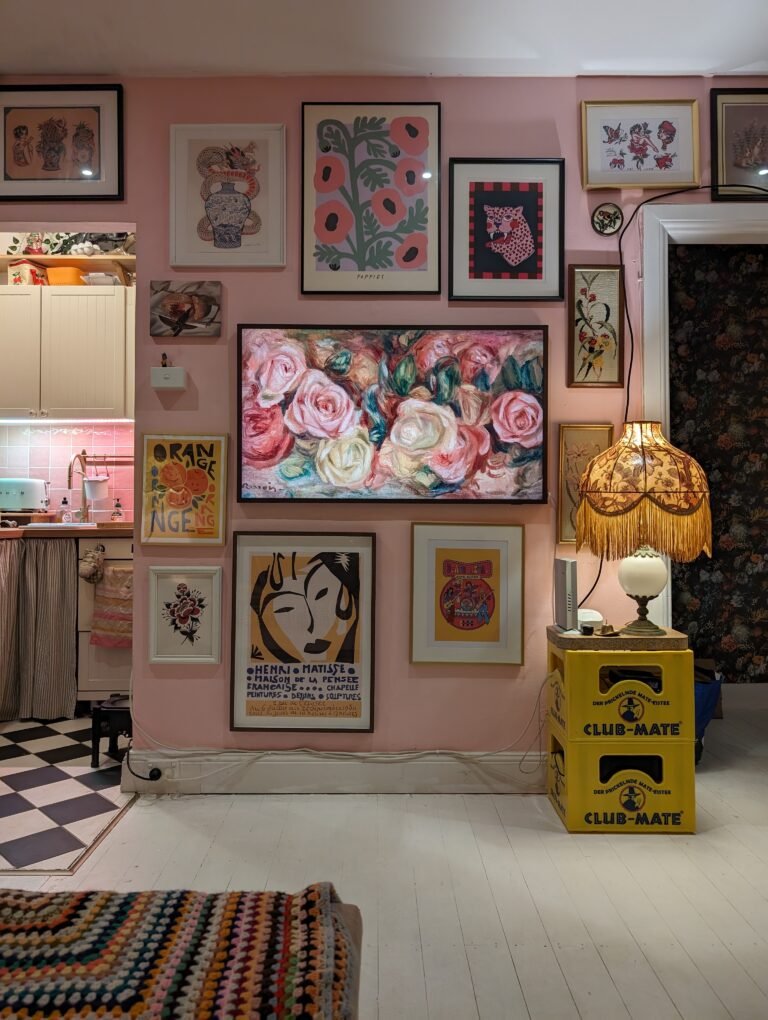
- Add one or two colors that make you feel something—through pillows, throws, or art.
- Let a stack of current books live on the coffee table.
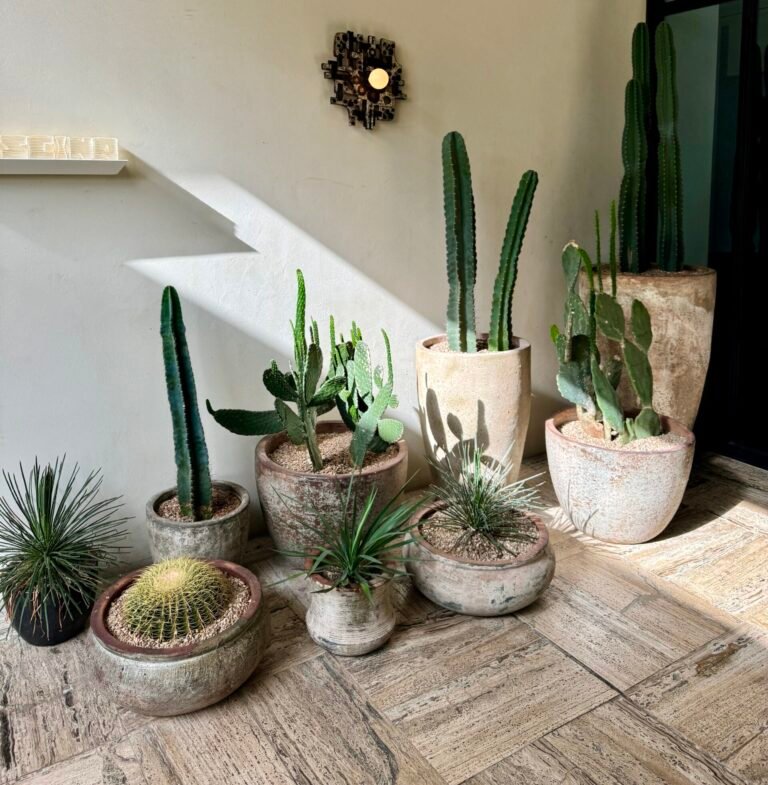
- Keep a plant or fresh flowers in the spot your eye lands first when you sit down.
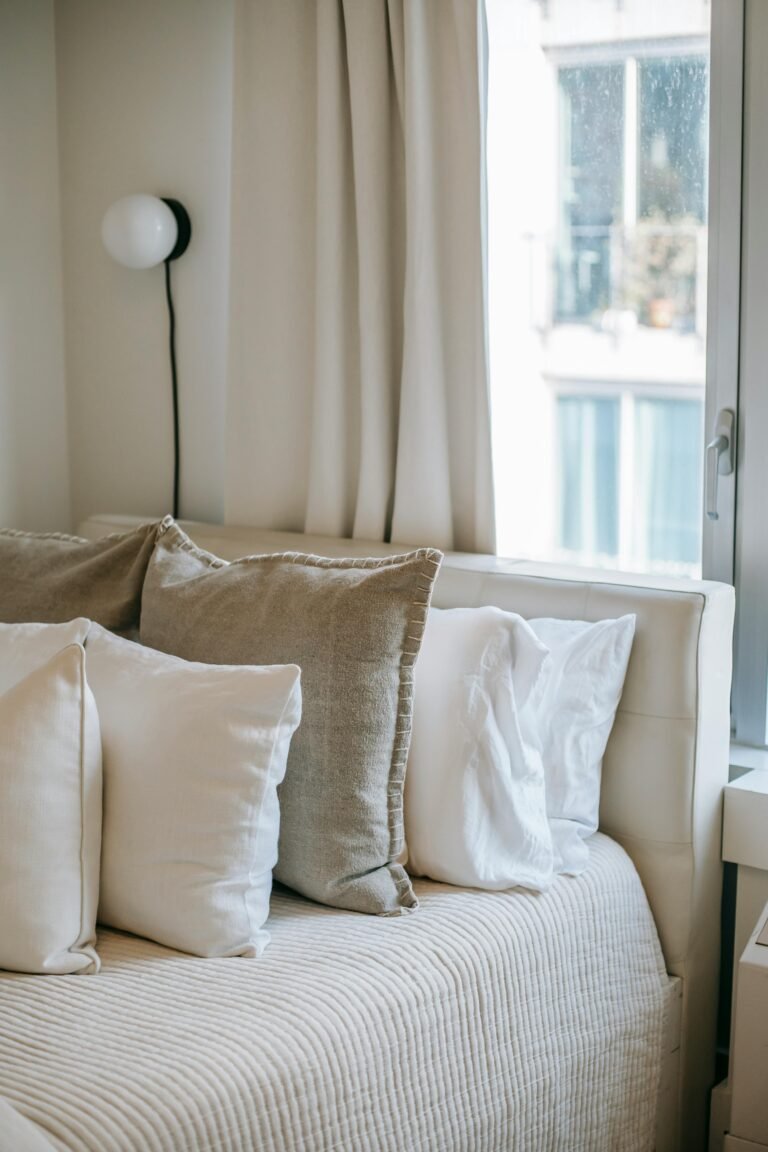
- Use textures (knit, linen, wood, rattan) that make the room feel warm rather than sterile.
If you’ve been working through the tension between “sad beige” and a home that actually reflects who you’re becoming, the living room is a great place to apply ideas from Aesthetic Routine: Building Habits That Match Your New Identity. You’re not just making the room pretty; you’re making it look like the life you’re trying to grow into—one where presence is more interesting than escape.
Step 5: Set Shared Rules That Don’t Feel Like Punishment
You don’t live in your living room alone.
Partners, roommates, kids, and guests all bring their own phone habits into the space. A phone-free living room that only exists inside your head is going to feel like a constant fight.
Instead, treat this as a shared experiment.
Start with one or two simple, clear boundaries
For example:
- No phones on the coffee table during dinner or game night.
- No scrolling on the couch after 9pm—if you really want to be on your phone, you do it somewhere else.
- One “screen-on” night a week for a show you choose on purpose, not whatever autoplay serves you.
The boundaries work best when they:
- Are easy to understand
- Apply to everyone in the room (including you)
- Have a clear “why” you all agree on (more rest, better conversations, wanting the room to feel different)
Replace, don’t just remove
If you take away everyone’s phones without offering anything back, resentment will build fast.
Pair each rule with something positive:
- “No phones on the table” → we light a candle and play a specific playlist at dinner.
- “No couch scrolling after 9” → we read, stretch, talk, or go to bed earlier.
- “One intentional screen night” → we make snacks, choose a movie ahead of time, and actually watch it.
The living room becomes less about restriction and more about what this room is finally allowed to be again.
Step 6: Let Your Evenings (and Mornings) Change Together
A phone-free living room doesn’t exist in isolation. It’s part of a bigger shift in how your days begin and end.
When evenings at home stop dissolving into scroll tunnels on the couch, you create space for:
- Earlier, more consistent bedtimes
- Sleep that isn’t fractured by late-night stimulation
- Mornings that don’t start with a screen in your face
You’ll feel this most on the edges of the day.
At night, when you sit down and realize your phone is in its “home” and your book or knitting is on the table instead.
In the morning, when you move from a calmer night in the living room into a slower, more intentional start to the day—the kind of rhythm you’ve been building in Morning Routines That Support a Rebrand.
This is where small environmental changes stack with identity work. It’s not just that you “use your phone less.” It’s that you’re becoming someone whose life, home, and routines match the story you’ve been trying to write about yourself—one evening, one room, one habit at a time.
When Your Living Room Finally Stops Pulling You Back to Your Phone
There will be a quiet night when you walk into the living room and notice it feels different.
The couch is still there. The TV still exists. But your phone isn’t waiting on the table.
Instead, you see:
- A book you’re halfway through.
- A game laid out on the table.
- A chair angled toward a window, blanket draped over the arm.
You sit down, and your body doesn’t immediately reach for the rectangle. It remembers the new job of this room.
That’s what a phone-free living room actually is—not a perfect, rule-obsessed space, but a room that gently makes the choice you wanted to make all along feel easier.
You don’t have to transform everything overnight. Start with one boundary (where your phone lives), one zone (a corner that actually invites you in), and one small ritual you repeat when you sit down.
Let the room do some of the work.
Over time, the living room that used to swallow your evenings will become the place where you get them back.