
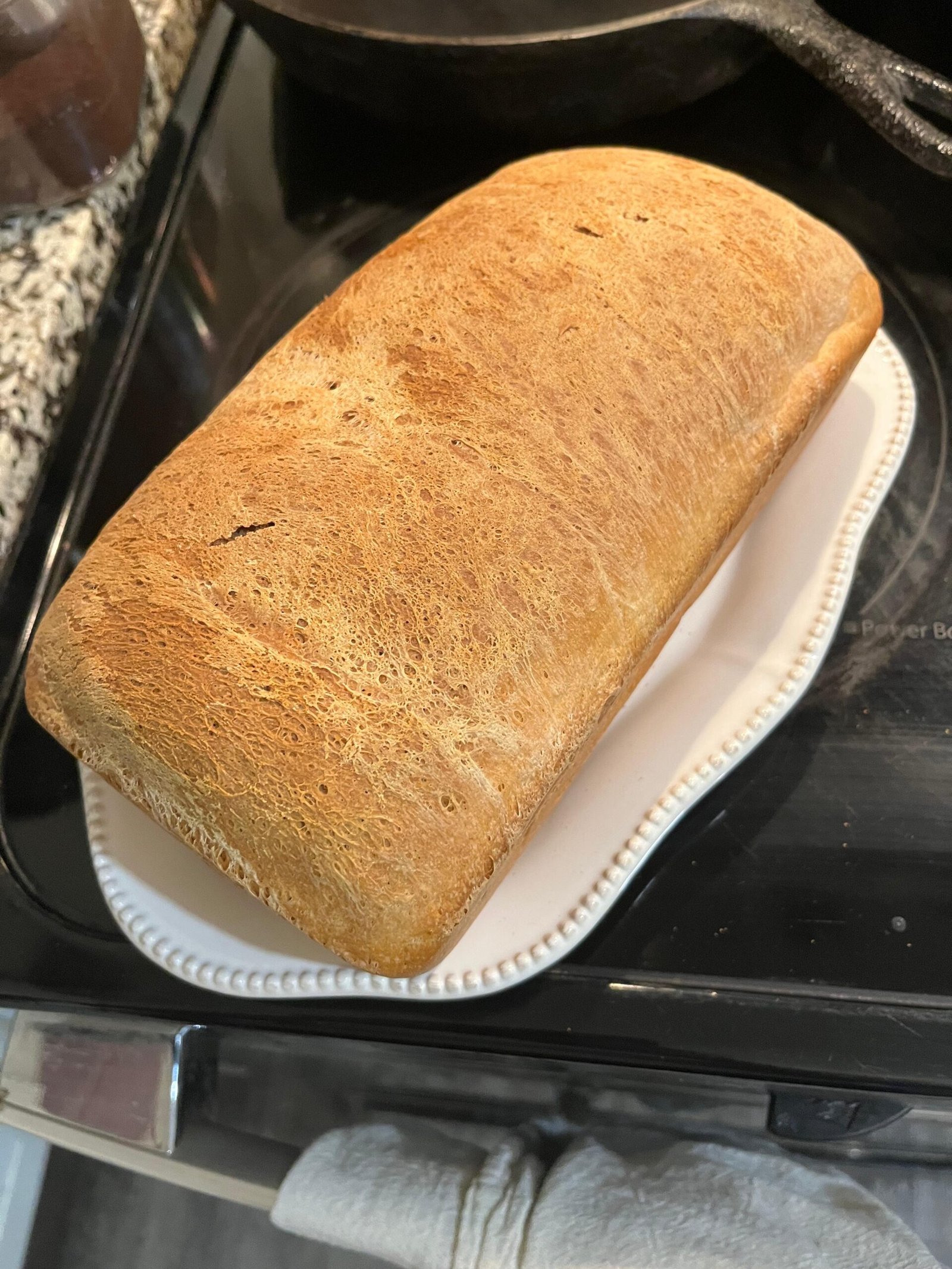
An easy 6-ingredient homemade bread recipe plus the small weekly habit that made our home feel warmer, calmer, and more grounded.
Picture this: it’s a cold New England evening, the kind where the sun disappears before dinner and everyone comes home with frozen fingers and red cheeks. The house is quiet for a second—until the front door opens, cold air rushes in, and someone pauses on the threshold.
“Are you making bread?”
That one question changed the mood of the whole night.
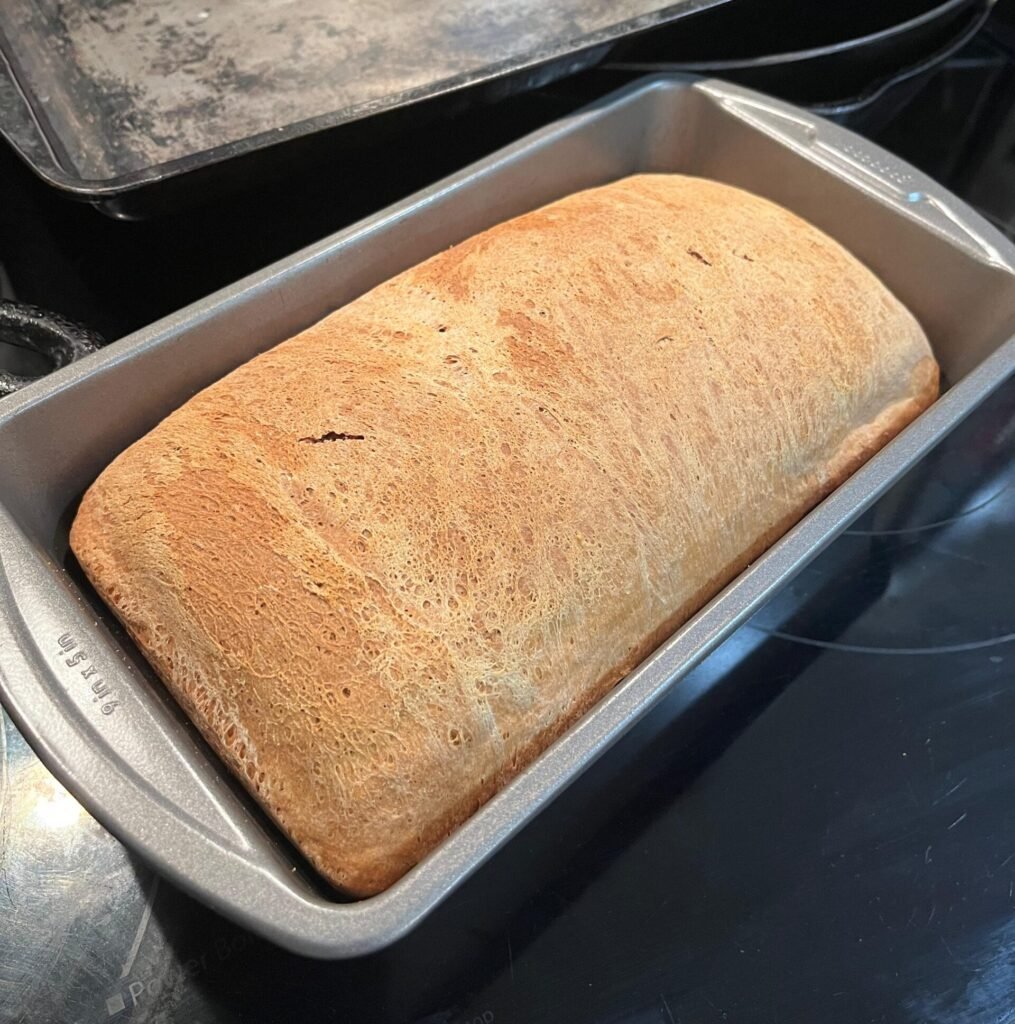
The smell of a simple homemade loaf, the sound of a knife slicing into the crust, the way steam curls up from the first slice… none of it is complicated. But it turned an ordinary Thursday into something that felt like a tiny celebration we’d built ourselves.
This is the story of that bread—and how one easy recipe quietly reshaped our evenings.
The Bread Itself: A Simple Recipe
Every family has its own favorite base recipe, and I won’t pretend yours has to look exactly like mine. Think of this less as a strict formula and more as a template you can adapt.
Simple Recipe
Easy Homemade Bread
Makes 2 loaves · Prep 20 min · Rise 75–100 min · Bake 25 min
Ingredients
- 5¾–6¼ cups all-purpose flour
- 1 packet active dry yeast (2¼ tsp)
- 2¼ cups warm milk (120–130°F)
- 2 tablespoons sugar
- 1 tablespoon butter or olive oil
- 1½ teaspoons salt
Steps
- Mix. Combine 2½ cups flour with yeast. Warm the milk with sugar, butter, and salt to 120–130°F.
- Bring together. Add warm milk to flour. Gradually mix in more flour until a soft dough forms.
- Knead. 6–8 minutes on a floured surface until smooth and elastic.
- First rise. Cover and rest in a warm spot until doubled, 45–60 min.
- Shape. Divide, shape into loaves, rise again 30–40 min.
- Bake. 375°F for 25 minutes or until deeply golden and hollow when tapped.
New England tip: Cold kitchen? Turn the oven on for one minute, turn it off, then tuck the covered dough inside to rise.
AFTERSCROLL.COM
It’s the opposite of fussy. No starter to feed, no special equipment, just basic ingredients and a little attention.
If you keep your recipe this straightforward, there’s room for the evening around it to carry most of the magic.
The Night the Bread Shifted the Room
The first time I made this bread, I wasn’t trying to be impressive. I was just trying to keep a promise to myself.
I had written “bake bread” in my planner for Thursday afternoon. Nothing glamorous. Just one line among appointments, toddler naps, and a dozen tiny to-dos. But because my planner has become almost sacred to me—a way of honoring what I say I’ll do—that one line mattered.
It was not an ideal day. Things hadn’t gone my way. I didn’t feel particularly domestic or confident. The last time I’d tried to bake bread, it came out dense and sulky and a little humiliating. But Thursday at four o’clock arrived, and the planner said bread. So I pulled out the mixing bowl.
I was still figuring things out as I went:
- Learning how long to knead by poking the dough and watching how it bounced back.
- Discovering that a New England winter kitchen is far too cold for yeast to be happy.
- Warming the oven for just a minute, turning it off, and tucking the bowl inside so the dough could rise.
The recipe itself was shockingly simple—no sourdough starters, no overnight schedules, no complicated equipment. Flour, yeast, warm milk, a little sweetness, salt, fat, patience.
While the loaf was in the oven, my husband came home from ice fishing, still in that half-outdoor, half-childlike mood he has when he’s been on the lake all day. He opened the door, stopped, and looked at me with this surprised, bright expression.
“You’re making bread?”
He hadn’t even seen the loaf yet. He could just smell it.
In our home, he’s usually the main cook. He makes game meatballs in big batches and freezes them, plans fish Fridays, handles the heavier kitchen projects. I’ve always been more comfortable with pasta, sauces, the Italian dishes I know by heart. So watching his face light up—seeing him walk into a house that smelled like something I had made, for us—shifted something in me.
That night we ate fusilli with his homemade venison meatballs, thick slices of my bread still warm from the oven, a little butter melting into the crumb. Our two-year-old wandered in and out of the kitchen, grabbing tiny bites, watching the whole thing unfold like it was the most natural thing in the world.
It felt like an ordinary dinner. But it also felt like a new kind of evening we could have again and again.
Why I Wanted One Simple Homemade Bread
This bread started long before I preheated the oven.
It really began with a book I fell in love with: French Women Don’t Get Fat. What stayed with me wasn’t the title; it was the way the author framed food as quality of life and lifestyle, not just fuel or a guilt-ridden checklist.
Reading it, I realized I wanted our kitchen to feel less like a place where packages got opened and more like a place where choices were made:
- Choosing seasonal ingredients instead of defaulting to whatever happens to be on the shelf.
- Choosing to make a few things at home—bread, mayonnaise, tomato sauce—instead of outsourcing everything to preservatives.
- Choosing foods that feel like an investment in the kind of life we want, not a reaction to whatever’s convenient.
Around the same time, I’d been thinking a lot about slow living—that idea of reducing artificial urgency so you can actually feel your own life again. Posts like Slow Living: What It Really Means (And How to Start) helped me see that slow living doesn’t require a cottage in the countryside. It just asks you to redesign tiny pockets of your day.
For us, this bread became one of those pockets.
Instead of deciding at 5 p.m. what dinner would be, I chose one very simple thing ahead of time: Thursday is bread day. That one choice started to anchor the rest.
The Planner, the Dough, and a Tiny Structural Change
For years, I thought I was just “not a routines person.” I liked the idea of structure, but my weeks felt scattered and reactive.
Getting serious about a paper planner changed that. Not in a productivity-hustle way, but in a this-is-what-I’m-building way. When I write something down now, it’s not wishful thinking. It’s a small promise.
So when I wrote “bake bread” on a Thursday afternoon, it wasn’t optional background noise. It had the same weight as a call, a deadline, or a school pick-up.
That’s one of the quiet gifts of a planner: it lets you treat beauty and atmosphere as seriously as errands and appointments. It’s the same energy you might have seen in posts like Morning Routine List: 13 Daily Habits for a More Organized Life—structure not just for work, but for the feeling of your days.
Bread day became:
- A reason to be in the kitchen at a particular time.
- An excuse to pause the scroll and actually use my hands.
- A small act of care for my husband, who often comes home tired and still cooks.
- A way for our son to see me making something we all enjoy.
It’s “just bread.” But it’s also a structural decision about what our home is for in the late afternoon.
Free download
The same thinking, applied to your mornings.
One intentional choice in the evening changes the whole night. One intentional choice in the morning does the same. Here’s the one-page checklist I use to start mine — before the noise gets in.
Download free →How One Loaf Became a Weekly Ritual
What surprised me most wasn’t the bread itself. It was everything it changed around it.
A few things started happening on bread nights:
- We sat down earlier. Knowing the loaf would be ready at a particular time nudged us away from last-minute dinners.
- The table looked nicer without much effort. A cutting board, a serrated knife, a small dish of butter—instantly more atmosphere.
- Our phones stayed out of reach. When there’s hot bread to slice and pass, you’re naturally using your hands for something else. Pairing this with a phone-free living room style rule—no phones on the coffee table during dinner—made the whole evening feel calmer.
- Our son watched the whole process. A two-year-old won’t remember every detail, but he’ll remember the smell, the rhythm, the sense that food can be made, not just unwrapped.
It also started to shift how I thought about weeknights in general.
Instead of seeing evenings as something to “get through” before bed, I started treating them as small, repeatable rituals (and sometimes even using the question jars and cozy corners in Conversation Starters for Date Night at Home).
Bread was just our version.
How to Start Your Own Bread Night (Even If You Don’t Think You’re a Baker)
You don’t need to be “good at baking” to build this kind of ritual. You just need a simple plan and a bit of consistency.
1. Choose one forgiving recipe
Skip the complicated artisan loaves for now. Look for words like “everyday sandwich bread,” “no-fuss,” or “beginner-friendly.”
You want something that:
- Uses pantry ingredients you already recognize.
- Rises in 1–2 hours, not overnight.
- Bakes in a standard loaf pan or Dutch oven.
Treat it the way you’d treat one of the visual templates from your salad or screen-free posts: a structure you can repeat, not a performance.
2. Give it a fixed home in your week
Pick a specific time and write it down. Maybe it’s:
- Thursday afternoons while your toddler naps.
- Sunday late mornings before a slow lunch.
- A quiet weekday when your schedule tends to be lighter.
Protect that time the way you’d protect a call or an appointment in your calendar. If you already love the idea of anchored routines from posts like Morning Routine Ideas: 9 Habits That Actually Work in Real Life, bread night can be the evening version.
3. Let your home support the habit
Make it easy to start:
- Keep flour and yeast in one clearly labeled spot.
- Store your loaf pan where you can reach it without rearranging the whole kitchen.
- Tape the recipe inside a cabinet or keep it open on the counter.
If screens tend to swallow your evenings, pull ideas from Screen-Free Activities for Toddlers and Screen-Free Activities: The Complete Guide to Living With Less Screen Time. Let your toddler stir flour, stack measuring cups, or “help” clean up while your phone charges in another room.
4. Pair the bread with a simple, repeatable dinner
Bread night doesn’t need a brand-new menu every time. In fact, the repetition is part of the charm.
Some easy pairings:
- Pasta with meatballs or a simple tomato sauce.
- A big, spring-style salad that actually eats like dinner.
- Soup or stew you batch-cook and freeze.
If you love the feel of lighter, yet satisfying dinners, you’ll find plenty of structure in 7 Big Spring Salads That Eat Like Dinner—the same principles apply: real protein, real texture, a bit of freshness, and something beautiful on the side.
5. Notice what changes (beyond the recipe)
After a few weeks, pay attention to what’s different:
- Do your evenings feel calmer when there’s one small thing you know you’re making?
- Does your home smell different on bread days?
- Do conversations last a little longer at the table?
These are the tiny, real-life markers of slow living—far more than any aesthetic. When you zoom out, this is the same story as Why Slow Productivity Is the Only Sustainable Path for Women: choosing a gentler rhythm that still feels deeply intentional.
When Your Home Smells Like Bread
There will be another evening when someone you love opens the door, breathes in, and smiles before they even see you.
Maybe it’s a partner coming home from work, a friend dropping by, or a child wandering into the kitchen to see what’s happening. Maybe it’s just you, standing in your own doorway, realizing the house feels a little warmer and more alive than it did an hour ago.
That’s the quiet power of one simple homemade loaf.
It doesn’t require a full kitchen renovation, a brand-new personality, or a perfect schedule. Just a bowl, a bit of time, and a small, sacred line in your planner that says: tonight, we bake.