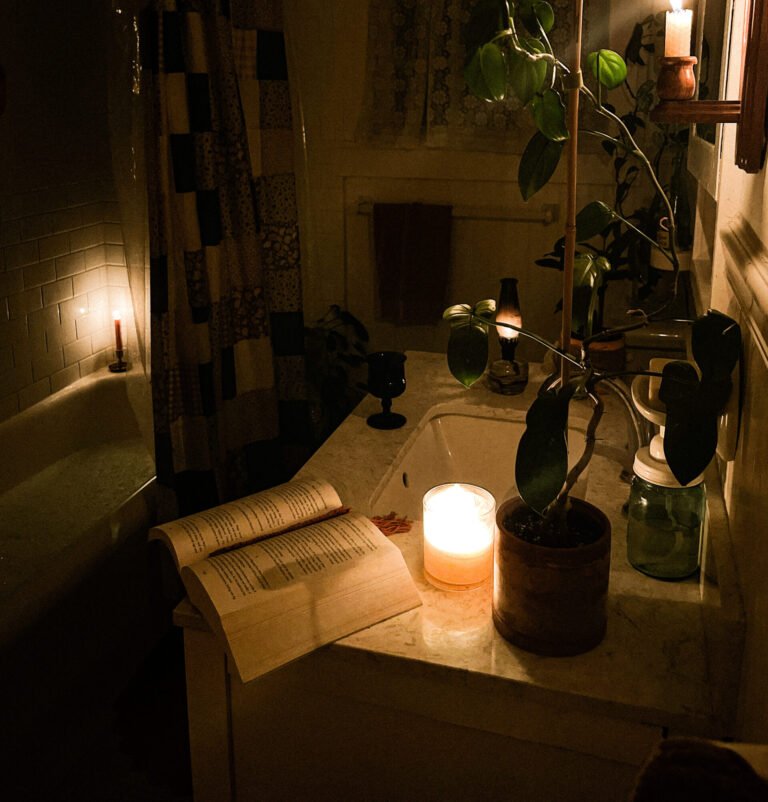

Build a simple night routine without your phone using 5 calming habits that reduce bedtime scrolling and help you fall asleep more easily.
There is a version of night that makes sleep feel close before you even get into bed. The kitchen is mostly closed. The lights are softer. Your phone is no longer moving from room to room with you. Instead of ending the day inside everyone else’s updates, you begin to feel your own life again.
That is what a night routine without your phone can do. It does not need to be strict, performative, or wildly ambitious. It simply needs to make the last hour of the day feel quieter, more physical, and more supportive of deep sleep.
If your evenings keep dissolving into “just one more check,” this guide will help you build a simple wind-down ritual that protects your attention, makes your bedroom feel more restful, and gives tomorrow a gentler start.
Quick win: a simple night routine without your phone
If you want to try this tonight, start here:
- Pick a phone cutoff time 30–60 minutes before bed.
- Put your phone in its night home — ideally outside the bedroom.
- Lower the sensory volume with one lamp, fewer tabs, and a tidier surface.
- Choose one analog wind-down activity like reading, showering, stretching, or journaling.
- Close the night with one repeatable sleep cue so your body recognizes bedtime.
That small sequence is enough to make a real difference.
What is a night routine without your phone?
A night routine without your phone is a simple set of habits for the last stretch of the day that removes scrolling from the center of the evening and replaces it with calmer, more sleep-friendly cues.
In practice, it means your nights are shaped by light, rhythm, and real-world rituals instead of notifications, clips, and the endless urge to check one more thing.
Why your phone makes deep sleep harder to reach
The problem with nighttime phone use is not only time loss. It is the way it keeps the brain lightly activated when you want the whole house — and your whole nervous system — to start closing.
The American Academy of Sleep Medicine’s reporting on bedtime doomscrolling makes this especially clear: many adults say screen time before bed makes their sleep worse, and younger adults feel it even more sharply. This matters because bad nights are often built from tiny, ordinary moments — a quick check in bed, a little scrolling after brushing your teeth, one article that becomes five.
Light matters too. Harvard Health’s explainer on blue light notes that evening light exposure can affect melatonin and shift circadian rhythm in a way that makes sleep feel farther away. And the Sleep Foundation’s guidance on electronics and sleep adds an equally important point: it is not only the light, but also the stimulation.
In other words, a phone-free night routine works because it solves several small problems at once:
- less light in your eyes right before bed
- less novelty when your brain should be settling
- less emotional noise from news, messages, and feeds
- less temptation to keep extending the night by accident
This is also why better sleep rarely starts with willpower alone. It starts with better rules around technology.
The best night routine without your phone starts before bed feels urgent
One reason nights get so slippery is that the phone becomes the bridge between every part of the evening. You finish dinner, you check it. You tidy the kitchen, you check it. You change clothes, you check it. By the time bedtime arrives, the phone is not just a device. It is the atmosphere.
I keep coming back to this idea in After Scroll: your environment is never neutral. It is always teaching you what to do next. If the last hour of the night still feels bright, busy, and open-ended, the scroll will almost always feel like the easiest option.
That is why it helps to start the ritual a little earlier than you think. If your evening still needs a softer landing after work, ending the workday on purpose gives the whole night a cleaner beginning. And if tomorrow mornings matter to you, the small evening habits that make mornings easier remind you that sleep is only part of the story. Nights are also where tomorrow begins.
A 5-step wind-down ritual for deep sleep
1. Give your phone a real night home
A night routine without your phone becomes much easier when the phone stops traveling with you.
Try one clear rule:
- the phone charges in the kitchen
- the phone stays on a hallway shelf
- the phone gets one last check, then it is done for the night
- the bedroom stays phone-free
Clarity matters more than intensity. You are not trying to become anti-technology. You are simply refusing to let a glowing rectangle set the emotional tone of the night.
If this feels hard, make the rule smaller at first: no phone in bed, even if the phone is still in the house. That one boundary alone can change how quickly sleep begins to feel possible.
2. Lower the room before you lower yourself
A good wind-down ritual is often more atmospheric than impressive.
Turn off the overhead light. Put on one lamp. Clear one visible surface. Close the laptop. Let the room stop asking for so much from you.
This is where a night routine without your phone becomes elegant rather than restrictive. You are not just removing a habit. You are replacing it with a setting that feels better to inhabit.
A softer room gives you a softer decision. I’ve noticed that even simple changes — a tidier nightstand, a warm lamp, a closed kitchen — make the phone feel less magnetic because the room itself already feels complete.
3. Choose one analog activity before the scroll starts
The phone wins most easily when you sit down without a plan.
So instead of only asking what you will stop doing, decide what your hands will do instead. A few good options:
- read ten pages of a real book
- take a warm shower and do skincare without watching anything
- stretch for five minutes on the floor
- make tea and drink it slowly
- write tomorrow’s one priority on paper
- fold a small basket of laundry in a calm room
If you want a slightly bigger container, an offline pocket at home makes this part of the night feel almost automatic. And if the deeper issue is a scrolling habit that follows you all day, breaking the cycle without throwing your phone away is part of the bigger picture.
The important thing is that the replacement feels pleasant, not punishing. A phone-free night routine should not feel like the fun has been removed. It should feel like better pleasures are finally easier to reach.
4. Get tomorrow out of your head
A lot of nighttime scrolling is disguised avoidance. The day is ending, tomorrow exists, and the phone offers a very efficient way not to think about any of it.
That is why one tiny “future me” action helps so much. Try one:
- set out your water glass or coffee mug
- choose tomorrow’s clothes
- write down tomorrow’s first task
- reset the kitchen counters
- put your bag, keys, or shoes where they belong
This takes pressure off the mind because tomorrow is no longer floating around unresolved.
It also sets up a calmer first hour tomorrow so your day does not begin with the same reactive energy you were trying to escape the night before.
5. Let the bedroom feel like the final signal
A night routine without your phone works best when the bedroom has a clear job: sleep.
The simplest principle here is also the strongest one: the fewer electronic distractions in the room, the easier it is for your body to associate the space with rest. That does not mean your bedroom needs to be perfect. It just needs to feel turned down.
A few easy ways to do that:
- keep chargers out of reach from the bed
- let the light stay warm and low
- keep one good book on the nightstand
- make the bed feel inviting before you are exhausted
- avoid treating the bed like a second couch or second desk
The bedroom should make deep sleep feel closer, not negotiable.
What to do when you still want to scroll
Some nights the urge will still be strong. That is normal.
The answer is not moral drama. It is friction plus replacement.
When the urge hits, try this quick reset:
- stand up and put the phone in its night home
- turn on one lamp instead of the main light
- choose the smallest analog option available
- tell yourself you only need to do it for ten minutes
Often that is enough to break the spell.
This is especially helpful on tired nights, when you do not need a beautiful ritual — you just need a better default. Your fallback version might be extremely simple: wash face, phone away, tea, book, bed. That still counts. In fact, that is often when the routine starts becoming real.
How to start tonight without overcomplicating it
If you want a night routine without your phone to actually stick, do not start with ten rules. Start with one sequence you can believe in.
Here is an easy version:
- 9:00 PM: final phone check
- 9:05 PM: phone to kitchen charger
- 9:10 PM: dim lights and reset one surface
- 9:15 PM: shower, tea, or reading
- 9:45 PM: bed with no phone
That is enough. You can make it prettier later. You can lengthen it later. First, make it real.
What matters most is the feeling you are building: the night has shape, the room has softened, sleep has been invited in on purpose.
Quick recap
If you want deeper sleep and calmer nights, a night routine without your phone works because it replaces stimulation with rhythm.
Here is the simple version again:
- park the phone before bed instead of bringing it room to room
- lower the sensory volume with softer light and fewer open loops
- choose one analog pleasure before the scroll begins
- lightly prepare tomorrow so the mind can stop carrying it
- let the bedroom cue sleep instead of more consumption
The most beautiful part of this kind of ritual is that it is not really about the phone. It is about teaching your evenings to feel inhabited again.
A night that ends with calmer light, a quieter room, and a few repeatable gestures does more than help you sleep. It helps you remember that your real life is happening here — in your home, your habits, your relationships, and the way you close the day.