
Learn how to create a low dopamine morning routine for anxiety with less phone time, fewer decisions, and gentle anchors that help you feel grounded.
There are mornings when the world feels loud before anything has even happened. The light is thin, the kitchen is still, and yet your mind is already skipping ahead—messages, decisions, what-ifs, the tone of the whole day forming too fast.
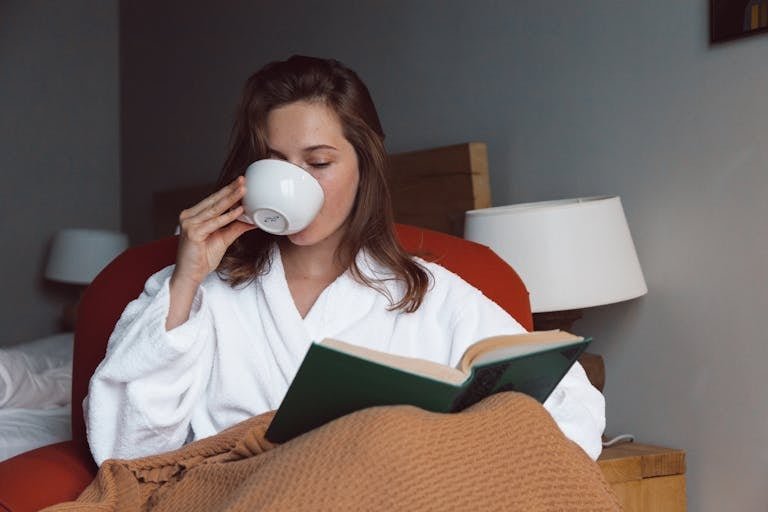
A low dopamine morning routine for anxiety helps the day begin in a quieter key. Not by turning your morning into a strict wellness performance, and not by asking you to become someone with unlimited calm, but by lowering the amount of stimulation your body has to sort through before you are fully awake.
If you want this to help in real life, start here:
- keep your phone out of the first 20 to 30 minutes
- let light, water, and one simple physical task come first
- choose three repeatable anchors instead of a 10-step routine
- make the room softer and less visually busy than your feed
- set up one tiny thing the night before so the morning begins with less drag
That is enough to change the emotional texture of a day.
What “low dopamine” means when anxiety is part of the picture
In practical terms, a low dopamine morning routine for anxiety is simply a lower-stimulation way to wake up. It gives your nervous system fewer sharp edges first thing: fewer alerts, fewer decisions, fewer visual temptations, fewer tiny jolts of urgency.
This matters because anxious mornings often are not only about thoughts. They are also about input. The phone lights up. A news headline lands too early. You open email before your body has even registered the room. A beautiful-but-demanding routine online suggests you should already be drinking lemon water, stretching, journaling, and becoming a new woman before 7:00 AM.
A gentler morning asks much less of you.
It gives you:
- structure without heaviness
- habits that are easy to repeat when your mind feels tender
- environmental calm before the internet starts narrating the day
- a little more authorship over the first hour of your life
That is the real appeal. A quieter morning makes it easier to show up for your work, your home, your relationships, and the life you are actively building.
Start with a calm first 20 minutes
Before you optimize anything, protect the first 20 minutes.
Think of this as a soft landing strip.
During that window:
- Do not open your phone. Let the device stay asleep a little longer.
- Change the room before you change your mind. Open the curtains, turn on one lamp, crack a window, or make the bed.
- Drink water before digital input. A full glass is enough.
- Touch one real-world task. Rinse a mug, unload a few dishes, start breakfast, step outside.
- Decide one simple priority for the morning. Not your whole life. Just the next meaningful thing.
This is where a calmer first hour before the internet gets a vote starts to make sense in ordinary life: a calmer first hour before the internet gets a vote.
You are not trying to win the morning. You are trying to make sure it begins inside your actual life.
Pick three anchors and repeat them
The routines that help anxiety most are usually the ones that feel recognizable.
Not impressive. Recognizable.
Choose three anchors that you can repeat on ordinary mornings:
1. Wake the room
Begin with atmosphere.
Open the curtains. Make the bed. Turn on one soft light if the morning is still dim. Let the air move a little. These are small physical signals, but they do important emotional work. They tell your body the day is beginning in a place, not inside a screen.
Harvard Health’s explanation of how sleep-wake cycles affect mood is a useful reminder here: light helps regulate the rhythms that shape sleep, alertness, and mood.
2. Wake the body
Keep this part very gentle.
You do not need a punishing workout or an ambitious checklist. Anxiety usually responds better to steadiness than to intensity first thing.
Try one of these:
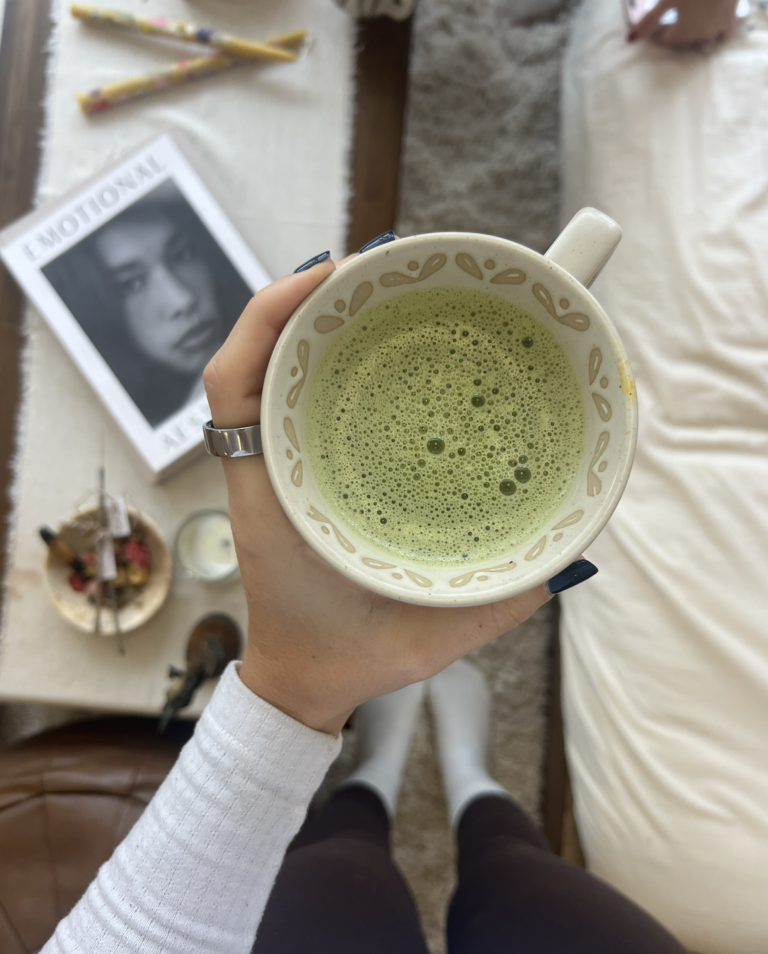
- a glass of water standing at the counter
- a short stretch while the kettle boils
- a few minutes outside on the porch, balcony, or sidewalk
- a quick walk to the mailbox or around the block
- breakfast made without opening any apps
If you enjoy breathwork, keep it simple and unfussy. The NCCIH notes that diaphragmatic breathing exercises may help reduce stress, which makes a quiet minute of slower breathing a lovely fit here—especially if your body tends to wake up already a little alert.
3. Wake the day
Once the room and body are awake, give the morning one clear direction.
This might be:
- writing down the one thing that would make the day feel more grounded
- opening your planner before your messages
- looking at your first appointment without falling into inbox mode
- deciding what the morning is protecting: breakfast, focus, a school run, a calm start to work
The point is not productivity theater. The point is to make the morning belong to you before it belongs to everything else.
Make your phone wait—and give it a home
For many women, the phone is the fastest route from a quiet room to an anxious mind.
A low dopamine morning routine for anxiety gets much easier when the phone has an address instead of a shadow life. Bedroom drawer. Kitchen counter. Shelf by the coffee machine. Charger across the room. Anywhere that prevents the automatic hand-to-screen reflex.
A phone-light start that begins in your actual room is often much easier to keep than a vague promise to “use your phone less”: a phone-light start that begins in your actual room.
A few simple rules work beautifully:
- no social apps until after breakfast
- no notifications until your three anchors are done
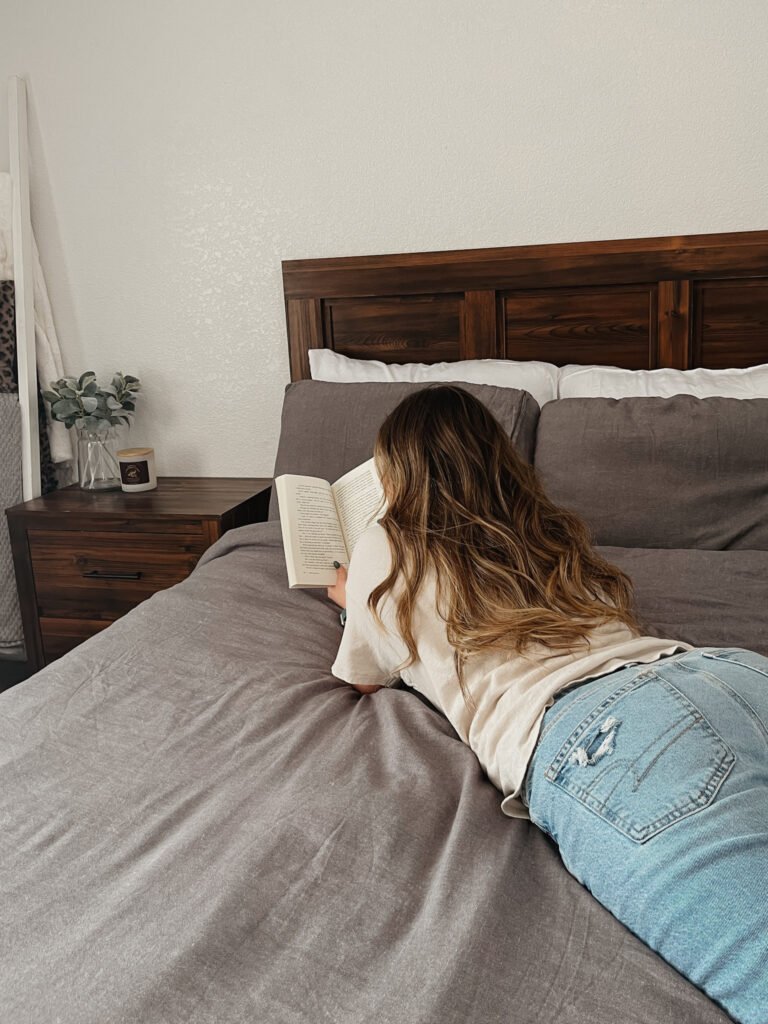
- no phone in bed, so the morning starts when your feet hit the floor
- no carrying the phone from bed to bathroom to kitchen like it’s part of your body
If your device feels too visually rewarding, it also helps to make it slightly duller. Moving high-pull apps off the home screen or reducing how colorful and easy it feels to open them can lower the urge to reach. In other words, try making your phone less visually rewarding to look at.
Let the room feel gentler than your feed
An anxious morning often improves when the environment stops competing with your attention.
Ask yourself: what does the first room of the day feel like?
Is it bright, cluttered, loud, full of chargers, open tabs, and visual leftovers from yesterday? Or does it feel slightly edited—like a place where a person could think one complete thought before the world arrives?
A few small changes help more than they seem to:
- put out a real glass the night before
- leave a notebook open instead of your phone on the table
- use one lamp instead of hard overhead light when the room still feels tender
- keep counters as clear as you reasonably can
- make one chair or corner feel intentionally pleasant
This is also why the night-before habits that make gentler mornings possible matter so much: the night-before habits that make gentler mornings possible.
An elegant morning is rarely built by willpower at 7:00 AM. It is built upstream, in the rooms and rules that make calm easier to choose.
Keep the routine nourishing, not performative
One reason many morning routines backfire for anxiety is that they ask too much too early.
They become another thing to fail at.
A low dopamine morning routine for anxiety should feel believable. Soft enough to keep. Clear enough to repeat.
That means:
- shorter is better than idealized
- pleasant is better than punishing
- repeatable is better than elaborate
If your body is still waking up, that might mean your routine is only:
- curtains open
- water
- bed made
- one slow breakfast move
- one look at the day on paper
That counts.
If you want more offline replacements ready for the moments your brain wants a quick hit, keep a short list nearby. A short list of quieter things to reach for when your brain wants a hit can make the whole routine easier to hold: a short list of quieter things to reach for when your brain wants a hit.
And if you want more examples beyond the morning itself, a broader menu of low-stimulation things to do instead of defaulting to your phone can help you protect the rest of the day too: a broader menu of low-stimulation things to do instead of defaulting to your phone.
What this can look like in real life
There is no perfect version. There is only the version that supports your actual morning.
If you live alone
Let the first 20 to 30 minutes feel slow and physical. Open the curtains. Drink water. Stand outside if you can. Write one sentence about what the morning is for before any digital noise starts.
If you have children
Keep the routine atmospheric instead of precious. Lights on. Breakfast started. Phone away. Water for you before the household accelerates. Even a low dopamine morning routine with children can work when it feels like room tone rather than a solo performance.
If you work from home
Protect the first block for one meaningful task before email. An anxious work-from-home morning usually gets worse when the inbox becomes the first voice you hear.
If mornings are tight
Shrink the whole routine to five minutes:
- open the curtains
- drink the water
- put the phone down somewhere else
- do one physical task
- look at one priority on paper
That is still a real beginning.
Use the night before to support the morning
A gentler morning often begins the evening before.
This is not about turning your nights into a second shift. It is about giving tomorrow less friction.
Try one or two of these:
- plug your phone in outside the bedroom
- set out your mug and water glass
- leave your planner or notebook open to the right page
- write tomorrow’s one priority before bed
- reset one visible surface so the room greets you well
Sleep matters here too. The Sleep Foundation’s guide to how electronics affect sleep is a good reminder that screens do not only shape attention. They also change how easily the body settles at night, which changes the feel of the next morning.
That is why a low dopamine morning routine for anxiety works best as part of a rhythm, not an isolated trick.
How you know it’s working
A good morning routine for anxiety does not make you feel morally superior.
It makes you feel slightly more available for your own life.
You will know it is helping when:
- the first hour feels less jagged
- you reach for your phone with less urgency
- the room feels easier to be inside
- your mind gathers itself faster
- one useful thing happens before the day starts scattering you
- mornings feel easier to repeat than to recover from
That last one matters most.
The best routines do not impress you. They hold you.
A softer start is still a strong start
There is something deeply appealing about a morning that does not demand a performance.
A little light. A little order. A little movement. A phone that waits. A room that feels softer than the internet. A day that begins from inside your life instead of outside it.
That is what a low dopamine morning routine for anxiety can offer.
Not a cure. Not a new personality. Just a steadier first chapter.
And often, that is enough to change the tone of everything that follows.
Because the woman building a life she wants to stay present for does not need a harsher morning. She needs one that lets her arrive.