
Discover tiny daily habits that quietly build self-trust—through small promises, completed tasks, and kinder routines.
There’s a very specific kind of day that feels good when you fall asleep. And that’s because you can point to a handful of moments and think, I did what I said I would do today.
You answered one message you’d been avoiding. You finished the thing you started. You moved your body the way you promised yourself you would. You closed your laptop when you said you would, instead of slipping into “just one more scroll.”
That feeling—that quiet, grounded sense of I can rely on myself—is self-trust.
You don’t buy it with a new planner or a big life overhaul. You build it through tiny, repeatable micro-habits that line up with the person you’re becoming.
This post is about those habits.
Think of it as a gentle companion to deeper pieces like Aesthetic Routine: Building Habits That Match Your New Identity and Morning Routine List: 13 Daily Habits for a More Organized Life. Those articles zoom out on identity and structure. Here, we’re zooming in on the smallest possible moves that prove to you—day after day—that you’re someone you can trust.
Pick two or three that immediately make you think, yes, that feels like the next version of me, and start there.
What Self-Trust Looks Like in Real Life
Self-trust is one of those phrases that sounds abstract until you see it in your day.
In real life, self-trust looks like:
- You believe yourself when you put something on the calendar.
- You take your own ideas seriously enough to give them time.
- You don’t panic when you miss a day—you know you can come back.
- You speak to yourself like someone you respect, not someone you’re disappointed in.
It’s deeply related to self-esteem, but a little more practical. If you’ve explored posts like Self-Esteem in the Age of Digital Media or 5 Self-Esteem Books Worth Reading (And the One That Actually Changed How I See Myself), you’ve already seen the bigger emotional landscape.
Self-trust is the daily, lived version of that work. It’s how you:
- Show up for your own structure
- Follow through on tiny pieces of production
- Shape your environment so it supports who you’re becoming
- Hold your relationships (including the one with yourself) with more steadiness
And because it’s so daily, micro-habits are the most elegant way to build it.
Why Micro-Habits Are So Powerful for Self-Trust
Big declarations—“I’m going to change everything this month”—feel intoxicating in the moment. They also put enormous pressure on a single season of your life.
Micro-habits do the opposite. They:
- Shrink the promise down to something your current life can hold.
- Create dozens of small opportunities to keep your word to yourself.
- Turn “becoming a different person” into a series of tiny, doable rehearsals.
If you’ve read Why Slow Productivity Is the Only Sustainable Path for Women, you already know the After Scroll point of view: depth over hustle, focus over frantic output.
The same idea applies here. You don’t need a dramatic self-trust bootcamp. You need a few micro-habits that quietly, steadily confirm: when I say I’ll do something, I usually do.
1. Choose One Daily Promise (and Keep It Tiny on Purpose)
The quickest way to start rebuilding self-trust is to shrink the promise until it’s nearly impossible to break.
Instead of “I will stick to a perfect morning routine,” try:
“Every weekday, I will do one tiny thing that orients me before I open my phone.”
That might be:
- Opening your planner before you touch a screen (borrowed from Morning Routine List)
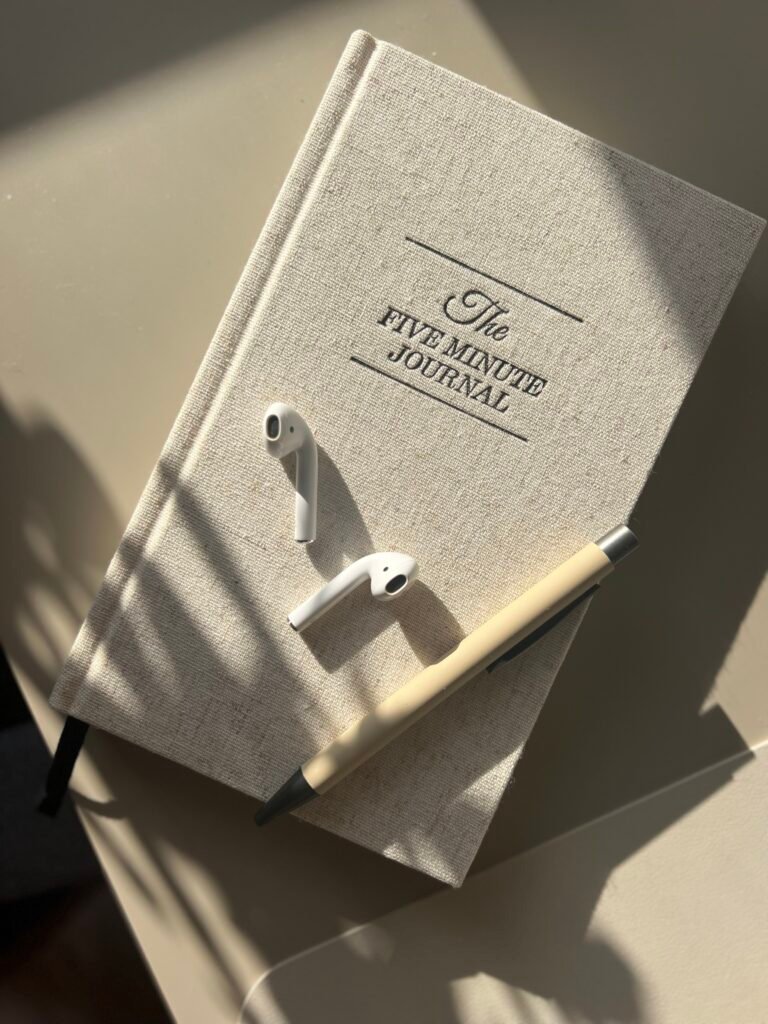
- Writing a one-line answer to: “What’s the one thing under my control that would make today feel good?”
- Standing by the window for 30 seconds with your coffee, just to actually notice the light
The point is not impressiveness. It’s repetition.
Every day you keep that micro-promise, you’re sending yourself evidence: I do what I say, even when it’s small. Over time, that matters more than any dramatic push.
Tiny prompt:
After I pour my morning drink, I will do one 60-second orienting habit before I touch my phone.
If you like having gentle structure to plug that into, the printable in Morning Routine Checklist: A Printable Step-by-Step Morning Plan can hold the rest.
2. Finish One Small Thing You Start
Self-trust erodes in the gap between our starts and our finishes.
We start the email but never hit send. We open the draft but never complete the paragraph. We tidy one corner and then wander away. Eventually, our brains start to believe the story: I’m someone who doesn’t finish things.
Instead of demanding that you suddenly finish everything, choose one finish line every day:
- Send the email you already drafted.
- Take the dishwasher from “clean but open” to “emptied and closed.”
- Move the blog post from outline to rough draft, even if it’s messy.
If you want a bigger companion piece, How to Finish What You Start and The One Thing Book Review: Why Focus Beats Hustle are helpful mindset anchors. But the micro-habit is simple:
Tiny prompt:
Every afternoon, I ask, “What’s one thing I already started that I can actually finish before I close my laptop?” and I finish it.
The task can be tiny. The message to yourself is not.
3. Keep an “Evidence List” of Kept Promises
Self-trust is built on remembered follow-through, not just follow-through.
Our brains are very good at cataloguing every miss and almost allergic to noticing the quiet wins. An evidence list is a micro-habit that corrects that bias.
Once a day, jot down two or three things you actually did:
- “Went on the 10-minute walk I planned.”
- “Closed Instagram at 10 p.m. like I said I would.”
- “Started work with my one thing before checking email.”
That’s it. No paragraphs. No analysis.
This is where a little external support helps. Research from UC Berkeley’s Greater Good Science Center on how gratitude changes your brain suggests that small, regular reflection practices literally re-train what your attention notices.
Self-trust works the same way: the more you practice noticing evidence that you’re reliable, the easier it becomes to act like someone who is.
Tiny prompt:
Before I close my planner at night, I list three tiny things I followed through on today.
Over a few weeks, this becomes a living archive of trust—not in an abstract sense, but in specific, ordinary moments.
4. Give Your Future Self One Visible Assist
Micro-habits don’t just live in your head. They live in your environment.
One of the simplest self-trust builders is choosing a single way, each day, to make tomorrow easier than today. Think of it as a tiny “evidence gift” to your future self:
- Laying out tomorrow’s clothes (your future self doesn’t have to decide).
- Putting your book open to the right page in your reading chair.
- Putting your workout mat where you’ll literally trip over it.
This is the lived version of what we talk about in Aesthetic Routine: Building Habits That Match Your New Identity. You’re not styling your home for photos; you’re shaping it to quietly say, “I know who you’re becoming, and I’ve prepared for her.”
Here, the cue is architectural: your rooms start to prove that you are someone who thinks ahead, even in micro ways.
Tiny prompt:
Every evening before I sit down for the night, I set up one visible thing my future self will thank me for tomorrow.
5. Protect One Screen Rule You Can Actually Keep
You don’t need a full digital detox to rebuild self-trust. You need one rule about your phone that you actually respect.
Some options:
- No social apps in the first 30 minutes of your morning.
- Phone charges outside the bedroom.
- One app-free block every evening between dinner and your wind-down routine.
If you’ve already explored why scrolling feels so compelling in posts like Why Social Media Scrolling Feels Addictive (And What to Do Instead) or How to Stop Scrolling Addiction (Without Throwing Your Smartphone Away), you know this isn’t about virtue. It’s about design.
Self-trust grows every time you choose to honor your own boundary—even when no one is watching, even when it would be easier not to.
Tiny prompt:
On weeknights, my one non-negotiable is: no social apps between dinner and my wind-down routine.
And if you want a full strategy for those reclaimed pockets of time, the ideas in Morning Routine for Success: 21 Simple Habits That Actually Work are surprisingly easy to re-purpose into evening anchors.
6. Give Your “One Thing” a Fixed Daily Home
Self-trust isn’t only about what you do; it’s about what you do first.
Every day has one thing that matters more than the rest—a piece of work, a home task, a conversation, a small but meaningful step toward a rebrand or a move or a financial goal.
When you consistently give that “one thing” a protected slot in your day, you quietly start to believe: when something matters to me, I make room for it.
The combination of focus and trust is the whole heartbeat of Morning Routine List: 13 Daily Habits for a More Organized Life and The One Thing Book Review: Why Focus Beats Hustle.
Your version doesn’t have to be dramatic:
- 30 minutes on your creative project before you open email.
- 15 minutes of budgeting or bill-sorting on Sunday evenings.
- 20 minutes of movement before you sit down at your desk.
Tiny prompt:
On weekdays, I give my “one thing” a 30-minute home on my calendar—and I treat it like a real appointment.
Over time, that simple slot becomes proof that your own priorities are not optional.
7. Run a Weekly Self-Trust Review (In 10 Minutes)
Once a week, zoom out.
Self-trust is easier to see in patterns than in individual days. A short, honest review keeps the work light but meaningful.
Open your planner or notes and ask:
- Where did I keep my word to myself this week?
- Where did I drop a promise—and why? (Be curious, not punishing.)
- What’s one micro-habit I want to protect next week?
If you enjoyed the reflection rhythm in pieces like Morning Routine Ideas: 9 Habits That Actually Work in Real Life, this is the same energy, pointed at trust.
Tiny prompt:
Every Sunday afternoon, I spend 10 minutes answering those three questions before I open social apps.
You’re not looking for perfection. You’re looking for direction.
Let Your Self-Trust Stay Small (The Shift Won’t Be)
It’s tempting to think self-trust will arrive after the big achievement: the new job, the move, the rebrand, the season where everything is finally “together.”
But in practice, self-trust usually arrives before those moments—in the dozens of tiny ways you rehearse being the kind of woman who shows up for what she says she wants.
Every time you:
- Honor a small boundary with your phone
- Finish one thing you start
- Give tomorrow’s self a visible assist
- Protect your “one thing” on the calendar
…you’re casting a quiet vote for your next identity.
Read this alongside Aesthetic Routine: Building Habits That Match Your New Identity and you’ll see the through line: real transformation isn’t something you perform. It’s something you practice, one micro-habit at a time.
You don’t have to overhaul your life to feel different.
You just have to keep nudging your days—and your rooms—toward the version of you you already know you’re building.
Let the habits stay small. The self-trust that grows from them will not be.