
Replace bedtime scrolling with a phone-free evening routine built around 5 simple habits. Create calmer nights, better boundaries, and a gentler path to sleep.
There is a very specific kind of night that changes the mood of a whole week.
Dinner is finished. The kitchen is mostly back in order. A lamp is on somewhere. Your phone is no longer traveling from room to room like it owns the evening. Instead of falling into the familiar blur of messages, tabs, and clips, you begin to feel yourself arriving back inside your actual life.
That is the promise of a phone-free evening routine. Not a strict digital detox. Not a joyless performance of self-control. Just a graceful structure that helps the night feel softer, more intentional, and a little more beautiful to live inside.
If you want this to work in real life, start with five simple moves tonight.
Start Here: The 5-Part Ritual
- Give the workday a visible ending. Close the laptop, clear one surface, change clothes, or turn on one lamp that signals evening has started.
- Put your phone in its evening home. A kitchen counter, hallway shelf, or charger away from your best seat works beautifully.
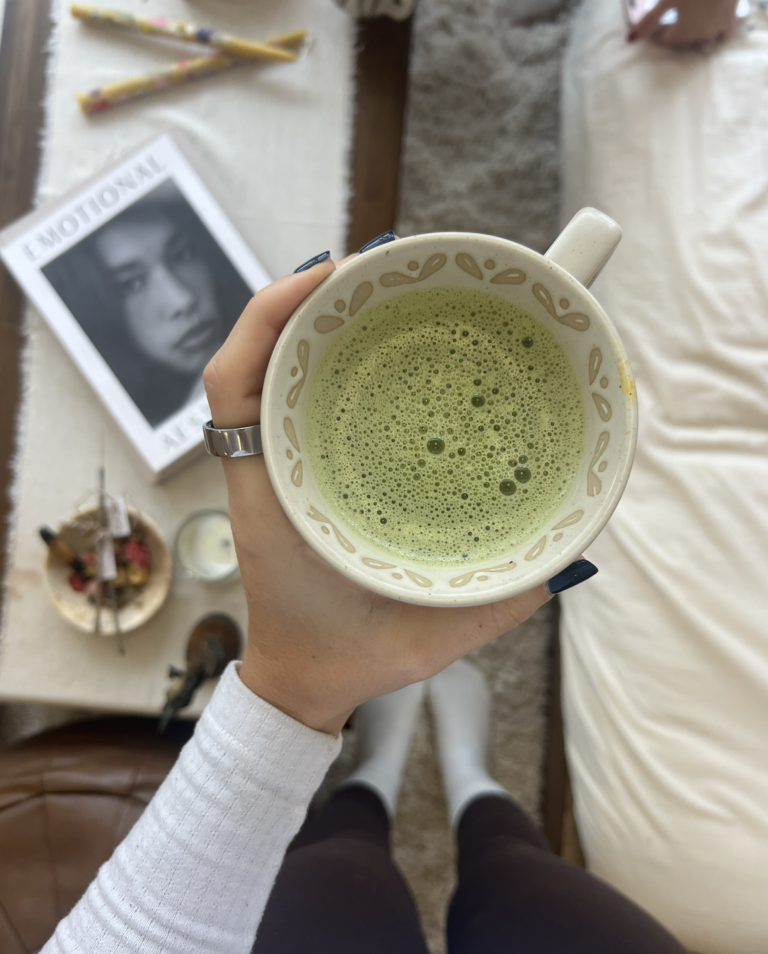
- Choose one real pleasure before the scroll begins. Tea in a real mug, ten pages of a book, a shower, a tidy kitchen, a short walk.
- Create one small bridge between dinner and bed. Something physical helps the night feel shaped instead of accidental.
- Set out one thing for tomorrow. A mug, a notebook, tomorrow’s clothes, your walking shoes. Just enough to make the morning feel cared for.
That is already a routine.
You do not need a perfect house or a dramatic reinvention. You need a sequence that makes your phone a little less central and your evening a little more lived.
Why the Phone Takes Over at Night So Easily
Evenings are when attention is tired and boundaries get blurry.
You have already made decisions all day. You have answered people, moved between tasks, carried the invisible tabs of home and work, and probably used your phone for practical things a dozen times before dinner. By night, the easiest object in the room often wins by default.
That is one reason bedtime scrolling feels so automatic. The American Academy of Sleep Medicine notes that bedtime doomscrolling can hurt sleep quality, especially when phones stay close enough to fill every tiny pause. And once the evening becomes a string of quick checks, the whole night starts to feel fragmented.
A phone-free evening routine works because it removes some of that fragmentation. It gives the night a spine.
Instead of asking yourself every ten minutes what to do next, you move through a few steady cues:
- one signal that work is over
- one place the phone belongs
- one real-world activity that takes over
- one softer landing into sleep
This kind of structure matters because it quietly supports the things After Scroll cares about most: habits, environment, relationships, and the calm authority that comes from shaping your days on purpose.
1. Give the Day an Ending You Can See
The best phone-free nights usually begin before the phone itself enters the conversation.
They begin with an ending.
If the day just melts into the night, your brain keeps looking for leftover stimulation. But when there is a visible off-ramp, the evening feels more like a room you have entered intentionally.
Keep this simple:
- close the laptop and put it out of sight
- wash the last dish or wipe the counter
- change into softer clothes
- switch from overhead lighting to one lamp
- step out of your work corner and into the rest of your home
If you want a fuller version of this, a gentler after-work rhythm can make the whole evening feel less like leftover time and more like your real life beginning again.
The important part is not the exact action. It is the cue. You are telling yourself, the performative part of the day is finished now.
2. Let the Phone Have a Home Instead of a Passport
One of the easiest ways to make a phone-free evening routine work is to stop letting the phone wander through the house with you.
It does not need to sit on the arm of the couch, on the bathroom counter, beside the plate at dinner, and then on the nightstand too. That kind of constant availability turns every lull into an invitation.
Try one clear rule:
- the phone charges in the kitchen after dinner
- the phone stays off the couch
- the phone gets one final check, then goes to its shelf
- the phone does not come to bed at all
Clarity matters more than severity.
You are not trying to prove that you are above technology. You are simply refusing to make it the main atmosphere of the night. If you want extra support, it helps to pair this with a quieter phone setup that stops acting like the most interesting object in the room.
And if the bedroom has become the place where the most committed scrolling happens, building a softer room that supports sleep instead of stimulation can change the final hour of the day more than any app block ever will.
3. Put One Real Pleasure in the Room Early
A phone-free evening routine is much easier to keep when the evening offers something lovely quickly.
This is where many routines go wrong. They remove the phone, but they do not replace it with anything appealing. Then the whole night starts to feel like a test.
Give yourself a real alternative before you feel depleted:
- a pot of tea and a square of chocolate
- a bath or a long shower
- ten pages of a physical book
- a simple card game with your partner
- folding laundry with music on
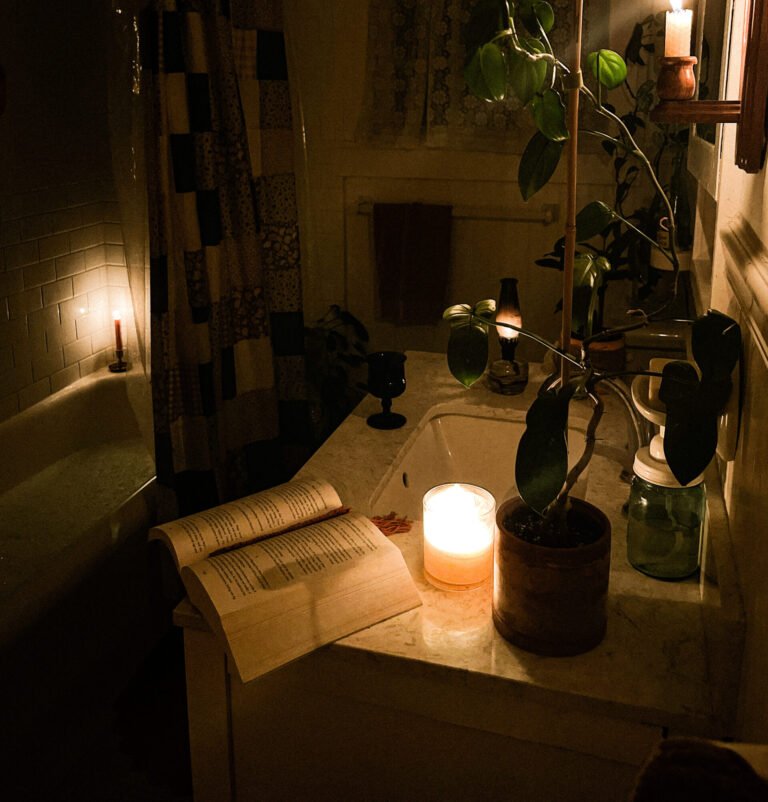
- a candle lit while you reset the kitchen
- a hobby basket waiting in the living room
The goal is not productivity. The goal is to make real life more immediate than the feed.
That is why one protected offline pocket in the evening works so well. Even thirty minutes where your hands are on real objects and your eyes are on the room can change the emotional texture of the whole night.
If books are part of the life you want to rebuild, it helps to think about letting a real book become the easiest interesting thing in the room. A book on the chair beside a lamp feels very different from a book buried in a stack while your phone glows on top of the blanket.
4. Use a Small Bridge Between Dinner and Bed
One reason scrolling takes over at night is that many evenings have no bridge. Dinner ends, dishes are half done, and suddenly you are on the couch with your phone without ever deciding to be there.
A phone-free evening routine works better when there is one activity that carries you across that gap.
This bridge can be tiny:
- a 10-minute kitchen reset
- a quick shower
- watering plants
- a short stretch on the living-room floor
- a walk around the block
I especially like a brief walk here because it clears the mental residue of the day without asking much of you. A short golden-hour loop before you settle in can become the outdoor version of a wind-down ritual. And even from a health perspective, movement does more than we give it credit for. The Harvard T.H. Chan School of Public Health notes that walking is an accessible form of movement with meaningful health benefits, which is a lovely reminder that an ordinary walk still counts.
This bridge matters because it keeps the evening from collapsing into one unchosen default.
You are moving from activity into rest with a little more ceremony.
5. Make the Last Hour Feel Predictable in the Best Way
The final stretch of the night should feel less like a free-for-all and more like a familiar sequence.
It does not need to be long. It just needs to be repeatable.
A beautiful last hour might look like this:
- kitchen closed
- phone in its home
- lights lower
- shower or skincare
- tea or water by the bed
- five to ten pages of reading
- one tiny reset for tomorrow
Sleep advice often becomes sterile very quickly, but the practical point is sound: a repeated wind-down helps the body register that the day is ending. The Sleep Foundation’s bedtime routine guide for adults makes the same case in simple terms. Consistency matters.
In After Scroll language, though, this is about more than sleep hygiene. It is about identity. A repeatable night ritual turns bedtime from collapse into close. It makes the whole house feel a little more trustworthy.
And if tomorrow mornings tend to feel rushed, the small night habits that make tomorrow gentler are one of the nicest ways to extend the care of the evening into the next day.
What to Do Instead of Scrolling on Low-Energy Nights
This matters because not every night will be high-energy, romantic, and beautifully composed.
Some nights you will be tired. Some nights you will want comfort fast. Some nights the phone will feel more tempting simply because your brain wants the easiest possible relief.
That is exactly why the routine should be easy to shrink.
On low-energy nights, keep only the essentials:
- phone in its home
- one lamp on
- one quick wash-up or shower
- one tiny analog pleasure
- one thing set out for tomorrow
Your analog pleasure on those nights might be almost laughably small:
- one chapter of a cozy book
- peppermint tea
- lotion and clean sheets
- ten minutes with a puzzle
- folding one basket of laundry
- sitting quietly with the window open
A living room that stops advertising the scroll helps here too. When the room itself is a little calmer, you do not have to rely so heavily on motivation.
This is one of the deepest truths in the After Scroll world: your environment is never neutral. It is always teaching you what to do next.
How This Routine Supports a Life You Want to Stay Present For
A phone-free evening routine is not really about becoming morally superior to your phone.
It is about deciding that ordinary evenings deserve shape.
When nights have a little structure, several things change at once:
- your home starts supporting you instead of distracting you
- your relationships get more room because attention is less splintered
- your habits become easier to keep because the sequence is familiar
- tomorrow gets lighter because tonight already prepared part of it
This is how a woman slowly moves from passive consumption to active construction.
Not through one dramatic reinvention, but through repeatable evenings that teach her body and mind what her life is actually for.
A phone-free evening routine can hold all kinds of things: a real dinner, a conversation, a chapter, a walk, a shower, a small reset, a lamp beside the bed. None of these is flashy. Together, they create a night that feels inhabited.
And that is often the real craving beneath the urge to scroll. Not more stimulation. More presence. More texture. More evidence that your life is happening in the room around you.
When the Ritual Starts Working
You will know this routine is becoming real on an ordinary night.
You finish dinner. The phone goes to its place without much drama. The kitchen gets a quick reset. You step outside for ten minutes or turn on the shower or pull the book toward you instead of the charger.
Nothing about the night is especially impressive.
And yet it feels better.
The house is softer. Your mind is less scattered. Bed feels closer. Morning already looks kinder.
That is the quiet power of a phone-free evening routine.
It does not ask you to become a different woman overnight. It simply helps the woman you already are spend her evenings in a way that feels more elegant, more grounded, and much more like living.