If your nights feel overstimulating, this low dopamine evening routine offers simple rituals to calm your mind, protect your attention, and wind down naturally.
There is a particular kind of evening that makes the whole house feel softer. Dinner is over. The lights are lower. The phone is no longer conducting the mood of the room. Instead of disappearing into a blur of tabs, clips, and little compulsive checks, you begin to feel yourself returning to your actual life.
That is the appeal of a low dopamine evening routine. Not a joyless night. Not a strict anti-tech performance. Just a calmer, lower-stimulation way to close the day so your attention can settle, your home can support you, and sleep can feel closer and more natural.
If you want a low dopamine evening routine that works in real life, start with five simple moves tonight:
- dim the room and lower the sensory volume
- give your phone a clear ending time and place
- choose one analog activity before the couch-scroll starts
- reset one small surface for tomorrow morning
- end with one repeatable ritual that tells your body the day is over
That is enough to change the tone of a night. And over time, it does something bigger: it helps you build evenings that feel like part of the life you are creating, not something you’re trying to escape.
Why a low dopamine evening routine works so well
A low dopamine evening routine works because evenings are when attention is usually the most tired and the least protected. You’ve already spent the day making decisions, responding to people, moving between tasks, and carrying the invisible mental tabs of work, home, and relationships.
So of course the phone feels appealing at night. It is frictionless. It offers novelty without effort. It fills the space between one part of the day and the next.
But it also keeps the nervous system lightly activated. One message leads to three tabs. One quick check turns into shopping, headlines, and a reel you did not mean to watch. The small jumps matter. The American Psychological Association’s explanation of switching costs is useful here: every attention shift carries a cost, even when it feels minor in the moment.
A low dopamine evening routine gives your brain fewer jumps. It replaces endless novelty with a few quieter, steadier pleasures that still feel good: warm light, a tidier room, a book, a shower, a short conversation, tea in a real mug, tomorrow lightly prepared.
It is a simple way of choosing texture over stimulation.
How to build a low dopamine evening routine in real life
The best low dopamine evening routine is not impressive. It is believable. It fits the version of your life you are actually living, and it makes the next right thing slightly easier to choose.
1. Lower the volume of the room first
Before you try to change your behavior, change the atmosphere.
Turn off the bright overhead light. Put on one lamp. Clear the visual noise from the coffee table. Put the dishes in motion. Let the room signal that the performative part of the day is ending.
This matters more than it seems. A room that still feels loud tends to keep the mind loud too. A lower-stimulation evening often begins with physical cues:
- softer light
- fewer open objects in view
- lower sound
- one clean surface
- a sense that the room has stopped asking so much of you
This is also why the night routines that quietly set up tomorrow work so well. They are not only productive. They are atmospheric. They make the house feel like it is cooperating with the version of you who wants a calmer night.
2. Give your phone a clear ending time and place
A low dopamine evening routine becomes much easier when the phone is no longer drifting from room to room with you.
Pick one simple rule:
- the phone charges in the kitchen after 9:00 PM
- the phone does not come to the couch
- the phone stays off the bed completely
- the phone gets checked once more, then it is done for the night
The rule matters less than the clarity.
The goal is not punishment. The goal is to stop making the phone the most available form of relief in every tiny pause.
If you want extra support here, it helps to pair the evening routine with a phone setup that stops acting like the most interesting object in the room. A quieter phone and a quieter evening reinforce each other beautifully.
And if sleep has felt harder lately, the Sleep Foundation’s guide to how electronics affect sleep is a helpful reminder that screens affect more than mood. They can interfere with how easily the body winds down too.
3. Decide what your hands will do instead
Most nighttime scrolling is not about deep desire. It is about the moment after you sit down and do not yet know what happens next.
That is why a low dopamine evening routine needs a replacement, not just a restriction.
Choose one or two analog options that feel easy enough to reach for on an ordinary night:
- read ten pages of a physical book
- do a quick skin-care routine without watching anything
- fold a basket of laundry in a calm room
- copy a recipe into a notebook
- stretch on the floor for five minutes
- play cards with your partner
- make tea and sit down to drink it properly
- write tomorrow’s one important thing on paper
If the couch-scroll moment is especially strong for you, keep a small list of better options nearby. It is much easier to choose a calmer evening when you do not have to invent the alternative from scratch every time.
This is also where one protected offline hour that belongs to real life can become a beautiful container. Not every night needs a full hour, but even thirty minutes of analog time changes the emotional texture of an evening.
4. Reset one small part of tomorrow
A low dopamine evening routine is not only about sleep. It is also about authorship.
Choose one small action that makes tomorrow feel lighter:
- clear the kitchen counters
- lay out tomorrow’s clothes
- set out the coffee mug
- write your morning priority on a notepad
- put your bag, keys, or walking shoes where they belong
These are tiny acts, but they matter because they let your future self wake up inside a little more order.
That is one reason this kind of routine pairs so naturally with a calmer first hour before the internet gets a vote. Evenings and mornings are not separate projects. They are one rhythm. The lower-stimulation choices you make at night often become the reason a more grounded morning is even possible.
5. End the night with one repeatable signal
One of the nicest things about a low dopamine evening routine is that it can become recognizably yours.
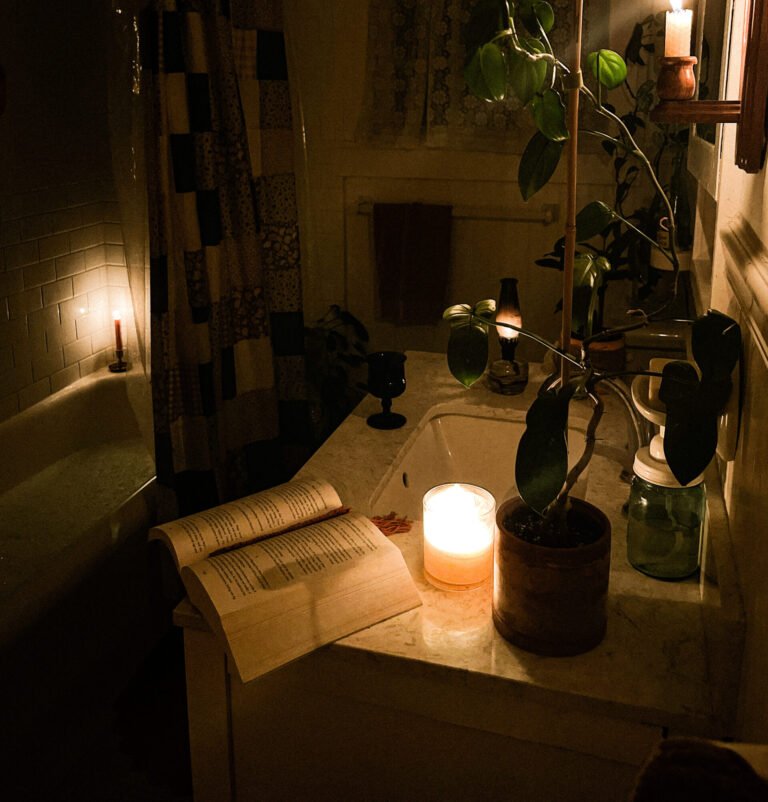
Maybe your signal is a candle and a paperback. Maybe it is the shower, then hand cream, then the same lamp beside the bed. Maybe it is peppermint tea and a quick reset of the living room. Maybe it is a short walk around the block with no headphones before locking the door and closing the kitchen.
A good closing ritual should feel:
- pleasant
- simple
- easy to repeat
- slightly more inviting than another ten minutes on your phone
The Sleep Foundation’s bedtime routine guide for adults makes the practical case for this kind of consistency. But editorially, the deeper appeal is even simpler: a repeated night ritual gives your evenings identity. It turns bedtime from a collapse into a close.
What a low dopamine evening routine can look like in different seasons
There is no one ideal version. The best version is the one that respects your real evenings.
If you work from home
You may need a stronger transition between work mode and home mode. Let your low dopamine evening routine begin with physically closing the day: shut the laptop, clear the table, change clothes, turn on a lamp, and do one off-screen task before you sit down.
If you have children or a busy household
Keep the routine atmospheric and small. Focus on lowering stimulation for the whole house: dim lights, reset one room, charge the phone away from the couch, put on quieter music, and choose one gentle activity you can do after the house settles.
If evenings are your only quiet time
This matters most. You do not need to make the evening virtuous; you need to make it nourishing. Let the routine feel like pleasure in a calmer key: better lighting, a better drink, a better chair, a better activity than the one that leaves you tired and unsatisfied.
A low dopamine evening routine should not feel like deprivation. It should feel like a more beautiful offer.
The point is not less pleasure. It is better pleasure.
This is where people get the idea wrong. A low dopamine evening routine is not an argument for becoming boring. It is an invitation to become easier to satisfy.
When your nights are less fragmented, ordinary things recover some of their appeal. A conversation gets a little deeper. A shower feels more restorative. Reading feels possible again. The room itself starts to matter more. You notice whether the kitchen is welcoming, whether the chair is comfortable, whether the lights are kind, whether your evening actually belongs to you.
That shift matters because After Scroll has never really been about less technology for its own sake. It is about building a life that feels good enough to stay present for.
A low dopamine evening routine supports that kind of life quietly. It helps you protect your attention, shape your environment, and close the day in a way that makes tomorrow more livable.
And the best part is that it does not require a dramatic reinvention. Just a few rules. A few objects. A few rhythms. A few evenings repeated often enough that they begin to feel like home.