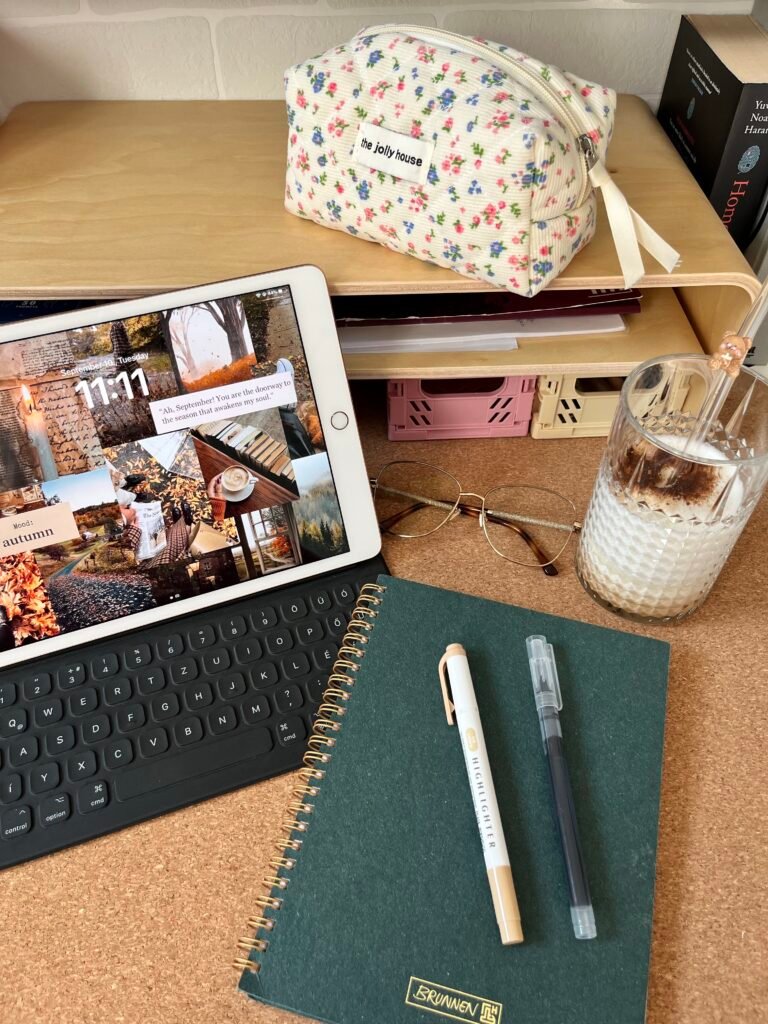

Curious about the “that girl” morning routine? Learn what actually works, what’s just performative, and how to build a slower, realistic routine that fits your life.
There is a version of morning that looks almost irresistible on the internet. The glass of lemon water catches the light. The bed is already made. The workout set matches. The journal is open to a clean page. Breakfast looks beautiful. Nobody seems rushed. Nobody is checking three texts while looking for a missing shoe.
It makes perfect sense that the that girl morning routine became such a magnet. After all, it promises more than aesthetics. It promises order, self-respect, momentum, and the quiet pleasure of starting the day in a way that feels beautiful on purpose.
And honestly, that appeal points to something real. Most women are not looking up the that girl morning routine because they want to perform for strangers. They are looking for a morning that feels better than rolling over, grabbing a phone, and letting the day begin in reaction mode.
What happens when you actually try the full thing, though, is often more revealing than the montage. The parts that help are usually simple. The parts that feel heavy are usually the ones borrowed from performance. So if I were building a morning worth keeping, I would keep the beauty, the structure, and the self-respect—and I would choose a slower version for the rest.
If you want the good part without turning your morning into an audition, start here:
- choose three anchors, not twelve
- protect the first 20–30 minutes from feeds and notifications
- set up one small thing the night before
- let light, water, and a little movement wake you up before content does
- decide what your morning is for, so it can support your real life
That is where a good morning becomes useful.
What the “That Girl” Morning Routine Gets Right
The trend became popular because it noticed a real hunger: women want mornings that feel intentional.
A beautiful morning changes the emotional texture of the whole day. A made bed, a clean kitchen, an open curtain, a cup of coffee you actually sit down to drink—these are small signals that your life belongs to you before the world starts making claims on it.
That part is worth keeping.
A strong morning routine can support exactly the things After Scroll cares about most:
- structure that makes the day feel held instead of scattered
- habits that are easier to repeat because they live in the same order each morning
- environment that makes your home feel alive before your phone becomes the main character
- production in the form of one meaningful thing moved forward early
This is why a slower morning often works so well inside a more spacious, real-life version of slow living. The value is not the performance. The value is the feeling that your day begins from inside your own life.
What Happens When the Routine Turns Into a Performance
The trouble starts when a morning routine stops being a support system and starts becoming an identity test.
The full internet version of the that girl morning routine tends to carry a lot of invisible pressure:
- wake up early enough to feel impressive
- do enough steps to feel disciplined
- make it look polished enough to feel valid
- keep the whole thing consistent enough to feel like the kind of woman who has it together
That is a lot to place on the first hour of the day.
The result is often a strange split. The routine looks calm from the outside, but internally it can feel tense, crowded, and self-conscious. You are no longer simply making breakfast, stretching, or writing a line in your notebook. You are evaluating yourself while you do it.
That feeling is not imagined. Research on how social media environments encourage upward comparison helps explain why highly curated routines can quietly shape the way we judge our own mornings. Once a routine becomes visual culture, it is very easy to start measuring your life against an edited version of someone else’s.
And the irony is hard to miss: the routine that was supposed to make you feel more present can make you more self-observing instead.
The Slower Morning I Would Choose Instead
The version I would actually keep is gentler, simpler, and much more loyal to real life.
It still has beauty. It still has rhythm. And it still helps the day begin well. But it is built to support a woman living an actual morning, not starring in one.
1. Begin with atmosphere, not achievement
A good morning does not need to prove anything in the first ten minutes.
Let it begin with one or two physical signals that tell your body and home the day has started:
- open the curtains
- make the bed
- turn on one lamp if the light is still soft
- pour water before coffee
- let a little air into the room
This is part of why a calmer first half hour before notifications arrive feels so different. You are not starting with proof of discipline. You are starting with contact—with light, air, fabric, water, and the room around you.
Harvard Health’s explanation of how sleep-wake cycles affect mood is a useful reminder here: morning light does real work. It helps regulate the rhythms that shape energy, sleep, and how the day feels in your body.
2. Pick three anchors and repeat them
The internet loves maximal routines. Real life usually loves repeatable ones.
Instead of building a 12-step morning, choose three anchors that you can actually recognize as yours. For example:
- wake the room — curtains open, bed made, window cracked
- wake the body — water, a quick stretch, a short walk, or breakfast at the table
- wake the mind — planner open, one line of journaling, one clear look at the day
That is enough to create a morning identity without creating a morning performance.
If you want more ideas to plug into that framework, a short list of habits that actually holds up in daily life is often more useful than trying to recreate a routine designed for the camera.
3. Make your phone wait
This is the quiet dividing line between a morning that belongs to you and a morning that belongs to the feed.
You do not need to become anti-phone. You simply need the phone to arrive later.
A slower version of the that girl morning routine might mean:
- no social apps until after breakfast
- no notifications until your first three anchors are done
- no phone in bed, so the day begins when your feet hit the floor
- one fixed place where your phone lives during the first part of the morning
This works even better when the night before is already helping you. The quieter evening habits that make tomorrow feel easier matter because smoother mornings are often built upstream.
And yes, the night piece matters physically too. The Sleep Foundation’s guide to how electronics affect sleep is a helpful reminder that keeping screens close late at night changes more than your attention. It changes how your body settles, which changes how the morning begins.
4. Let movement be light and loyal
One reason the that girl morning routine can feel heavy is that every element starts trying to prove virtue. Workout. Green juice. Supplements. Journaling. Reading. Skin care. A protein-heavy breakfast. A full reset before 8:00 AM.
A slower morning asks a softer question: what would help me feel more awake and more like myself today?
Sometimes the answer is a real workout. Sometimes it is five minutes on the floor stretching your back while the coffee brews. And sometimes it is taking the trash out and using that excuse to stand in the morning air for two minutes.
Small movement counts. Short movement counts. Pleasant movement counts.
The point is not to win the morning. The point is to feel inside your own body before the day becomes abstract.
5. Protect one meaningful thing
This is where the morning becomes more than pretty.
The routines that hold up over time are the ones that make something real easier: a calmer breakfast, a cleaner kitchen, a few pages read, a draft started, a walk taken, a child greeted with a less-fragmented mother.
Choose one thing your morning is protecting in this season:
- a work block before the internet gets loud
- a peaceful breakfast at the table
- a short walk that helps you feel present in your body
- ten minutes with a notebook before everyone else needs something
- a cleaner handoff into family life, school mornings, or the workday
This is the question that keeps the routine from drifting back into aesthetics alone. A beautiful routine is lovely. A beautiful routine that also helps your life move forward is much better.
What a Slower Morning Looks Like in Real Life
The best version changes shape depending on the season you are in.
If you work from home
A slower morning may be less about elaborate self-care and more about creating a clean runway into focused work: open the curtains, get dressed properly, make breakfast, look at your one priority, and begin before tabs multiply.
If you have kids
A slower morning may look more atmospheric than private: lights on, breakfast started, phone away, table cleared, music low, your own water poured before the kitchen gets busy. It still counts.
If you commute
A slower morning may begin at home and continue on the way out the door: three anchors before leaving, one page read on the train, or one walk to the car without social media in your hand.
If mornings are tight
Make the whole thing five minutes long. Curtains. Water. Bed. One look at your plan. Phone later. Repeated small still changes the tone of a life.
How You Know the Routine Is Actually Working
A good morning routine does not make you feel impressive. It makes the rest of the day feel more coherent.
You will know it is working when:
- your home feels slightly more welcoming at 7:00 AM
- the first hour feels less jagged
- you reach for your phone with less urgency
- you know what the morning is protecting
- your routine feels easier to repeat than to skip
That last one matters most. The best routines become the path of least resistance.
Keep the Beauty. Drop the Audition.
There is nothing wrong with wanting a morning that looks lovely. Beauty belongs in ordinary life. Ritual belongs there too.
The deeper win is choosing a morning that helps you live well from the inside.
So if the that girl morning routine has been tugging at you, I would pay attention to what you are actually craving underneath it. Usually it is not a glass straw, a perfect set of matching containers, or a six-step performance before sunrise. Usually it is something much better: a day that begins with more order, more presence, more self-respect, and less artificial urgency.
That is the slower version worth keeping.
It gives you structure without stiffness, atmosphere without pressure, and a morning that supports the life you are building instead of asking you to perform one.