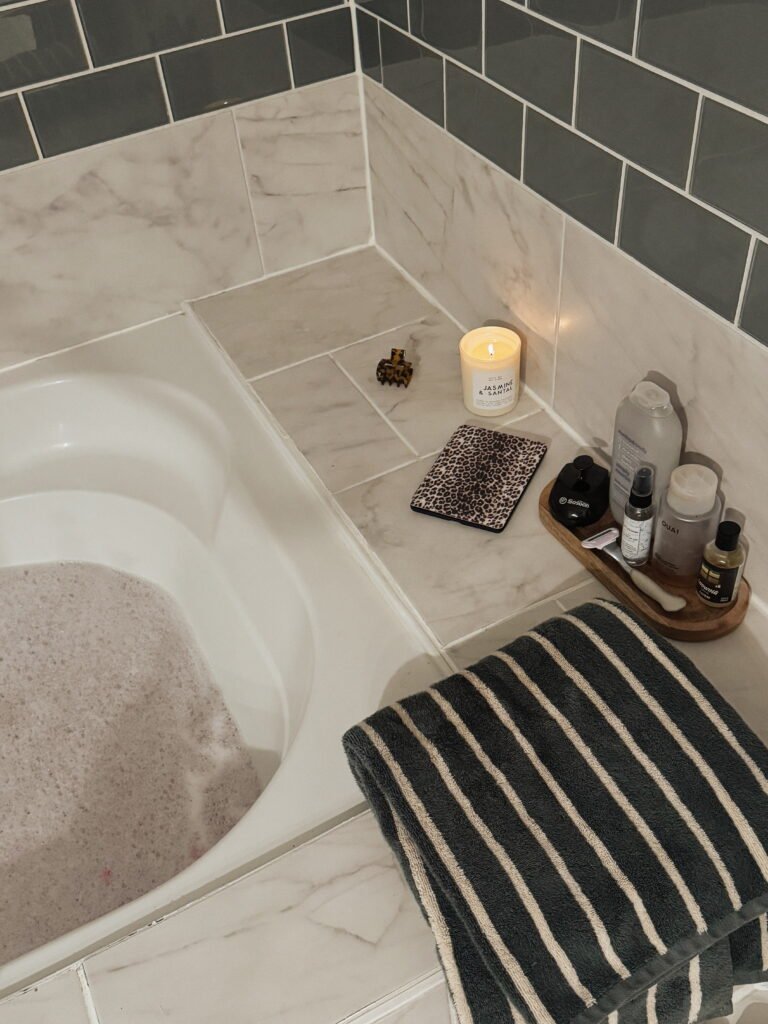

Feeling scattered? Learn how to get your life together with simple habits, weekly resets, and realistic routines that make daily life feel lighter.
There is a version of life that feels beautifully together, and it is usually much quieter than the internet makes it look.
Your kitchen is not perfect, but dinner is handled. Your week has shape. Your phone is no longer the loudest thing in the room. You know what matters today, and you actually touch it before the day dissolves into tabs, messages, errands, and low-grade chaos.
That is what most women mean when they think, I need to get my life together. Not a personality transplant. Not a punishing reset. Just a life that feels more organized, more intentional, and easier to fully inhabit.
If that is the season you are in, start here:
- choose one area of life to steady first
- give your week one clear job instead of ten competing priorities
- build a short morning and evening reset that keeps tomorrow lighter
- create one weekly life-admin hour for appointments, money, meals, and loose ends
- make your environment slightly easier to live inside than your phone
That is enough to begin.
What “getting your life together” usually actually means
Most of the time, getting your life together is not about becoming stricter. It is about becoming clearer.
You want:
- fewer open loops in your head
- a home that supports your real life
- routines that make days feel steadier
- more evidence that your life is moving forward
- less time spent reacting and more time spent choosing
In other words, you are not trying to become a different woman overnight. You are trying to build a life that feels easier to trust.
That is why this works best when you stop thinking in terms of a total reset and start thinking in terms of structure, habits, environment, production, and relationships. Those are the real categories that make life feel coherent.
Start with one life category, not your whole existence
One reason it is so hard to get your life together is that women often try to improve everything at once.
The house. The budget. The body. The inbox. The skincare. The meal planning. The friendships. The work project. The phone habits. The sleep.
That much ambition sounds impressive, but it usually creates a week full of motion and very little real change.
Instead, choose one category to stabilize first:
- Home — your kitchen rhythm, laundry flow, evening reset, or one room that needs to function better
- Work — your schedule, focus blocks, unfinished projects, or your relationship with email
- Body — sleep, movement, hydration, meals, or getting dressed in a way that helps you feel more present
- Money — a weekly money check-in, bill system, or one savings goal
- Relationships — family dinners, a weekly check-in with your partner, more intentional friendships, better attention at home
This is not about neglecting everything else. It is about giving one area enough stability that the rest of life begins to feel easier too.
Give your week one clear job
A life starts feeling more together when your week stops trying to carry twenty main characters.
At the beginning of each week, ask:
What is the one thing this week needs to move forward so life feels lighter by Friday?
Sometimes that answer is practical:
- finally making the doctor’s appointment
- getting the kitchen under control
- planning three reliable dinners
- finishing the draft that has been hovering for weeks
Sometimes it is more structural:
- setting up a better bill-pay system
- rebuilding your mornings
- protecting two focus sessions for meaningful work
This is the same logic behind giving the week a real spine instead of letting it scatter. When your calendar has one visible priority, your energy stops leaking into ten equally urgent-seeming directions.
A good rule: if your week has one clear job, your to-do list can stay long without your life feeling directionless.
Build a morning that lands you in your real life
You do not need a 5 a.m. club routine to get your life together. You need a morning that helps you arrive before the internet does.
A few gentle anchors go a long way:
- open the curtains before you open an app
- drink water before your first scroll
- look at your planner or notebook before your notifications
- touch one real-life task before the phone becomes the day’s narrator
If mornings currently disappear into your screen, start with a small protected window. Even the first 20 to 30 minutes can change the tone of the day. That is why a first hour with less stimulation and more authorship feels so powerful: it gives your thoughts somewhere solid to land.
The goal is not to become morally superior to your phone. The goal is to make sure your day begins inside your own life.
Use evenings to make tomorrow easier
A lot of women think they need better mornings when what they really need is a better handoff from the night before.
The easiest way to feel more together tomorrow is to do a few small things tonight:
- clear one visible surface
- set out what you need first thing in the morning
- write tomorrow’s top priority on paper
- plug your phone in somewhere that is not your pillow
That kind of evening does not look dramatic, but it changes everything. Your space is calmer. Your brain has fewer open tabs. Tomorrow already has a direction.
If you want a fuller version of that rhythm, the kind of night that quietly sets up the next day is one of the simplest forms of real-life competence.
It also helps with sleep. The Sleep Foundation’s overview of how electronics affect sleep is a useful reminder that late-night screen habits do not just steal time; they make the next morning harder to inhabit too.
Create one weekly life-admin hour
One of the fastest ways to get your life together is to stop letting tiny responsibilities ambush you all week.
Choose one hour each week for the things that keep adult life running:
- checking your calendar
- paying bills
- booking appointments
- ordering household essentials
- planning a few meals
- returning messages you actually want to answer
- making a short list of what this week needs from you
This hour is not glamorous, but it is deeply elegant. It turns adult life from a constant series of interruptions into something more deliberate.
If you tend to avoid this kind of maintenance because it feels dull, pair it with something pleasant: coffee in your favorite mug, a cleared table, a candle, printed calendar pages, or music in the background. The point is to make responsibility feel lived-in, not punitive.
A together life is rarely built by doing more. It is built by giving recurring responsibilities a home.
Let your environment carry part of the load
Your habits do not live in a vacuum. They live in rooms.
If your entry table collects chaos, your counters are always crowded, your planner is hidden in a drawer, and your phone follows you from bed to bathroom to kitchen, life will feel more scattered than it needs to.
You can change that without becoming a minimalist or buying all new containers.
Try these small environmental shifts:
- create one landing spot for keys, mail, and bags
- keep your planner or notebook visibly out, not put away like a special occasion object
- choose one chair, table corner, or desk as the place where focused work happens
- make one room more appealing than your feed with a lamp, a book, flowers, or an actual cleared surface
- give your phone a home that is not your hand
This is also why lower-stimulation, real-world pleasures matter. A list of slower, more satisfying things to do when your brain wants a break can help ordinary life feel rich enough that you stop outsourcing every pause to a screen.
And if you want your routines to feel prettier as well as steadier, small changes that make daily life feel more polished and intentional can support the identity side of this process too.
Stop making your phone the control tower
A lot of women say they want to get their life together when what they really mean is: I want my attention back.
That matters, because attention shapes almost everything else.
If your phone gets the first look in the morning, the last look at night, and every spare minute in between, it becomes very difficult to feel like the author of your days.
You do not need a dramatic detox. You need a few clear rules that make your life easier to choose:
- no social apps before you check your plan for the day
- no phone during meals
- no scrolling in bed
- one daily block where the phone lives in another room
- one evening pocket each week that belongs fully to real life
The American Psychological Association’s overview of task-switching and multitasking costs helps explain why this matters: even brief digital jumps make attention more expensive. When your mind keeps bouncing, life feels noisy faster.
A together life is not a life with no technology. It is a life where technology knows its place.
Choose three standards, not thirty rules
If you want your life to feel more together by next month, choose three standards that hold your week in place.
For example:
- The kitchen closes each night. Not perfectly, just well enough that morning begins clean.
- The planner gets checked before the phone. Your priorities arrive before the algorithm.
- One thing moves every weekday. A call, a workout, a page, a room, a project step.
That is enough to create momentum.
The women who seem the most together are often not following 42 complicated systems. They are simply keeping a small number of standards consistently enough that life stops slipping through their hands.
This is also where progress matters more than fantasy. As Harvard Business Review argues in The Power of Small Wins, visible progress in meaningful work changes motivation far more than grand intentions alone.
In real life, “together” often feels like this: not flawless, just steadily moving.
Let your progress look ordinary
The internet loves visible transformation. Real life prefers repetition.
You get your life together in uncinematic ways:
- making the same simple breakfast three mornings in a row
- finally folding the laundry before it becomes a mountain
- payi