There’s a particular kind of weeknight that deserves something gentler than another default scroll: dinner is done, the light is softer, and you want your evening to feel like part of your life instead of the leftover space after work.
That’s where soft crafts come in.
Not complicated sewing projects. Not anything that needs a ring light, a perfect outcome, or a whole Saturday. Just tactile, low-pressure projects you can pull toward you after dinner—paper, fabric, flowers, ribbon, clay—so the night feels calmer, prettier, and a little more lived in.
In this post, you’ll find cozy craft ideas that are genuinely realistic after work, how to choose the right one for your energy, and how to set up your home so making something small feels easier than disappearing into your phone.
12 Soft Crafts for Soft Evenings
If you want one clear place to start, choose from this list first. These are low-barrier, forgiving projects that pair beautifully with tea, a lamp, and a slow night at home.
1. Pressed-flower bookmarks
Press a few blooms or greenery between book pages, then arrange them on cardstock or clear laminate sheets.
Why it works after work: tiny, quiet, and easy to finish in one sitting.
2. Air-dry clay trinket dishes
Roll out a little clay, cut or pinch a soft shape, and make a catchall for rings, matches, or hair clips.
Why it works after work: satisfying with your hands, no kiln required, and charming even when imperfect.
3. Simple embroidery on tea towels
Pick one tiny motif—a bow, flower sprig, initials, or little border—and stitch it onto a plain towel or napkin.
Why it works after work: repetitive, portable, and easy to pause halfway through.
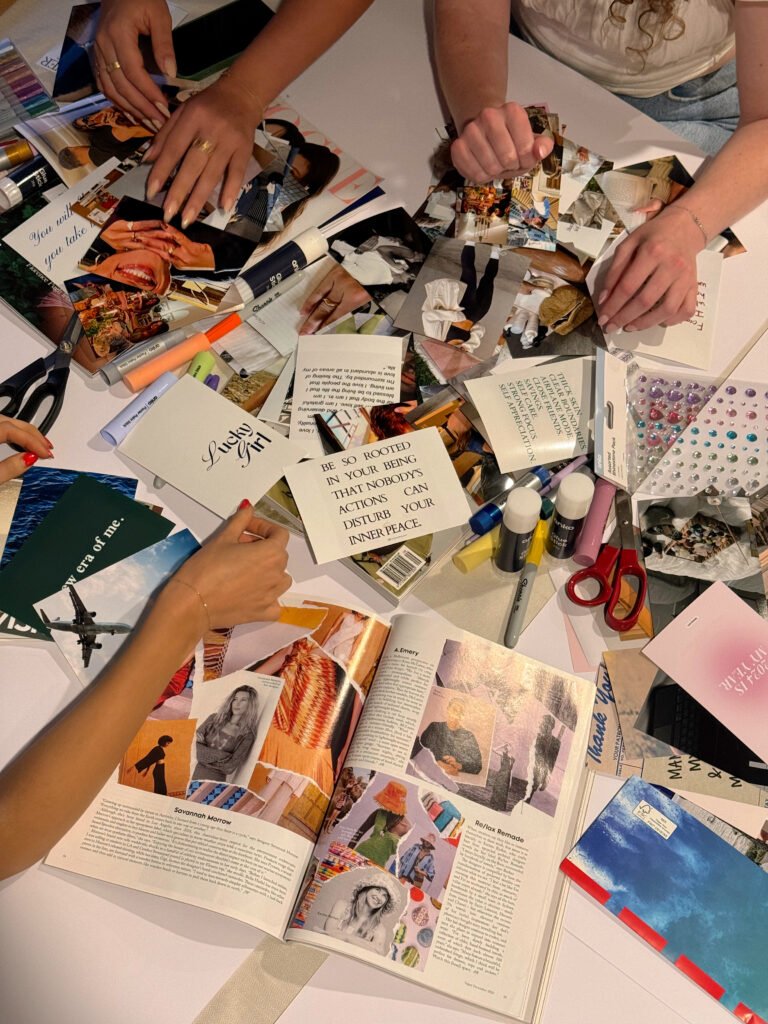
4. Collage postcards or mood cards
Use old magazines, tissue paper, wrapping scraps, and glue to make little visual collages you can tuck into books, frame, or mail to a friend.
Why it works after work: zero pressure to “be good at art,” and the materials are often already in the house.
5. Ribbon bookmarks or gift toppers
Cut velvet, grosgrain, or silk ribbon into bookmark lengths, or tie little toppers for gifts, baskets, and hostess treats.
Why it works after work: almost no setup, and the result feels immediately useful.
6. Beaded bag charms or keychains
String a few beads, pearls, ribbon, or charms into something playful for your keys, tote, or zipper pull.
Why it works after work: tactile, beginner-friendly, and easy to finish in under 30 minutes.
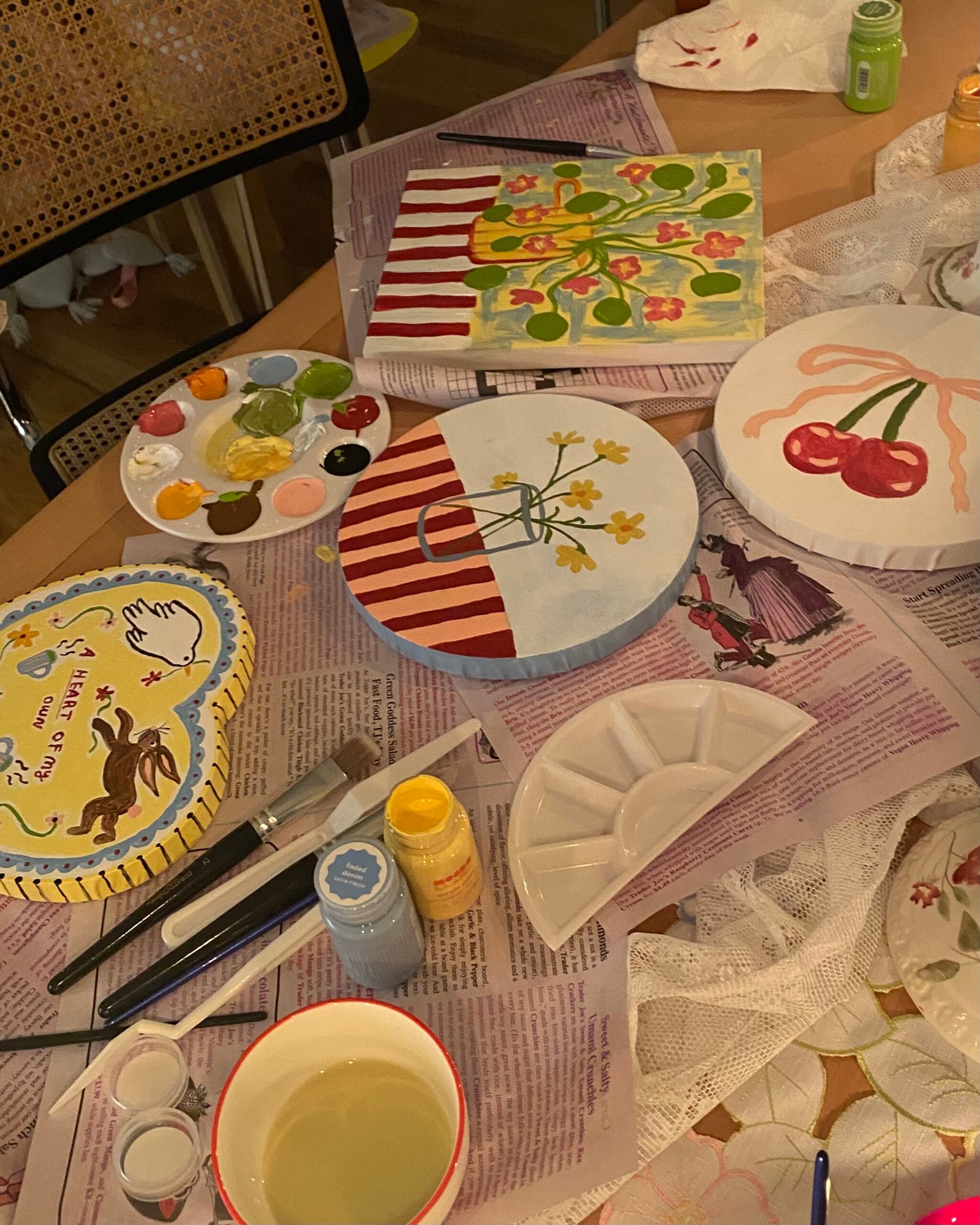
7. Painted gift tags or place cards
Use watercolor, gouache, or markers to make a little stack of pretty tags you can keep in a drawer for gifts, baskets, and dinner parties.
Why it works after work: light creative play with a practical payoff.
8. Decoupage matchboxes or small trays
Cover a matchbox, trinket tray, or little tin with pretty paper scraps, botanical prints, or leftover wrapping paper.
Why it works after work: it feels decorative without becoming a whole home project.
9. Tiny watercolor botanicals
Paint one leaf, one stem, one flower, or a loose set of stripes and shapes on postcard-sized paper.
Why it works after work: small scale keeps it from feeling intimidating.
10. Lavender sachets or fabric pouches
Fill a scrap of linen or cotton with dried lavender, tie it with ribbon, and tuck it into a drawer or beside your bed.
Why it works after work: soft materials, lovely scent, and almost impossible to overcomplicate.
11. Covered notebooks or journals
Wrap a plain notebook in pretty paper or fabric and add ribbon, labels, or a pocket inside the cover.
Why it works after work: a simple way to turn ordinary supplies into something you actually want to use.
12. Miniature paper garlands
Cut little flags, circles, or flowers from cardstock or tissue paper and string them into a short garland for a shelf, mirror, or party corner.
Why it works after work: cheerful, forgiving, and surprisingly cinematic for how little effort it takes.
If you’re craving a broader menu of hands-on hobbies that make evenings feel richer, that piece is the bigger sister to this softer, craft-focused version.
What Makes a Craft Right for After Work?
The best after-work crafts have a very specific personality.
They are:
- Easy to begin without laying out an entire studio
- Gentle on a tired brain
- Forgiving when the result is a little lopsided
- Pretty enough to leave out so the project can quietly call you back tomorrow
- Easy to pause when real life interrupts
That last part matters.
After work, you don’t want a project that asks for your peak performance. You want something that turns the hour after dinner into a softer kind of presence—more hands busy, less brain buzzing.
This is also why soft crafts pair so well with permission to make something imperfect on purpose. The goal isn’t mastery by 9 p.m. The goal is that the evening feels better because you made something with your own hands.
How to Choose the Right Project for Tonight
When you’re tired, decision fatigue is real. So instead of asking, “What craft should I become the kind of person who does?” ask a much smaller question:
What sounds good for this exact version of tonight?
If your brain feels fried
Choose something repetitive and tactile:
- Embroidery
- Beading
- Clay dishes
- Ribbon bookmarks
These work well when you want your hands occupied but don’t want to make many decisions.
If you want the night to feel a little prettier
Choose something decorative:
- Pressed-flower bookmarks
- Painted tags
- Decoupage trays
- Paper garlands
These are lovely on evenings when you want a quick visual reward.
If you want a tiny sense of completion
Choose something you can likely finish in one sitting:
- Lavender sachets
- Bag charms
- Covered notebooks
- Bookmark projects
If you want a softer, more immersive pocket
Choose something you can come back to over several evenings:
- Embroidery
- Watercolor botanicals
- A series of collage cards
- Multiple clay pieces drying on a tray
Think of this as the craft version of creating a lighter analog pocket after dinner: you’re not trying to overhaul the whole evening, just giving it one better center of gravity.
Set Up a Soft-Craft Corner That Beats the Scroll
A project you have to unpack from three different closets will lose to your phone every time.
A project that already lives in a basket by the sofa has a real chance.
To make soft crafts feel natural after work, create a tiny setup with:
- One basket or tray
- Good scissors
- Glue stick or craft glue
- A notebook or small cutting mat
- Ribbon, paper scraps, thread, or beads depending on your project
- A cloth napkin or towel to protect the table
Then make one environmental change that supports the ritual:
- Put your phone on a charger across the room
- Turn on a lamp instead of the overhead light
- Keep one pretty mug or water glass nearby
- Let the materials stay slightly visible between sessions
If you’ve already been shaping a living room that quietly nudges you away from your phone, soft crafts fit beautifully inside that same logic. The room doesn’t need to be anti-tech. It just needs to make the real-life option feel more inviting.
A few especially good places for a soft-craft station:
- By the sofa: for embroidery, beading, ribbon work
- At the dining table: for collage, paper crafts, clay
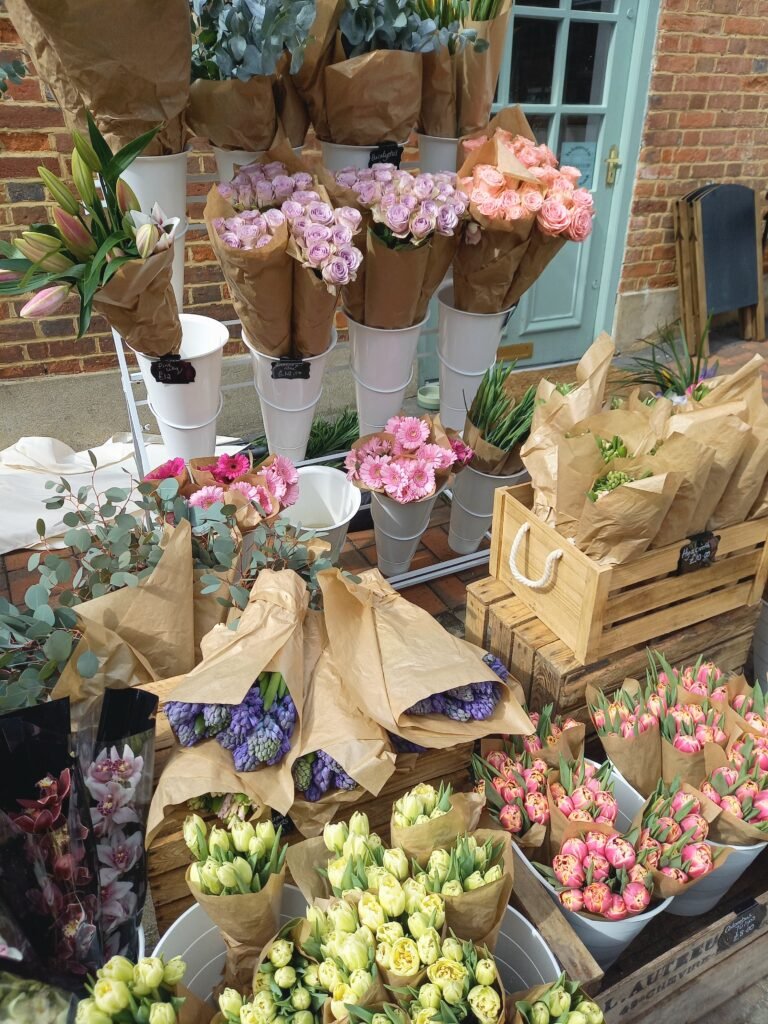
- Near the kitchen window: for pressed flowers, painted tags, little arrangements
- In a reading corner: for projects you can touch for ten quiet minutes before bed
Why Soft Crafts Feel So Good Right Now
Modern work has a way of flattening the end of the day. So does scrolling.
You close one set of tabs, open another set of apps, and somehow the whole evening disappears without ever quite becoming anything.
A soft craft changes that rhythm.
It gives you:
- A visible result instead of a vague blur of consumption
- A gentler transition out of work mode
- Something tactile and dimensional after hours of screens
- A small act of production that doesn’t feel performative
That matters more than it sounds.
The American Psychological Association’s work on burnout keeps emphasizing how chronic overload and blurred boundaries wear people down over time. A soft evening project won’t solve that on its own, but it does give the after-work hours a clearer emotional texture: you are home now, and this part of the day belongs to real life.
And when your project involves flowers, leaves, linen, clay, or other natural textures, it taps into something else too. Overviews like the University of Minnesota’s explainer on how nature impacts our wellbeing suggest that even modest contact with natural elements can lower stress and help you feel more grounded.
Which is another way of saying: no, it isn’t silly that a pressed-flower bookmark or lavender sachet can change the mood of a Tuesday.
Soft Crafts That Support the Life You’re Actually Building
The best part of this category is that it isn’t separate from the rest of your life.
Soft crafts naturally support the exact things the After Scroll reader is already trying to build.
Structure
A named craft night is a real rhythm.
- Tuesday collage hour
- Thursday embroidery by the lamp
- Sunday afternoon clay and tea
A ritual like that gives shape to the week without making home feel over-managed.
Habits
Soft crafts are excellent habit-stackers.
- After dinner, you clear the dishes and stitch for 15 minutes
- After you put your phone on its charger, you sit down with a clay tray or collage pieces
- After your shower, you paint one little tag or press flowers for tomorrow
Environment
These projects leave beautiful traces.
A ribbon spool on the shelf. A tiny dish drying by the sink. A finished sachet tucked into a drawer. A stack of painted cards waiting in a bowl.
Your home starts to advertise a life where making things is normal.
Relationships
Soft crafts are also quietly social.
You can:
- Make collage cards with a friend over tea
- Stitch while kids color at the same table
- Turn paper crafts into a low-key girls’ night
- Make handmade place cards or little toppers before a dinner party
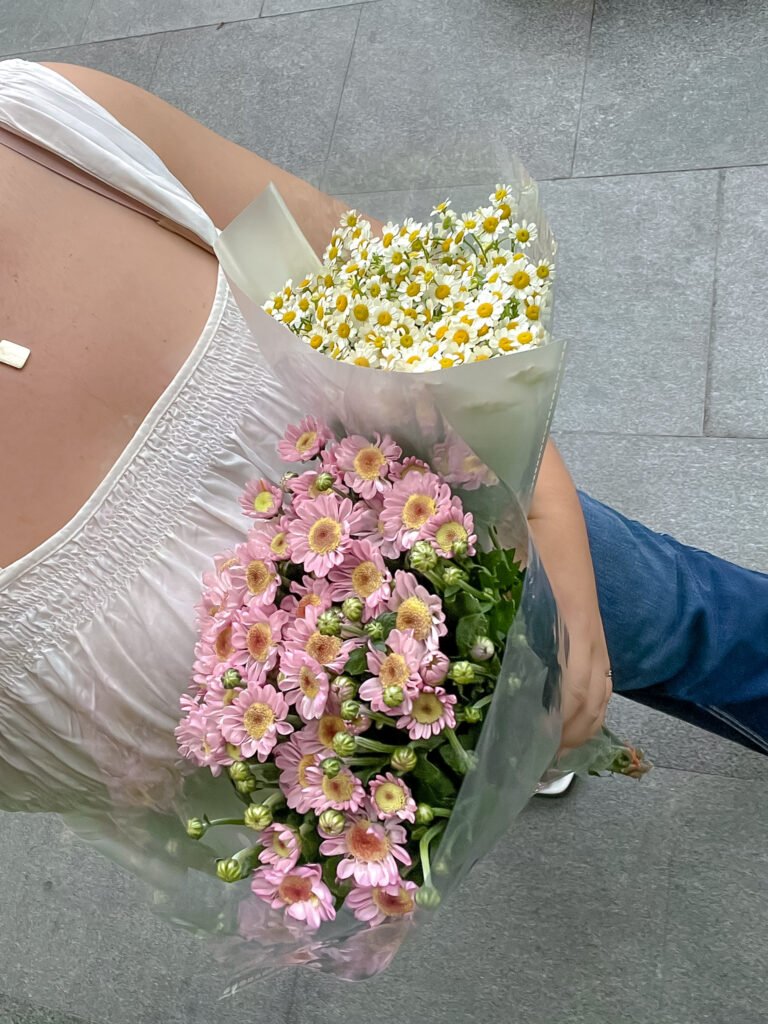
If you want the floral side of this world to spill into the rest of your home, bringing flowers into the rooms you actually live in is a natural next step.
Turn One Project Into a Weekly Ritual
The fastest way for a soft craft to become part of your life is to stop treating it like a random idea and start giving it a home.
Try this simple formula:
One project + one place + one repeating time.
For example:
- Pressed flowers at the dining table on Sunday afternoons
- Embroidery by the sofa after dinner on Wednesdays
- Painted tags and paper scraps in the kitchen on Friday evenings
- Clay dishes and ribbon work during a slow Saturday coffee hour
You don’t need five new hobbies. You need one small craft that can repeat long enough to become part of the atmosphere of your week.
That’s where the deeper practice of reducing artificial urgency starts to become visible. Not in a dramatic lifestyle reinvention. In a Tuesday night that now includes thread, glue, paper, or clay instead