Learn how to stop doomscrolling without tuning out the world. These practical habits help you stay informed, protect your attention, and stop checking headlines all day.
There is a real difference between being informed and letting the news sit at your breakfast table, follow you to the sofa, and climb into bed with you.
If you’ve been searching for how to stop doomscrolling, that’s probably the difference you want to recover. Not ignorance. Not denial. Just a cleaner relationship with information—one where you know what matters without handing every quiet moment to headlines, outrage, and endless commentary.
That’s the heart of this post. The goal is to stay aware without making your nervous system available to the entire internet all day long.
Quick win: 6 ways to stop doomscrolling this week
If you want a practical reset, start here:
- Choose two specific news-check windows instead of checking all day.
- Keep your phone in one fixed place at home so it stops trailing behind you.
- Remove news and social apps from your first screen to break the automatic reach.
- Protect the first and last hour of the day from headlines and commentary.
- Pick 2–3 trustworthy sources and stop using the comment section as “research.”
- Keep a short replacement list nearby—tea, a walk, a shower, two pages of a book, one small tidy, one real text.
If you do only those six things, doomscrolling usually starts to lose some of its grip very quickly.
What is doomscrolling?
Doomscrolling is the habit of repeatedly consuming negative, stressful, or emotionally charged news online long after the useful part is over.
It often starts as “I just want to check what’s happening” and turns into a stream of headlines, reactions, hot takes, and worst-case thinking that leaves you more tense than informed.
Why doomscrolling is harder to stop than ordinary scrolling
Doomscrolling is sticky for a few reasons.
First, there is almost never a natural stopping point. News refreshes. Commentary multiplies. The next post always suggests there’s one more thing you need to know before you can relax.
Second, the emotional charge makes it feel important. Even when the information is repetitive, your brain reads urgency as relevance.
Third, it fragments attention. The American Psychological Association’s overview of multitasking and attention switching explains how frequent switching creates cognitive costs and mental strain. Doomscrolling creates that same scattered state inside daily life: you may be physically at home, but your attention is getting yanked across crises, opinions, and alerts.
And finally, it tends to heighten anxiety instead of resolving it. Cleveland Clinic’s explanation of doomscrolling notes that the habit can increase stress, anxiety, and sleep disruption—which is exactly why a “quick check” at night so rarely feels finished.
So if you want to know how to stop doomscrolling, the answer is usually not more discipline. It’s better structure.
12 honest ways to stop doomscrolling
1. Decide what “informed enough” means
A lot of doomscrolling happens because the goal is vague.
If your rule is simply “stay informed,” the internet will happily interpret that as: check again, refresh again, open one more tab, read one more take.
A better question is: What actually counts as informed enough for my real life?
For most people, it looks more like this:
- know the major headline
- understand whether it affects your work, family, finances, or safety
- read one or two reliable summaries
- stop there
You do not need to process the entire emotional ecosystem around every news event.
2. Stop using the news as background company
This is one of the clearest shifts you can make.
Doomscrolling gets stronger when headlines become ambient company—while coffee is brewing, while dinner cooks, while you wait in the car, while your child plays, while you’re folding laundry.
Once news becomes background noise, your day starts absorbing its emotional tone by default.
Ordinary life gets much lighter when the news is something you visit on purpose instead of something that lives beside you all day.
3. Use news windows instead of open-ended checking
If you want one strategy that works almost immediately, make it this one.
Choose one or two small windows when you check the news intentionally. For example:
- 15 minutes in late morning
- 15 minutes in early evening
That gives you a container.
It also keeps you from slipping into the exhausting pattern of checking five minutes here, eight minutes there, twelve minutes before bed, and then wondering why your mind feels crowded all day.
I’ve found that technology becomes much easier to live with when it has actual borders. If you’re rebuilding that mindset more broadly, it helps to start with better rules for your tech.
4. Choose a few sources and leave the commentary spiral
Most people do not get trapped by one clean article from one solid source.
They get trapped by the spiral around it:
- five different headlines about the same story
- social posts summarizing the article
- reaction videos about the social posts
- comments arguing about the reaction videos
That is not staying informed. That is staying activated.
Pick a few sources you trust. Read the update. Leave.
You do not need endless interpretation layered on top of information you already understood the first time.
5. Give your phone a physical home
A phone that follows you through the house will keep making itself relevant.
A phone that lives in one place becomes a tool again.
This sounds small, but it changes a lot. One of the simplest things I keep returning to is putting the phone somewhere fixed instead of letting it trail behind me like a second shadow. The few steps it takes to go get it create one moment of choice, and often that is enough.
Kitchen counter. Shelf. Hallway tray. Top of the freezer. The exact place matters less than the rule.
6. Make your first screen boring
Your phone should not open like an invitation to panic.
Remove news apps, social media apps, and browsers from your first screen. Turn off non-human notifications. Log out of the platforms you open most mindlessly. If you want stronger friction, switch to grayscale.
The point is not to become anti-phone.
The point is to stop making emotional stimulation the most visually prominent thing on your device.
7. Protect the first hour of the day
Morning doomscrolling is especially expensive.
It tells your brain, before you’ve even entered your own day, that the outside world gets first access to your mind.
A much better first hour looks like:
- opening the blinds
- drinking water
- getting dressed
- making breakfast
- writing your top priorities
- reading a page or two of something slower
If you want help building that edge of the day, a low-dopamine start to the morning makes doomscrolling much less likely later on.
8. Protect the last hour too
Night doomscrolling feels persuasive because you’re tired enough to want relief and not clear enough to choose it well.
This is also where the sleep cost begins to show up. The Sleep Foundation’s guidance on how electronics affect sleep explains why screens at night can interfere with wind-down and sleep quality.
Instead of trying to “be good” once you’re already depleted, give the evening a better landing:
- dim the lights
- shower
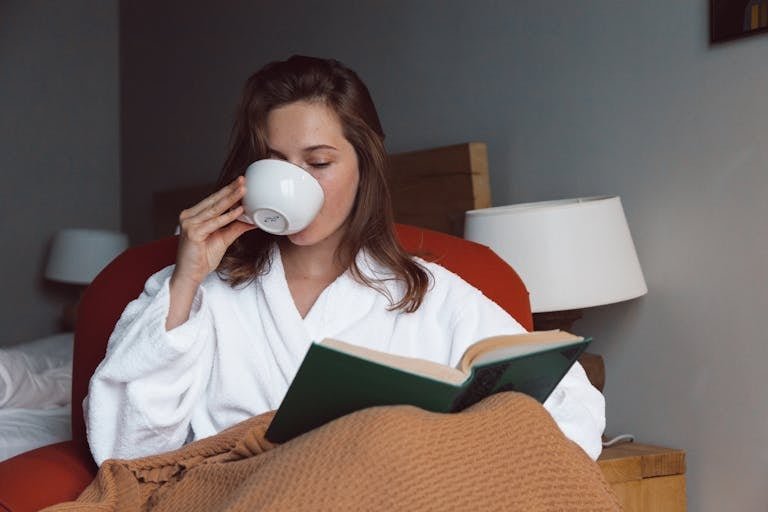
- make tea
- reset one small surface
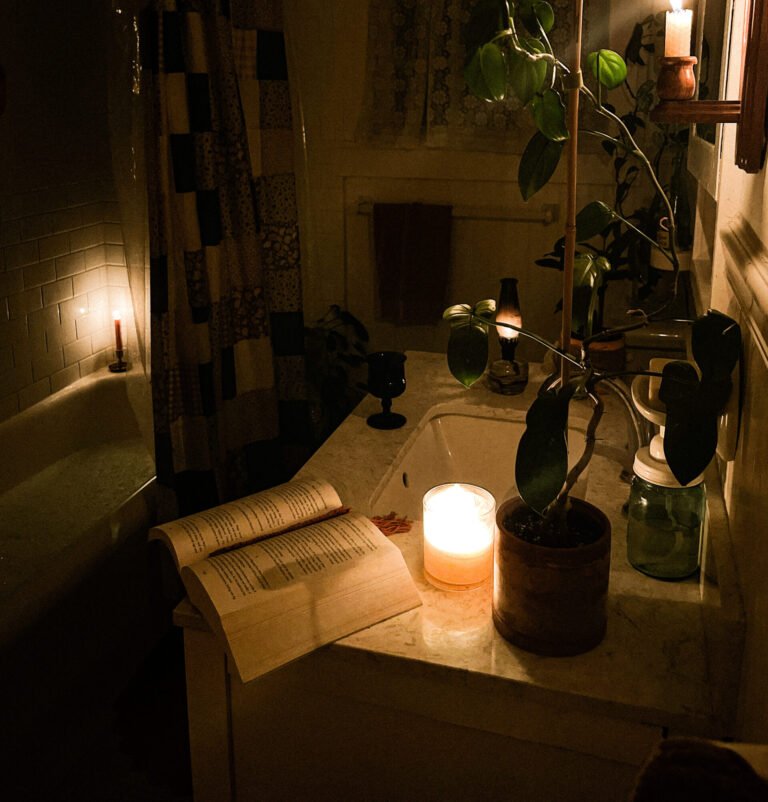
- read something physical
- sit in one chair without your phone
A short, protected analog hour at home can do a lot of the work that vague intentions never do.
9. Keep a replacement list where the urge happens
Most people don’t need stronger willpower. They need a pre-decided alternative.
Make a tiny list of things that feel good in real life:
- make tea
- step outside
- fold one small pile
- read two pages
- text one real friend
- stretch for three minutes
- write tomorrow’s top three tasks
This is especially helpful in transition moments, which is where doomscrolling loves to begin.
If that list would help, build a small menu of replacements before the urge shows up.
10. Watch the transition moments
A lot of doomscrolling doesn’t begin in leisure. It begins between things.
The meeting ends. Dinner is in the oven. The room gets quiet. You sit down for a second. The phone appears in your hand.
As someone who works from home, I notice these in-between moments matter more than people think. Days often turn on what you do right after a task ends.
Pre-decide a ritual for those moments:
- refill your water
- put on music
- change rooms
- open a window
- light a candle
- tidy one visible surface
Small transitions deserve structure. They’re where attention gets lost or protected.
11. Change the room that cues the habit
If your evening environment is arranged around chargers, remotes, background TV, and easy phone access, doomscrolling will keep feeling natural there.
Change the cue, and the behavior gets easier to change too.
Move the charger. Put books where your hand usually lands. Keep a basket with cards, magazines, knitting, or a puzzle within reach. Make one chair feel better than the feed.
If you want to push this further, start creating a living room that doesn’t cue the scroll.
12. Use short resets before the habit gets loud again
You do not need to wait until your phone feels wildly out of control.
Sometimes the smartest thing is a short reset:
- a weekend without news apps
- 48 hours without checking headlines at night
- one week of stricter boundaries after you notice the drift
Think of this as maintenance, not drama.
When you catch the pattern early, it’s much easier to turn than when you’ve already let it become the atmosphere of your whole week.
What to do in the exact moment you want to doomscroll
When you feel yourself about to disappear into the feed, try this:
- Name what you want. Relief? Stimulation? Reassurance? A break from effort?
- Pause for 30 seconds. Just enough to step out of autopilot.
- Do one physical action first. Stand up, wash your face, fill a glass, step outside, put on music.
- Give that action two minutes.
- Decide again. The urge is often weaker once your body has moved.
This is what learning how to stop doomscrolling really looks like. Not one dramatic identity shift—just a series of small interruptions that become a different way of living.
How to start today
If you want the simplest possible plan, do this for the next seven days:
- Choose your 2 news windows and keep them small.
- Move your phone to one fixed home when you’re in the house.
- Remove the most tempting apps from your first screen.
- Protect either the first hour or the last hour of the day. If possible, protect both.
- Create a 5-item replacement list and leave it where the urge usually happens.
- Pick one room or one chair as your no-scroll zone.
That is already enough to change the emotional texture of your days.
Quick recap
If you want to stop doomscrolling without disconnecting from the world, remember this:
- Doomscrolling thrives on vague rules. Clear windows and clean limits work better.
- The goal is not more information at any cost. The goal is informed enough.
- Background news changes the emotional tone of a day. Turn it back into a deliberate activity.
- Physical distance from your phone matters. More than most people expect.
- Morning and evening are the edges worth protecting first.
- Your home can support presence just as easily as it can support the feed.
Learning how to stop doomscrolling is really about protecting your attention so it can belong to your actual life again—your work, your meals, your home, your relationships, and your own thoughts.
And that is worth building structure around.