
Discover how to build an intentional living aesthetic with better routines, softer spaces, and digital habits that make daily life feel more peaceful.
There is a certain kind of life that looks beautiful before you ever think about the word aesthetic.
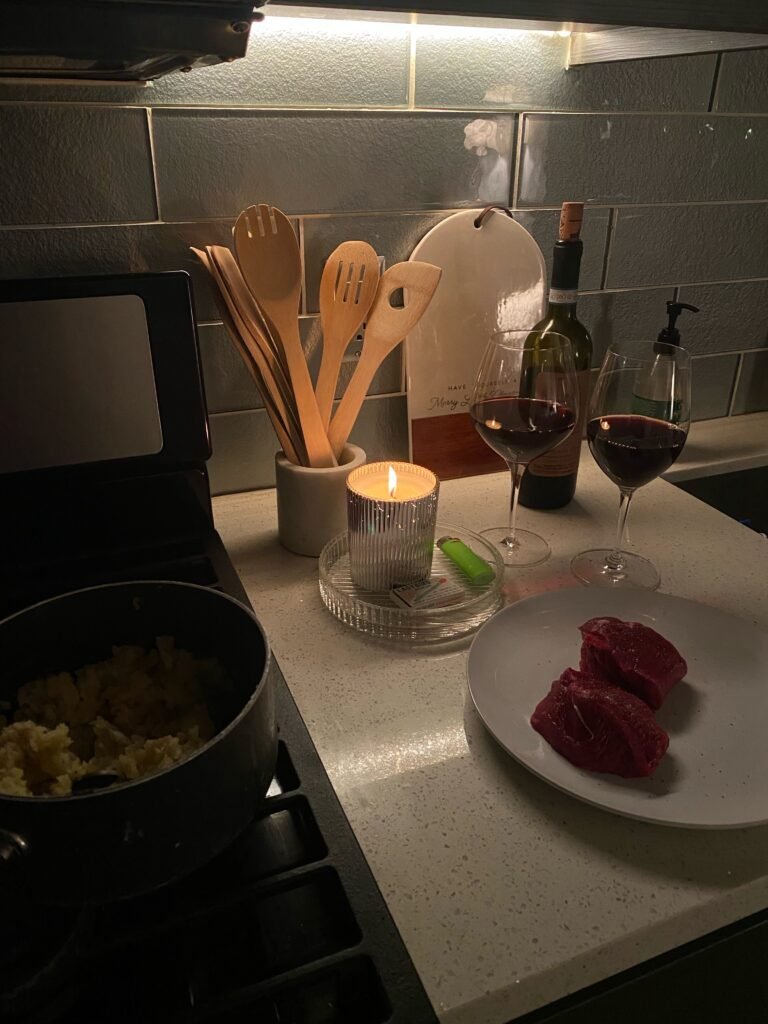
The kitchen has one vase of flowers in it. Your clothes make sense together. Your phone is not the loudest thing in the room. The table by the door holds exactly what you need when you come and go. Your mornings have a little shape. Your evenings know how to land. Nothing feels performative, but everything feels considered.
That is the pull of the intentional living aesthetic. It is the visual language of a life built on purpose.
If you want to create that feeling in real life, start here:
- choose one mood you want your days to carry
- make one room support that mood before you buy anything new
- build one tiny ritual that repeats often enough to become part of the atmosphere
- edit your wardrobe and digital habits so your life feels coherent from the inside out
- let beauty come from consistency, not from trying to impress anyone
That is where this aesthetic becomes useful.
What the Intentional Living Aesthetic Really Is
The intentional living aesthetic is what happens when your space, routines, and choices start reflecting your values instead of your impulses.
It is less about copying one look and more about creating a life that feels recognizable as yours.
A woman drawn to this search term is usually looking for more than pretty corners. She wants a home that supports presence, a rhythm that reduces noise, and small visual cues that make everyday life easier to inhabit. She wants beauty, yes—but beauty that helps her stay inside her own life.
That is why this topic fits so naturally inside the kind of slow living that works in real life. The goal is not a themed personality. The goal is a life with enough structure, atmosphere, and self-respect that you actually want to be present for it.
There is strong research behind this instinct too. Harvard Health’s piece on how clutter raises stress is a useful reminder that the way your environment looks and functions shapes how your body feels inside it. And research on goals that actually line up with your values helps explain why a life feels better when the things you pursue genuinely match who you are.
Choose the Feeling Before You Choose the Look
The easiest way to miss this aesthetic is to start with objects.
A more useful place to begin is with atmosphere.
Ask yourself: How do I want my life to feel on an ordinary Wednesday?
Maybe your answer is:
- calm and polished
- warm and literary
- light and airy
- grounded and feminine
- structured and quietly elegant
That answer becomes your filter.
Once you know the feeling, choices get much easier. You stop buying random things that are pretty in isolation and start choosing details that reinforce a single emotional direction.
For example:
- If you want life to feel calm and polished, your version of this aesthetic may lean into clearer surfaces, better lighting, simple gold accents, and a wardrobe with repeated neutrals.
- If you want it to feel warm and literary, you might want layered lamps, books left in reach, deeper colors, and softer fabrics.
- If you want it to feel light and airy, you may gravitate toward open curtains, pale ceramics, fresh flowers, and less visual weight in the rooms you use most.
The key is coherence. An intentional life feels like a story with one point of view.
Let One Room Carry the Message First
You do not need your whole home to transform at once. One room that truly supports your life will teach you more than a shopping cart full of decor ever could.
Start with the room where you spend the most ordinary time.
For many women, that is the living room, kitchen, or bedroom. The question to ask is simple:
What would make this room feel more like the life I want to live here?
If you want more reading, make it easier to sit down with a book.
If you want calmer evenings, make the room feel better to land in than your feed.
If you want to enjoy your mornings, make the first things you see lighter, softer, and more ordered.
This is where a home that quietly stops training you to scroll matters so much. When your room is built for chargers, remotes, and collapse, your attention follows the setup. When it is built for conversation, reading, flowers, and one or two beautiful practical rituals, your attention starts landing differently.
A few high-impact changes:
- move chargers away from the softest seats in the house
- bring one lamp lower than eye level into the room so the light feels gentler
- leave one beautiful, useful object visible—a book, a tray, a ceramic mug, a candle, a vase
- clear the first surface your eye lands on when you enter
- add one natural element your room was missing
The University of Minnesota’s overview on how nature supports wellbeing is a lovely reminder that even small natural cues can change the emotional texture of a space.
Build the Aesthetic Through Rituals, Not Just Decor
The most convincing intentional living aesthetic is never only visual.
It is behavioral.
You can feel it in the way mornings begin, in how evenings close, and in what the home seems to expect from you. A room with a candle, a chair, and a book starts feeling different once you become the kind of person who actually sits there after dinner.
That is why rituals matter so much.
A few examples that give this aesthetic real life:
1. A five-minute morning landing ritual
Open the curtains. Pour water into a real glass. Put on one lamp if the light is still soft. Look at your day before you look at your phone.
2. A weekly beauty ritual for the house
Bring in small weekly rituals that make a house feel cared for, whether that is flowers, a fruit bowl you refresh, or the simple act of resetting the table for the week ahead.
3. A calmer evening handoff
Adopt the quieter evening habits that make tomorrow feel easier: clear one surface, set out tomorrow’s first things, and let your phone sleep somewhere else.
4. A reading ritual that belongs to your home
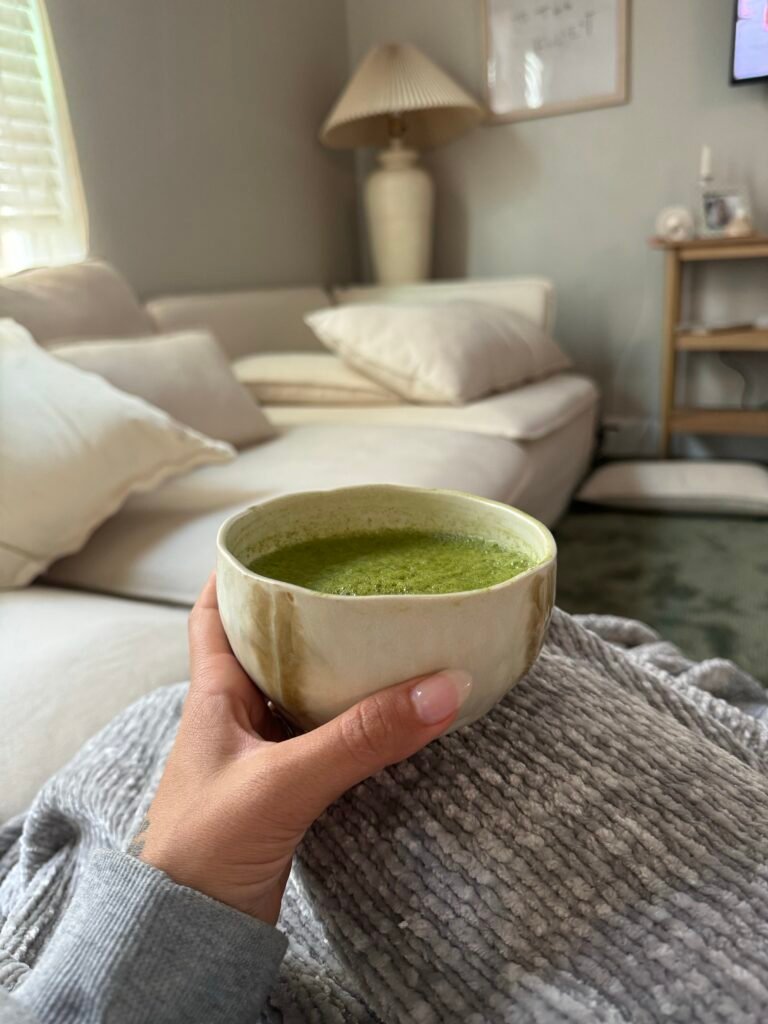
Create a reading corner that quietly wins over your feed, even if it is just one chair, one blanket, one lamp, and one book left open to your page.
These rituals are what make the aesthetic feel believable. They turn style into structure.
Dress Like the Life You’re Actually Living
Your wardrobe is one of the fastest ways to make life feel more coherent.
An intentional living aesthetic in clothing does not require a capsule wardrobe, a rebrand video, or ten new pieces. It usually asks for something much simpler: fewer mixed signals.
Start by noticing what you wear when you feel most like yourself.
Maybe it is:
- crisp trousers and a knit
- denim, a button-down, and simple jewelry
- dresses that feel easy enough for home but polished enough for the outside world
- soft, repeated colors that make every outfit feel related
The point is not uniformity for its own sake. The point is visual clarity.
When your clothes reflect the life you are actually living, getting dressed starts feeling easier and more satisfying. Your mornings move faster. Your mirror gives you one less argument. Your home life and public life stop feeling like two separate characters.
A helpful question here is:
Would this outfit make sense in the rooms, routines, and season of life I am trying to build?
If the answer is yes, it probably belongs.
Give Your Digital Life an Aesthetic Too
This is the part people skip.
A life can have the loveliest candles, the best lamp light, and a beautiful chair by the window—but if your phone still owns every spare second, the aesthetic will keep collapsing.
An intentional living aesthetic needs digital boundaries sturdy enough to protect the atmosphere you are creating.
That might look like:
- a home screen with fewer visual temptations
- one place where your phone lives when you walk in the door
- no social apps during the first part of your morning
- a living room that feels good enough to sit in without automatically reaching for a second screen
If this is the room you most want to change, a more intentional, phone-light living room is often where the whole shift becomes visible.
The goal is not to make technology disappear. The goal is to make real life easier to choose.
Once that happens, the aesthetic starts holding.
Small Details That Make a Big Difference
After the big categories—room, rituals, wardrobe, phone—the intentional living aesthetic often comes alive through tiny repeated cues.
Think:
- the same kind of glass on your nightstand and your desk
- one scent that belongs to evening
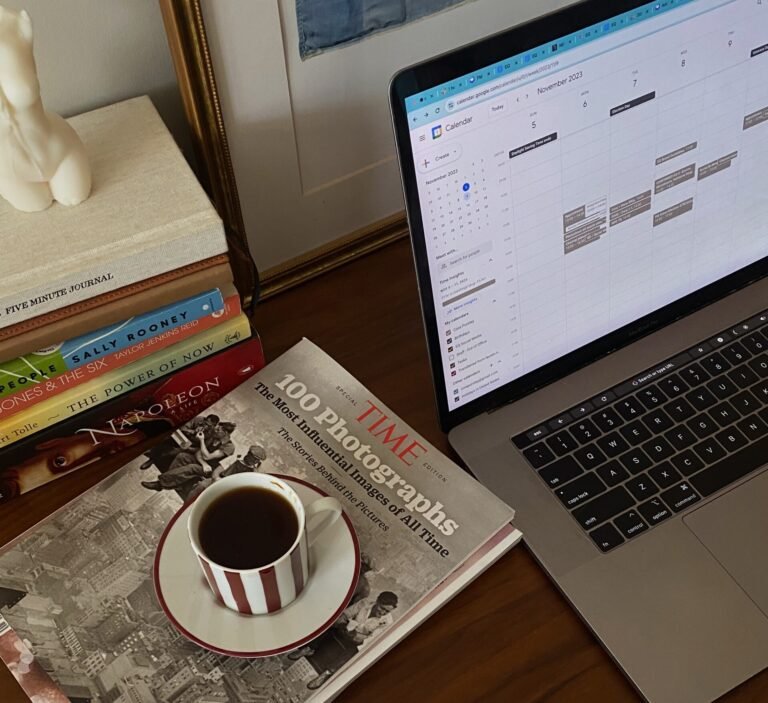
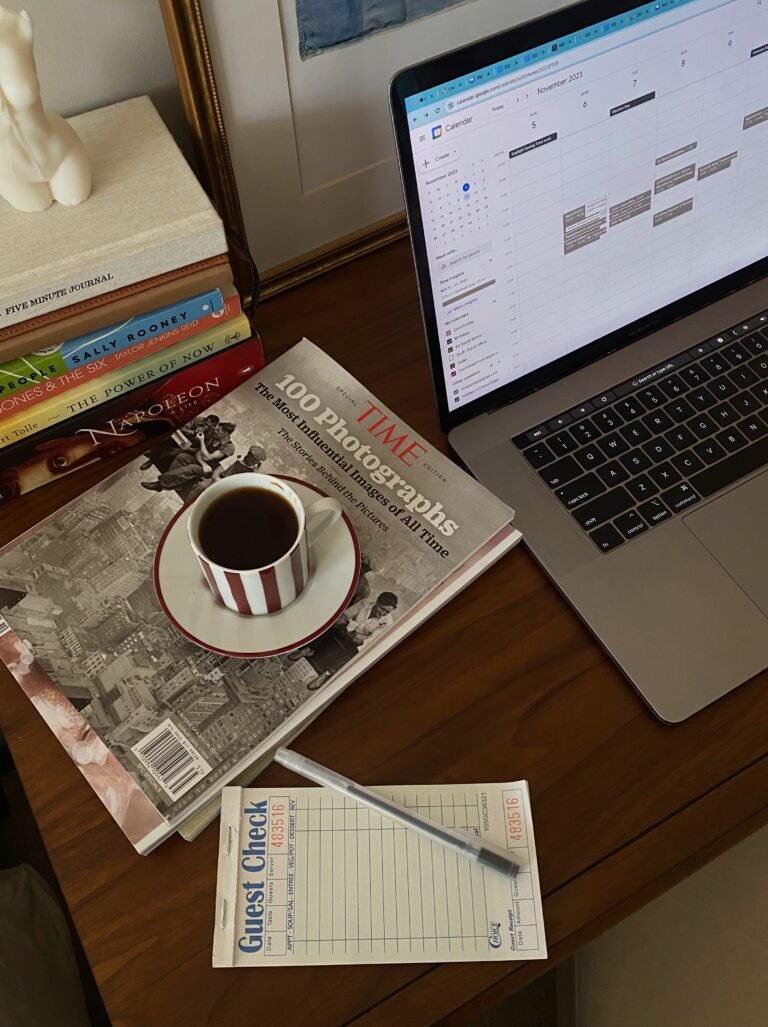
- a stack of books that actually reflects your interests
- linens, ceramics, or notebooks in colors you return to again and again
- a bowl for keys that keeps your entryway from becoming a drop zone
- one tray that makes your coffee corner or bathroom counter feel finished
These details matter because they reduce friction and add continuity at the same time.
They make life feel held.
And when life feels held, it becomes much easier to enjoy.
How You Know It’s Working
The intentional living aesthetic is working when your days start feeling more like themselves.
You will notice it when:
- your home feels a little more alive before you even buy anything else
- your routines get easier to repeat because the room supports them
- your wardrobe stops fighting your calendar
- your phone feels slightly less magnetic in the spaces you have intentionally shaped
- ordinary moments start looking better because they are better arranged, not because they are staged
Most of all, you will feel it when your life starts giving you the same pleasure your mood boards were trying to promise all along.
That is the deeper beauty of this keyword.
The intentional living aesthetic is not really about aesthetics alone. It is about building enough order, softness, and specificity into your days that your life begins to look like it belongs to you.
And that is always going to be more attractive than copying someone else’s idea of what a beautiful life should be.