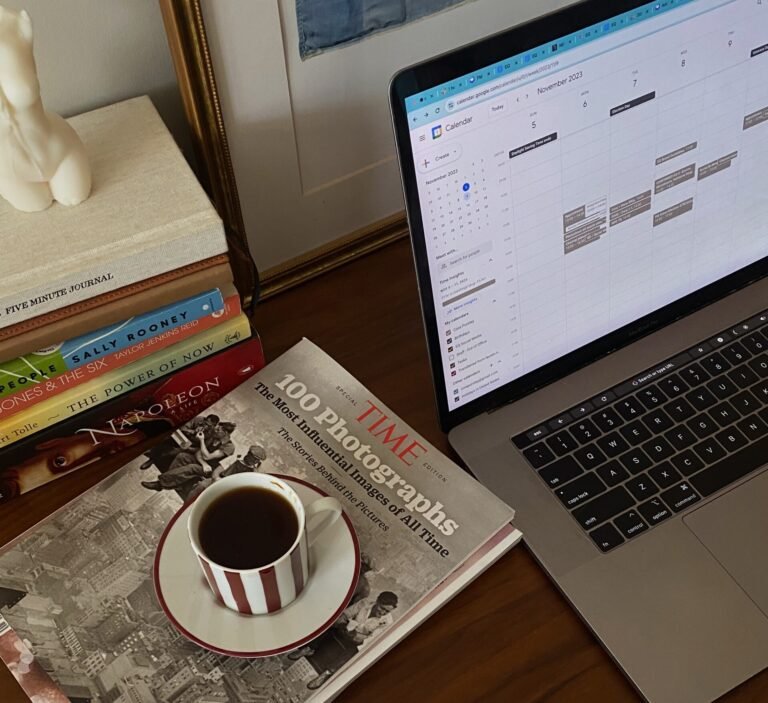

Most rebranding attempts fail because you’re fighting against yourself. Here’s why I wasted years chasing the wrong goals—and what finally worked.
I had a realization that changed everything.
For years, I kept trying to rebrand myself—new goals, new routines, new versions of “better me.” And every single time, I’d start strong and then… nothing. I’d give up. Again.
So I started asking myself a hard question: Why can’t I sustain change?
There were only two possible answers. Either something was genuinely wrong with me—maybe I just wasn’t capable of having good habits or making lasting changes. Or I was doing it completely wrong.
And honestly? I didn’t want to believe the first option. So I started digging into the second.
The Instagram Vision vs. The Daily Reality
Here’s what I used to do: I’d close my eyes and imagine the life I wanted. I’d scroll Pinterest for inspiration, look at successful people on social media, and feel this pull toward a specific version of myself.
But then I realized something that sounds obvious but somehow took me years to see: everything I wanted required a daily reality—routines, habits, a way of living—that didn’t actually make me happy.
Let me give you a concrete example.
Let’s say someone wants to have an extremely lean, toned body with visible abs—the six-pack, shredded look. To achieve that, you need a very specific routine: daily weightlifting, cardio, extremely restricted eating. You have to hit your macros, weigh your food, track everything meticulously.
Now, I’d look at that end result and think, “I want that.”
But the daily reality to get there? I didn’t want that at all. Weighing my food? Calculating macros for every meal? That life didn’t make me happy. It doesn’t make sense for who I am.
And here’s the brutal truth: I would never be able to sustain it.
This is where most people—including past me—get rebranding completely wrong.

We Chase Results We Don’t Actually Want
We see the finished product and want it. But we ignore a critical question: Do I actually want the lifestyle required to maintain this result?
Sometimes we don’t enjoy the process simply because we don’t like leaving our comfort zone—and that’s something we need to push through.
But other times, we don’t enjoy it because it genuinely doesn’t make sense for who we are.
There’s a difference, and you need the maturity to tell them apart.
For me, weighing food falls into the second category. I can’t imagine doing that. It doesn’t align with how I want to live. So no matter how appealing that ultra-lean aesthetic looks on someone else, it’s not my goal—because I don’t want the daily life it requires.
That’s when I started asking different questions:
- Who am I, really?
- What kind of life do I genuinely want to live?
- What results do I want—not because the world values them, but because I value them?
The Success Image That Wasn’t Mine
Sometimes we want things because the world values them. Society has a pre-made image of what success looks like, and we absorb that without questioning whether it fits us.
For example, there was a time when I wanted to become a “super entrepreneur.”
I’d seen stories of people who started small businesses and scaled them into huge operations—big teams, millions in revenue, all the classic markers of success. And I thought: That’s what I should want.
But when I got honest with myself, I realized: That model makes zero sense for me.
Don’t get me wrong—I do want to be an entrepreneur. I do want to earn well. But the model is different.
What do I actually want in my daily life?
I want to be home to raise my son up close. I want to homeschool him and be present for his childhood. That’s my real goal—not just the end result when he’s 18 and I can say “I gave him everything,” but the daily experience of being there with him, teaching him, watching him grow.
So yes, I want to build a business. Entrepreneurship is probably the most effective way for a woman to stay home with her kids while still contributing financially and achieving professional fulfillment.
But the business model has to be different.
It needs to be lean. It can’t risk burnout. The structure has to support the life I actually want, not undermine it.
Understanding this is crucial. You need to know:
- Who you are
- What you actually want
- What your natural abilities are
- What your real circumstances are
Then you make choices—or choose models—that amplify your strengths instead of fighting against them.
The Instagram Trap: Fighting My Own Strengths
Here’s a perfect example of how I wasted years fighting myself.
I’ve had several projects over the years that I couldn’t fully sustain. And I had a default pattern: I’d try to make the thing grow on Instagram.
Sometimes I didn’t even have the business figured out yet, but I was already creating its Instagram page, trying to make it blow up there. Because everyone who was succeeding seemed to be succeeding on Instagram. Companies had Instagram. Influencers grew on Instagram.
So I thought: To succeed, I had to succeed on Instagram.
But here’s the problem.
Instagram and most social platforms grow through dynamic content—videos, reels, stories. And my circumstances? They don’t support that.
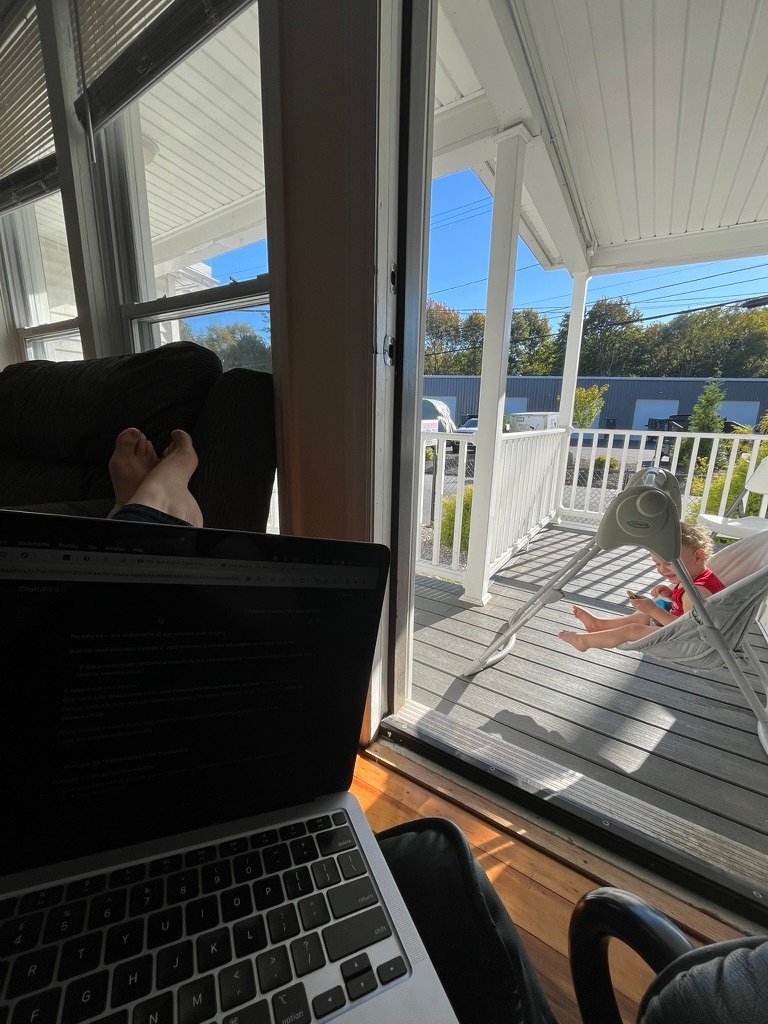
I have no support system nearby—most of my family is in Brazil. I’m home alone with my toddler every day while my husband works. We live in a small apartment in a city that’s not quiet—cars passing, ambient noise.
My son makes noise because he’s a kid. I can’t film videos when he’s sleeping without risking waking him. I can’t film when he’s awake because of the background noise.
So how was I supposed to grow on a video-based platform when my circumstances don’t allow it?
And here’s the other thing: I’ve always communicated better in writing than on video.
Then I discovered Substack.
Substack is also a social platform, but it’s focused on newsletters and long-form text. The people who use Substack prefer consuming content in written form.
And it hit me: I spent years giving up on projects because I couldn’t succeed on Instagram, when Instagram never made sense for my abilities or my circumstances in the first place.
On Substack (and later my own website), I could write when my son was awake. I could write when he was asleep. I communicated better. And I spent less time because writing is easier for me. And the audience consuming my content also preferred that format.
After Scroll actually started on Substack. Pretty quickly, I realized it was growing into something bigger—it deserved its own home. So I built the full website and turned it from a newsletter into a real publication.
But here’s the truth: I was wasted talent on Instagram. I would never have flourished there. Ever.
I was trying to succeed in a space that actively worked against my strengths, my circumstances, and my natural communication style.
When You Stop Fighting Yourself, Everything Aligns
This is the one thing most people get wrong about rebranding:
They try to rebrand into someone they think they should be, instead of amplifying who they already are.
And they pick goals that look good but require daily lives they don’t actually want.
They choose paths that work for other people but don’t fit their circumstances, abilities, or values.
And they force themselves into platforms, routines, and lifestyles that feel like pushing a boulder uphill—and then wonder why they can’t sustain it.
Here’s what actually works:
Get brutally honest about:
- What you actually enjoy doing daily (not just what result you want)
- What your real circumstances are (time, energy, support, resources)
- What your natural strengths are (not what you wish they were)
- What you genuinely value (not what society says you should value)
Then design your rebrand around that.

The Questions That Change Everything
When I finally started asking myself the right questions, everything shifted:
Question 1: Do I actually want the daily life required for this result?
Not “Do I want the result?” but “Do I want to live the way I’d need to live to maintain this result?”
If the answer is no, that’s not your goal. Find a different one.
Question 2: Am I choosing this because I want it, or because it looks impressive?
Society has pre-made success images. Make sure you’re not chasing someone else’s definition of a good life.
Question 3: Does this path amplify my strengths, or force me to work against them?
You’ll always lose when you fight your own nature. Find the path that makes your natural abilities an advantage, not a liability.
Question 4: Do my circumstances realistically support this approach?
You can’t build a video-based business with no childcare and a toddler at home. You can’t maintain an intense gym routine with unpredictable work hours. Stop pretending your constraints don’t exist—work with them instead.
Question 5: What would this look like if I designed it specifically for who I am?
Most advice is generic. Most success stories follow paths that worked for someone else’s life. What would success look like tailored to your specific situation?
What This Actually Looks Like in Practice
For me, it meant:
Business Model: Not scaling a huge team—building something lean and sustainable that doesn’t risk burnout or pull me away from my son.
Content Platform: Not Instagram video—long-form writing where I communicate best and my circumstances support.
Daily Routine: Not waking at 5am for elaborate morning rituals—a simple 15-minute workout that triggers the habits I actually need. (More on this in my post about what a 6-month rebrand really looks like.)
Fitness Goals: Not weighing food and hitting strict macros—focusing on one key habit (breaking my fast correctly) that makes everything else easier.
Parenting Philosophy: Not outsourcing childcare to scale faster—making my business model fit around being present for my son’s childhood.
None of this looks like the Instagram version of success. But it’s sustainable. It’s aligned. It’s actually working.
Why This Works (When Everything Else Didn’t)
When you stop fighting yourself, three things happen:
1. It’s Actually Sustainable
You’re not forcing yourself to be someone you’re not 24/7. The daily reality aligns with who you are, so you can maintain it long-term.
2. You Eliminate Unnecessary Friction
When you work with your strengths and circumstances instead of against them, progress requires less willpower. You’re swimming with the current, not against it.
3. You Stop Wasting Your Talents
How many years did I waste trying to succeed on Instagram when I’m actually a strong writer? How many projects died because I was using the wrong platform, the wrong approach, the wrong model for who I am?
When you find the right fit, your talents actually matter. You’re not constantly handicapped by trying to excel in areas that don’t suit you.

Your Turn: Stop Fighting Yourself
If your rebrand keeps failing, it’s probably not because something’s wrong with you.
It’s because you’re trying to rebrand into a version of yourself that doesn’t fit who you actually are.
So get honest. Brutally honest.
- What do you actually want your daily life to look like?
- What are your real strengths and circumstances?
- What would success look like if you designed it specifically for you?
Then build that.
Not the Instagram version. Not the version that impresses other people. And not the version you think you “should” want.
Build the version that actually makes sense for who you are.
Because when you stop fighting yourself, everything finally starts to align.
This is part of my rebranding series. If you haven’t read them yet: