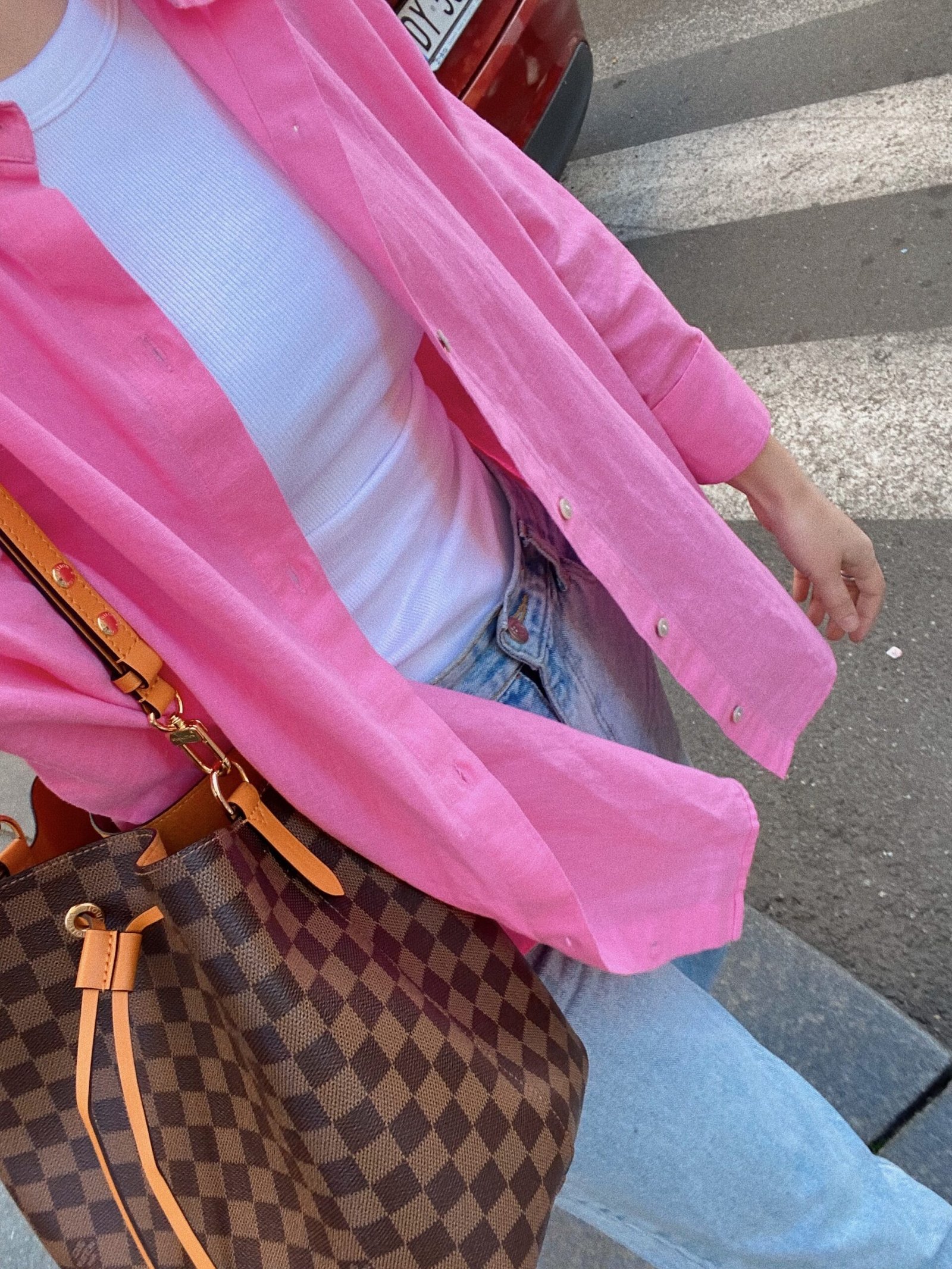
A practical guide to building a spring capsule wardrobe for 2026 versatile layers, timeless basics, and mix-and-match outfits.
The first truly mild morning of the year always gives it away.
You crack a window, the light feels softer, and suddenly the heavy knits and dark boots that carried you through winter don’t match the day in front of you. You’re ready for floatier fabrics, lighter layers, and outfits that feel like this season of your life—not last year’s.
A spring capsule wardrobe is how you make that shift feel calm instead of chaotic. A small, intentional collection of pieces that mix, match, and carry you through real spring days: school runs, office weeks, date nights, slow weekends at home. Think of it as the clothing version of your seasonal resets: the same gentle philosophy that shapes your home and routines, now living in your closet.
If you’ve already done a broader edit with A Fresh Closet Reset for the New Season, this post is the next layer. Here, we’ll zoom in on what actually earns a place in your 2026 spring capsule—and how to build it so getting dressed feels easy and a little cinematic every morning.
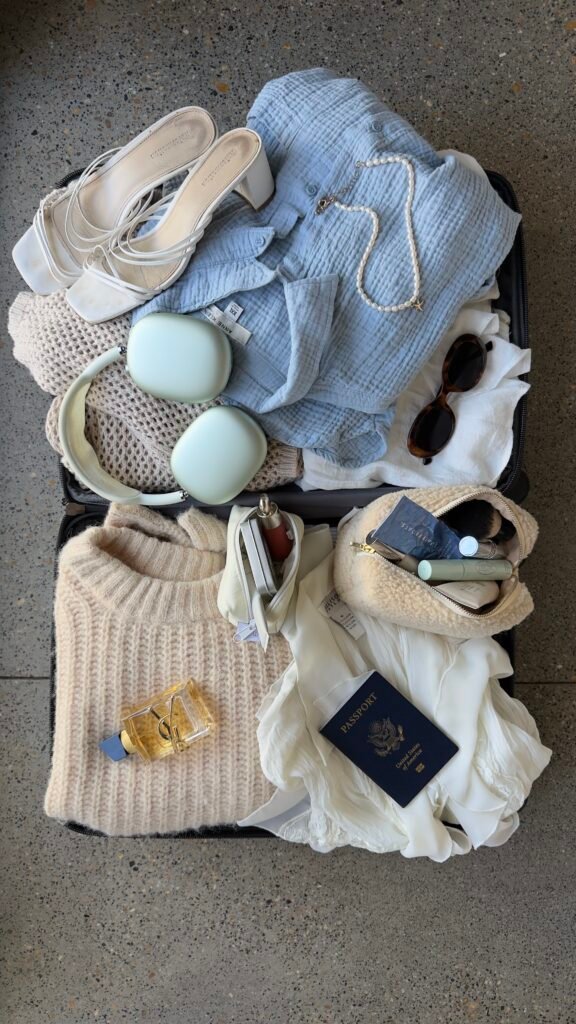
Step 1: Start With the Life You’re Dressing For
Before you buy or declutter anything, start with your actual calendar.
Grab a notebook (or the notes app) and answer:
- What does a normal week look like in this season—work, weekends, evenings?
- How often are you at home vs. out?
- Where do you want to feel a little more “put together”—school drop‑off, office days, church, date nights, hosting?
- What’s the typical weather like between now and early summer where you live?
Then ask one more question:
“If my closet quietly supported the life I’m stepping into this spring, what would it make easier?”
Maybe it’s:
- Getting ready in 10 minutes without trying on five outfits.
- Having a couple of pulled‑together looks for client days or coffee dates.
- Feeling like your at‑home outfits belong in the same intentional world as your Gentle Spring Self‑Care Habits and Spring Bucket List.
That answer is the filter for everything else. Your capsule isn’t serving some abstract Pinterest board—it’s serving the way you actually live.
Step 2: Build Your 2026 Spring Capsule by Category
Use your uniforms and color story to build a tight, generous‑feeling capsule. The numbers below are a guideline, not a rule—adjust up or down based on climate, laundry rhythm, and personal style.
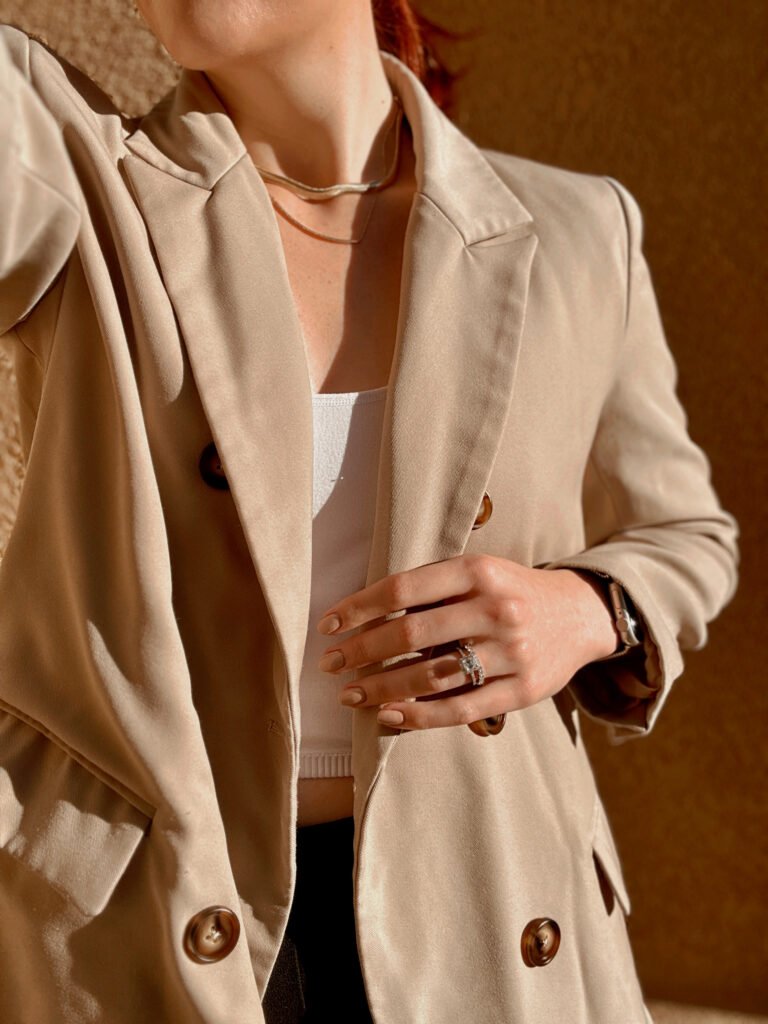
Outer Layers (3–4 pieces)
Think of these as the pieces that make every outfit feel finished:
- 1 light trench coat or longer coat in a neutral
- 1 shorter jacket (denim, cropped tweed, or bomber, depending on your style)
- 1–2 cardigans or soft blazers for work‑from‑home and office days

Tops (7–9 pieces)
Aim for a mix of polished and easy:
- 3–4 elevated basics – high‑quality tees or tanks in your neutrals
- 2–3 blouses or shirts – poplin, silk, or soft viscose for meetings and dinners
- 1–2 knits – a fine striped knit, a lightweight crewneck, or polo‑style sweater
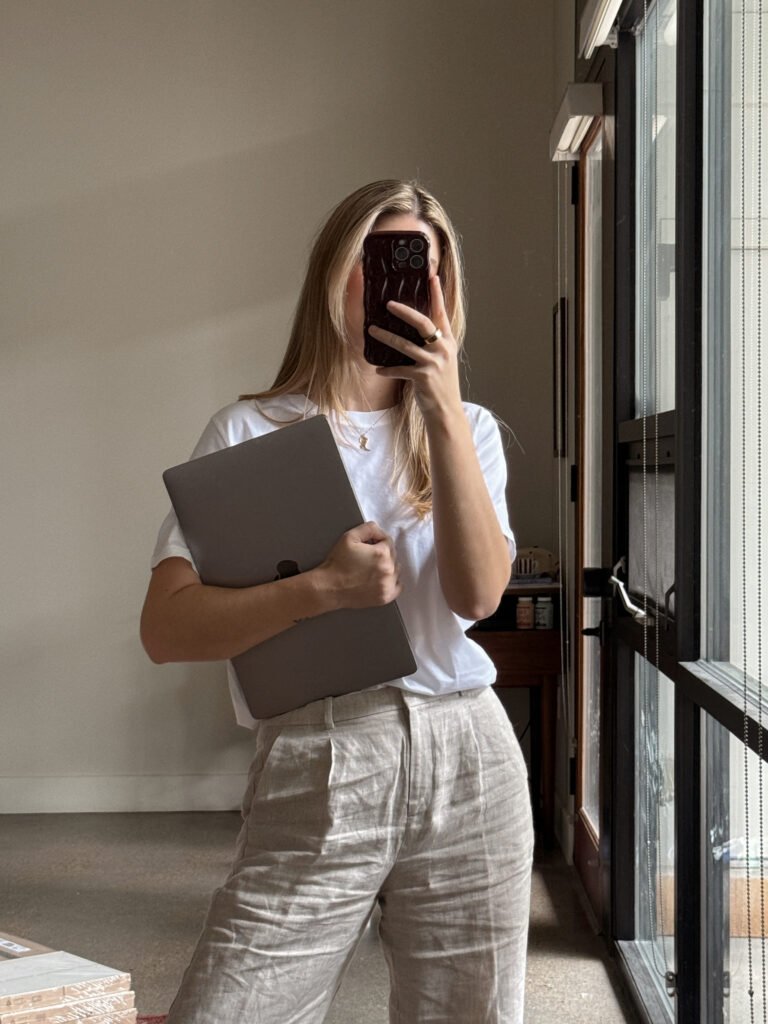
Bottoms (4–5 pieces)
Focus on silhouettes you already love on your body:
- 1 pair straight or wide‑leg jeans in a versatile wash
- 1 pair tailored trousers in a neutral
- 1 pair easy pants – linen drawstring or soft pleated pants for at‑home days
- Optional: 1 skirt (midi or slip) that works with your tops and outer layers
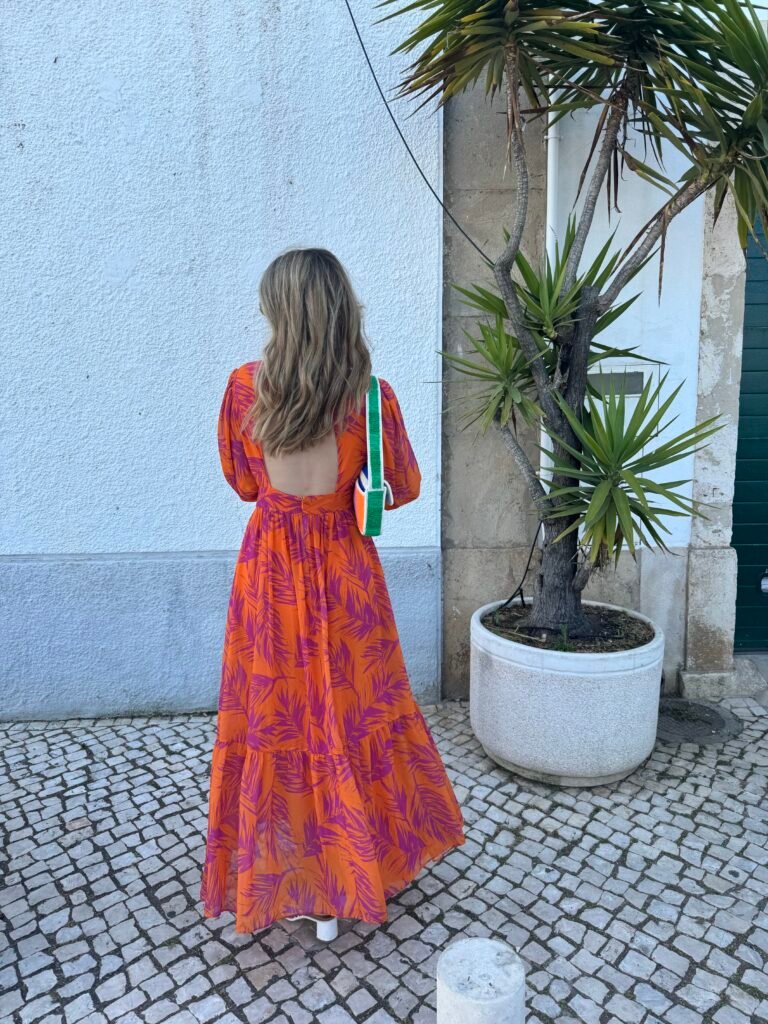
Dresses & Matching Sets (3–4 pieces)
These are your “instant outfit” pieces:
- 1 day dress in a breathable fabric you can dress up or down
- 1 slightly dressier dress for dinners, church, or events
- 1 two‑piece set (top + skirt or pants) you can also break apart
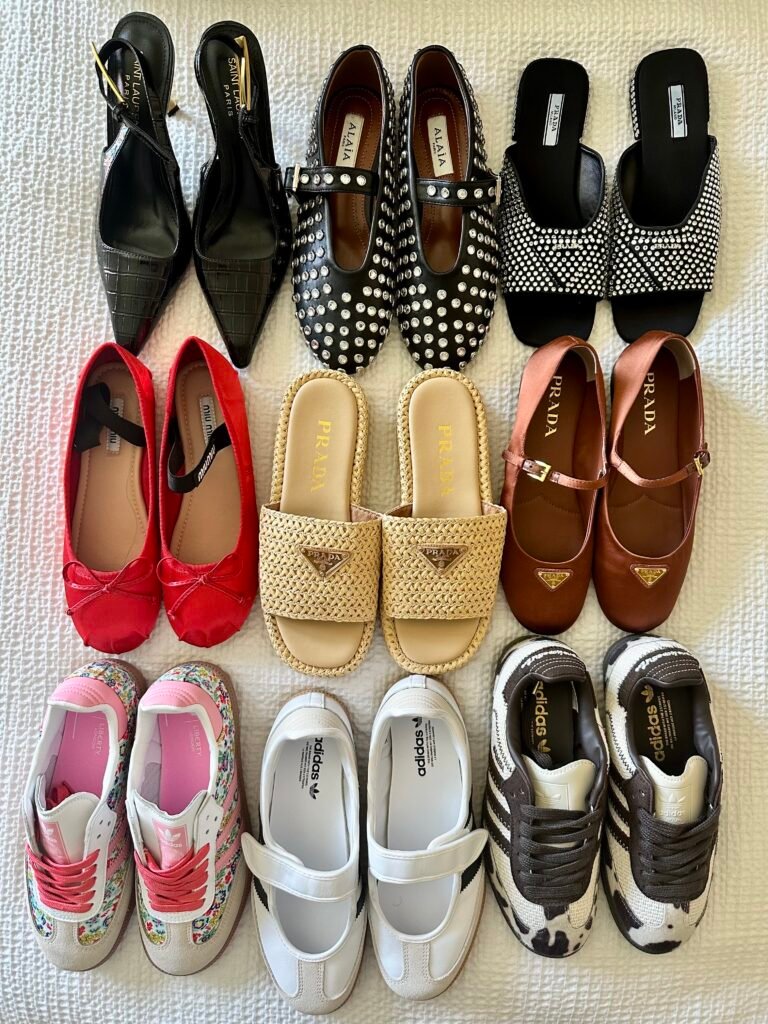
Shoes (3–4 pairs)
Think comfort first, then polish:
- 1 pair trainers or sneakers you love
- 1 pair loafers or ballet flats
- 1 pair sandals or low heels for warm days and evenings
- Optional: 1 ankle boot if your spring is still chilly
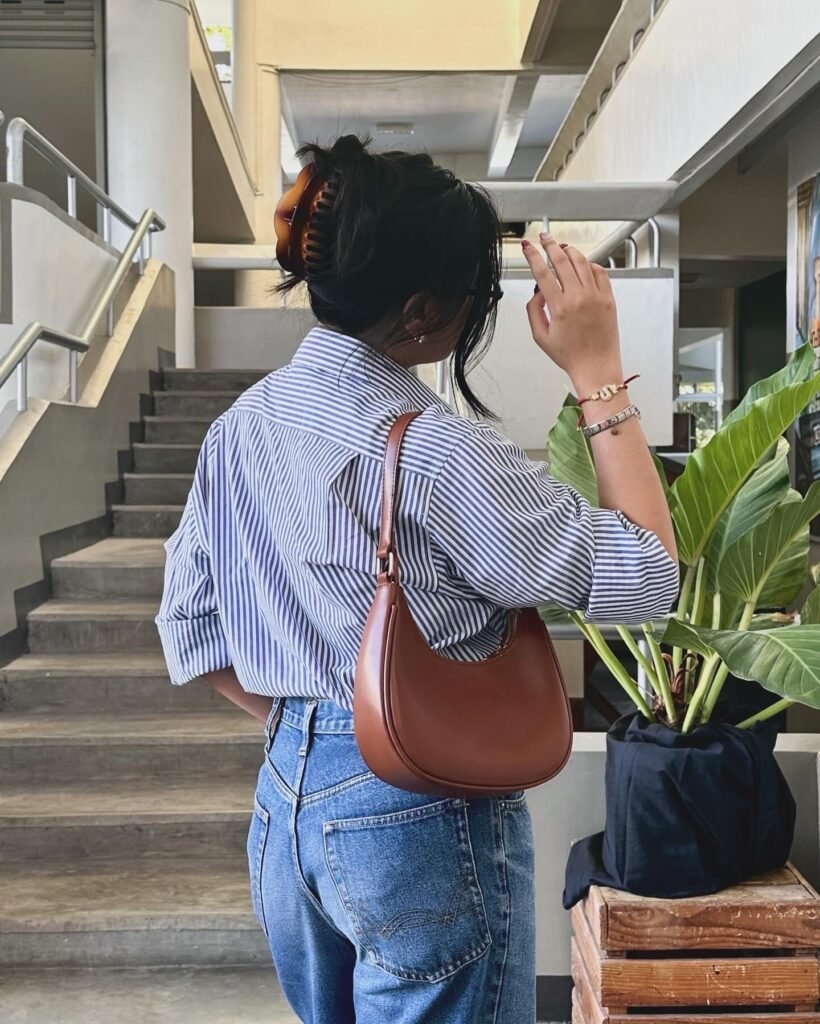
Bags & Small Pieces (5–7 items)
These are the details that make outfits feel “done” without effort:
- 1 structured everyday bag in a neutral
- 1 smaller crossbody or shoulder bag for evenings
- 1 basket or canvas tote for markets and weekends
- A thin belt, a simple watch, and 2–3 pieces of “signature” jewelry you can wear with everything
You’ll notice what’s not here: a pile of “just in case” items. Those can live in secondary storage, the way your off‑season pieces do after a Fresh Closet Reset. Your capsule rail holds only what you actually plan to wear between now and early summer.
Step 3: Choose a Spring Color Story for 2026
Next, give your capsule a color story so pieces naturally play together.
You don’t need a designer palette. You just need:
- 2–3 grounding neutrals – think ivory, soft white, navy, camel, chocolate, stone.
- 2 accent colors that feel like this spring – maybe sage, soft blue, blush, butter yellow, or a deep green you already love in your home.
- 1 metal you default to – gold or silver, so jewelry and hardware quietly align.
Look at what’s already around you:
- The light in your home when you crack the windows.
- The shades you’re drawn to in your decor (you might already be living in a palette from How to Refresh Your Space for Spring: Easy Decor Swaps).
- The colors you always reach for when you actually feel like yourself.
Overviews like the University of Minnesota’s piece on how nature impacts our wellbeing keep circling back to the same thing: small, repeated contact with colors and textures pulled from the natural world can noticeably shift mood. Your capsule can echo that—linen, cotton, light knits, tones that look like the trees and sky around you.
Write your palette down: “Spring 2026: navy, ivory, camel, soft green, blush, gold hardware.” From now on, everything that enters the closet either belongs to that story or is a very intentional exception.
Step 4: Pick 2–3 “Uniforms” Instead of Dozens of Outfits
The fastest way to reduce wardrobe decision fatigue is to think in uniforms, not individual pieces.
Choose 2–3 outfit formulas that match the life you mapped in Step 1. For example:
- Work or office days → tailored trouser + fine‑knit top + blazer + loafers
- Work‑from‑home days → soft pull‑on pant or straight jeans + tee + cardigan + simple earrings
- Evenings & weekends → midi dress + light jacket + basket bag + low heel or ballet flat
Once you’ve decided on these shapes, your capsule’s job is to give you multiple versions of each uniform, not an endless wall of one‑off pieces.
A handful of pre‑decided outfit formulas make your mornings easier—you’re not asking “What should I wear?” from scratch; you’re asking, “Which version of this uniform fits today?”
Step 5: Let Your Closet Layout Support the Capsule
A beautifully planned capsule still falls flat if your closet layout works against it.
Borrow the zoning idea from your home and habits content—How Your Home Is Training You to Scroll and How to Create a Phone‑Free Living Room You’ll Love—and apply it directly to your wardrobe.
Create three simple zones:
- Front‑Row Capsule Hang your entire spring capsule at eye level, grouped by category (outer layers → tops → bottoms → dresses/sets). These are the only pieces you pull from on most days.
- Seasonal Extras Occasion pieces, statement items, and niche silhouettes live toward one side or on a secondary rail. You still see them, but they’re not competing with your Tuesday morning outfit.
- Off‑Season Storage Heavy knits, winter boots, and truly out‑of‑season items move up high, under the bed, or into labeled bins.
A few small tweaks make this feel elevated instead of utilitarian:
- Use matching hangers so the rail looks calm.
- Keep one small tray or hook inside the closet for your everyday jewelry so it’s part of the getting‑dressed flow.
- Slip a seasonal color swatch (a scarf, paint chip, or printed palette) onto a hanger as a visual reminder of your 2026 story.
You’re teaching your brain that this front rail is your “yes” section. Everything else becomes optional.
Step 6: Create Ready‑Made Outfits for the Week Ahead
To really feel the difference of a capsule, give yourself five to seven outfits you could put on in 30 seconds.
Once a week—Sunday evening works beautifully—build a tiny outfit menu:
- Lay out or hang together 5–7 outfits you’d be happy to wear this week.
- Make sure each one has: outer layer, top, bottom or dress, shoes, and any key accessory.
- Snap a quick photo of each outfit on your phone for mornings when your brain is tired.
You can even tie this to a brief reflection ritual from Spring Wellness Reset: Tiny Habits for a Fresh Start or Mindful Morning Routines to Try This Spring:
“What kind of week am I dressing for? What would make it feel a little softer, clearer, more intentional?”
When you’ve already made the decisions on Sunday, weekday mornings stop feeling like a tiny crisis. They become one more place where your future self took care of you.
Step 7: Maintain and Evolve Your Capsule Through the Season
Your spring 2026 capsule isn’t a museum exhibit. It’s allowed to change.
A few gentle guardrails:
- One‑in, one‑out: If you add a new piece, something similar leaves the front rail.
- Monthly micro‑edit: Once a month, ask: “What am I never reaching for?” Try it on. If it still doesn’t feel right, move it to storage or start a small resell pile.
- Seasonal reflection: At the end of spring, jot down which outfits made you feel most like yourself. Those notes will quietly inform your summer and fall capsules—and even bigger identity shifts you explore in posts like What a 6‑Month Rebrand Really Looks Like and Aesthetic Routine: Building Habits That Match Your New Identity.
Instead of chasing trends, you’re letting your capsule be one expression of the larger rebrand you’re already living out in your home, work, and relationships.
How This Capsule Supports the Rest of Your Life
A thoughtful spring capsule wardrobe does more than make outfits easier. It quietly reinforces the life you’re building across the rest of After Scroll:
- Screen‑light mornings – When your outfit is half‑decided, you have more room for a window‑open coffee, a page in your book, or a five‑minute landing ritual from Gentle Spring Self‑Care Habits to Try This Season instead of a last‑minute scroll.
- Slow, intentional days – Fewer, better options echo the philosophy of Slow Living: What It Really Means (And How to Start): you’re designing your environment so the path of least resistance is also the one that feels most like you.
- A more intentional home – When your closet rail is edited, the rest of your space feels lighter too—pair it with one or two items from your Spring Bucket List or a tiny home refresh and you’ve changed the texture of the entire season.
You’re not just buying clothes. You’re building a small, daily ritual of getting dressed that says, quietly but clearly: this is the life I’m choosing.